
A church built in 2017 at the largest parish in Australia exemplifies the fusion of humanism and paganism which is unfortunately almost ubiquitous in contemporary Australian parishes. The church is one of five in the Burleigh Heads parish, and is part of the Archdiocese of Brisbane.
Named ‘Mary, Mother of Mercy’, the building includes anti-Christian features, including Masonic symbols and indigenous mythology. Pagan and occult features were built into the church’s design and the opening ceremony exemplified the parish’s focus on paganism with a smoking ceremony and allusions to the four principal elements of alchemy.
Problems begin with the logo used for all churches in the parish. It shows five crosses which no doubt represent the total number of churches, but these replace the traditional three-cross arrangement which represents Christ’s saving Crucifixion.


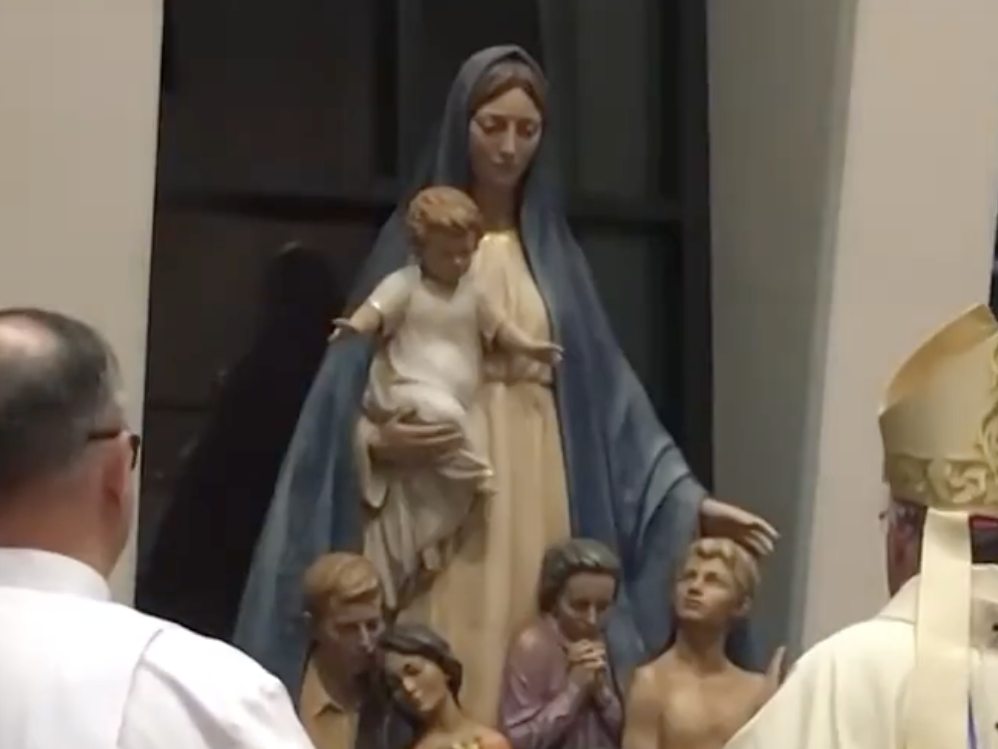
Built in a style typical of modern Australian churches, it features exposed steel beams and is almost devoid of sacred images. One exception is the enormous wooden statue of a very plain-faced Mother of God, surrounded by a group representing the diversity of Australian citizens, including a semi-naked boy with his surfboard.
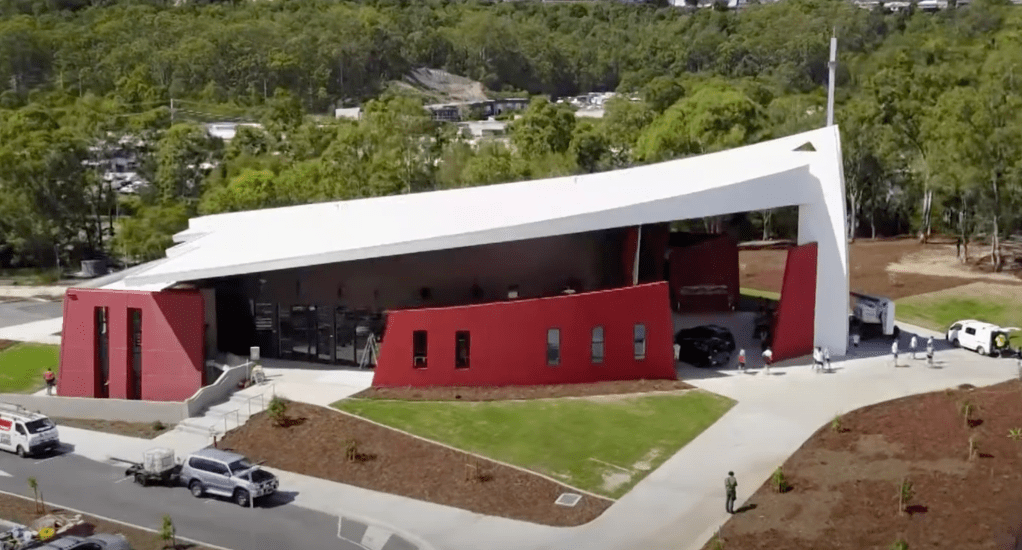
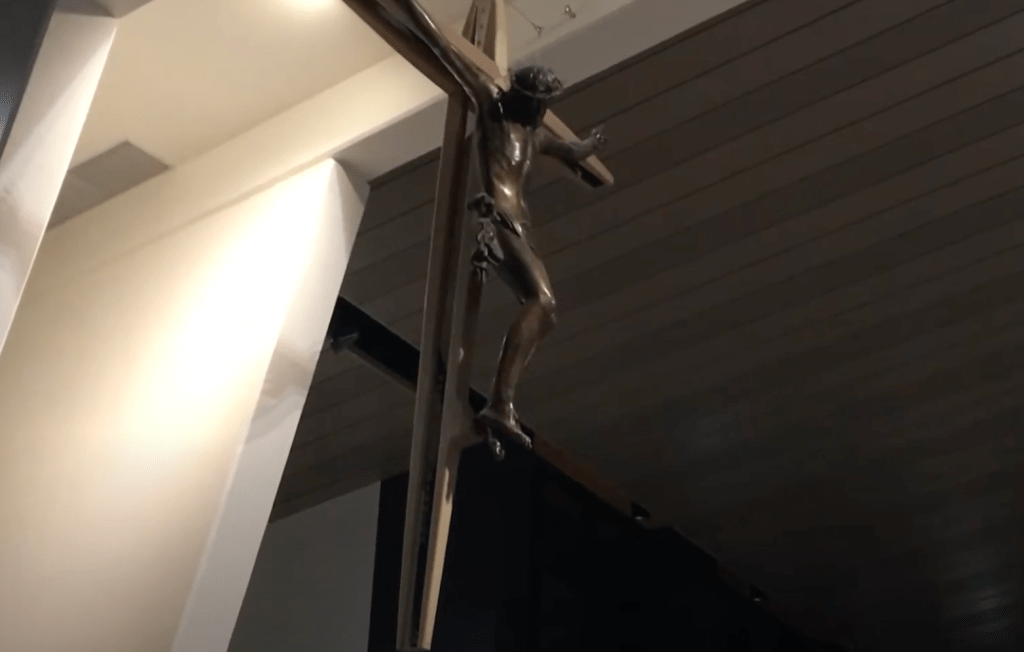

The sanctuary is typical of many churches here, with the tabernacle hidden from view. The church features a pair of strikingly Masonic design elements: two sets of twin pillars, one at the church’s entrance and one set inside the body of the church. A news report describes the latter set as ‘concrete portals;’ significant because in esotericism, a portal is a gateway to secret knowledge, and is usually achieved via occult rituals.


Twin pillars are especially significant in Freemasonry, where are said to represent the truth being found between two opposites, or poles. Duality is a common theme in the occult and was actually part of the design brief given to the designers for the church: they were asked that it embody ‘light and darkness, the masculine and the feminine, the sky and the earth’.
The heretical Archbishop of Brisbane, Mark Coleridge, (who possibly requested the design elements) gave a clue to the occult meaning of the ungodly building in his sermon at the opening Mass. He mentioned wind and fire, two of the four elements associated with alchemy and the occult.
This is the Church that has given birth to us and will continue to give birth to this community of faith in Burleigh Heads. It’s a place of the Spirit. It’s a place therefore of wind and fire, a place that can turn the human womb into a temple of God himself.
Archbishop Mark Coleridge
The third element, earth, is referenced by the twin pillars both inside and outside the church, which the designers explain “visually tie it to the ground.” The fourth element, water, is referenced in the name of the suburb housing the church – Burleigh Waters – as well as in the waters within the womb. Mention of the womb and rebirth also suggests the theme of transformation, so common among occultists.
Outside the church is a mosaic, shown below, which was produced by a local indigenous artist. It represents a pagan myth about a hero who was reincarnated as a dolphin.
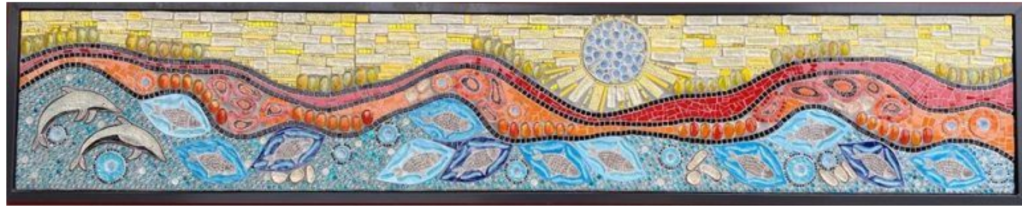
During the church’s opening ceremony, an unknown type of smoking ritual took place. It involved a layman raising a ‘smoking’ bowl over congregants. This appeared similar to indigenous smoking ceremonies in which smoking leaves or herbs are burned in the belief that this cleanses the space of ‘evil spirits’.

Perhaps unsurprisingly, the parish is home to at least one esoteric prayer group: the ‘Contemplative Women’s Group’ which purports to examine Scripture and which features an activity reminiscent of Wicca: “sinking into the feminine divine.”
Prior to the construction of the building, the former parish priest, Fr Ken Howell, was given a ‘virtual tour’ using cutting edge technology from a company named Oculus. Oculus is, of course, Latin for eye – a very important symbol for occultists.

 Ecclesiastical Freemasonry
One thought on “A Church Dedicated to the Four Elements”