A reader has supplied some concerning information about a parish in his state of Queensland: St. James at Coorpooroo in Brisbane. St. James has published its ‘Reconciliation Action Plan’ to implement indigenous ‘dialogue and accompaniment’ and includes adding Welcome to Country ceremonies to parish events as well as adding pagan elements into Masses throughout the year. Worst of all, the plan is based on guidelines that come straight from the notorious Archdiocese of Brisbane, meaning that similar plans are being rolled out all across Queensland.
St. James published its plan online and the document is reproduced below. As you can see, it involves lots of bureaucratic jargon (e.g. ‘stakeholders’, ‘actions’ and ‘deliverables’) and woke appeasement (‘reconciliation’, ‘truth-telling’ and ‘listening’) but mentions absolutely nothing about evangelising or Catholic formation.
Catholics are expected to ‘learn’ from indigenous Australians and put up with pagan additions to their Masses while celebrating imaginary indigenous feast days. St. James plans to hold events to mark at least four of the following victimhood days: Sorry Day, Close the Gap, Coming of the Light, Apology Day and Mabo Day.
Also mentioned is the anti-Christian Statement from the Heart document: four weekly sessions are planned to discuss this Marxist-inspired hymn to Gaia.
Cui Bono?
As is to be expected, local, urbanised Aboriginals will benefit financially from the parish programme: multiple plaques to honour the Indigenous have been purchased by the parish; Welcome to Country ceremonies are planned (presumably led by paid activists); indigenous businesses will be prioritised by the parish. There is no mention of assistance going to those indigenous Australians living in rural areas who are truly victims of poverty, often surrounded by violence, addictions and sexual abuse.
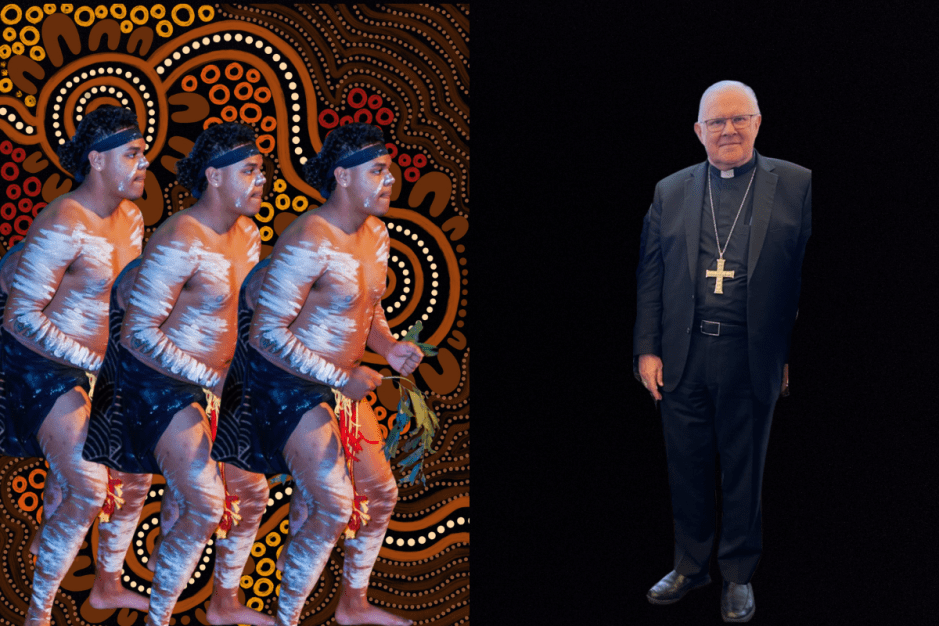
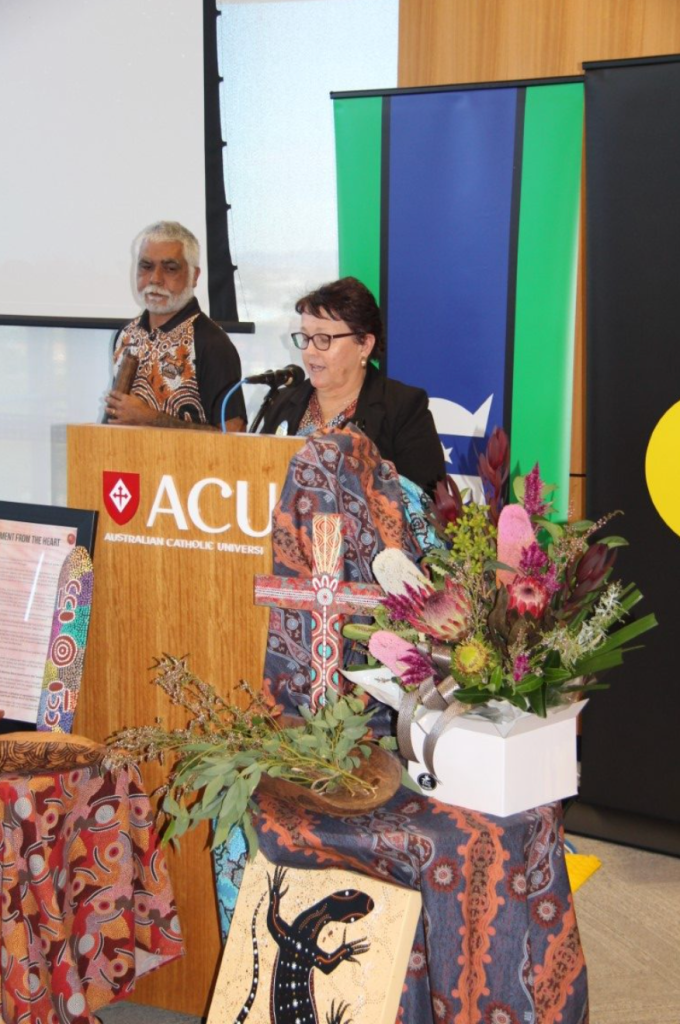
The Plan was officially launched during Sunday Mass on February 9th. The Mass was preceded by a pagan smoking ceremony, and the Entrance Procession was accompanied by music from the indigenous instrument, the didgeridoo, as well as ‘cultural significant statements, artwork and symbols’. This means that pagan symbols and representations of mythological beings were brought into the church during the Liturgy.

Reconciliation
The entire ‘Reconciliation’ movement is based on the lie that white settlers stole the land of Australia from deeply spiritual natives, violently imposing their imperialistic culture and faith on them. This Noble Savage myth is perpetuated in schoolrooms and universities around the country and is unfortunately promulgated by many of our bishops as well.
Of course, when the British arrived in Australia with their ships, tools, seeds, uniforms and Christian (albeit Protestant) faith, the indigenous inhabitants still running around in animal skins, eating each other and worshipping lizards. Yet, our hapless prelates insist that they have something to teach Catholics about spirituality and culture.
Of course, at the root of all this talk of reconciliation and dialogue is the complete absence of faith among the majority of the Australian hierarchy. They simply do not believe in the tenets of the Catholic Faith, especially not, it would seem, in the necessity of repentance and sanctification through the sacrifice of Our Lord Jesus Christ. They are simply well-paid bureaucrats who exploit the prestige of Catholicism while subverting its truths.
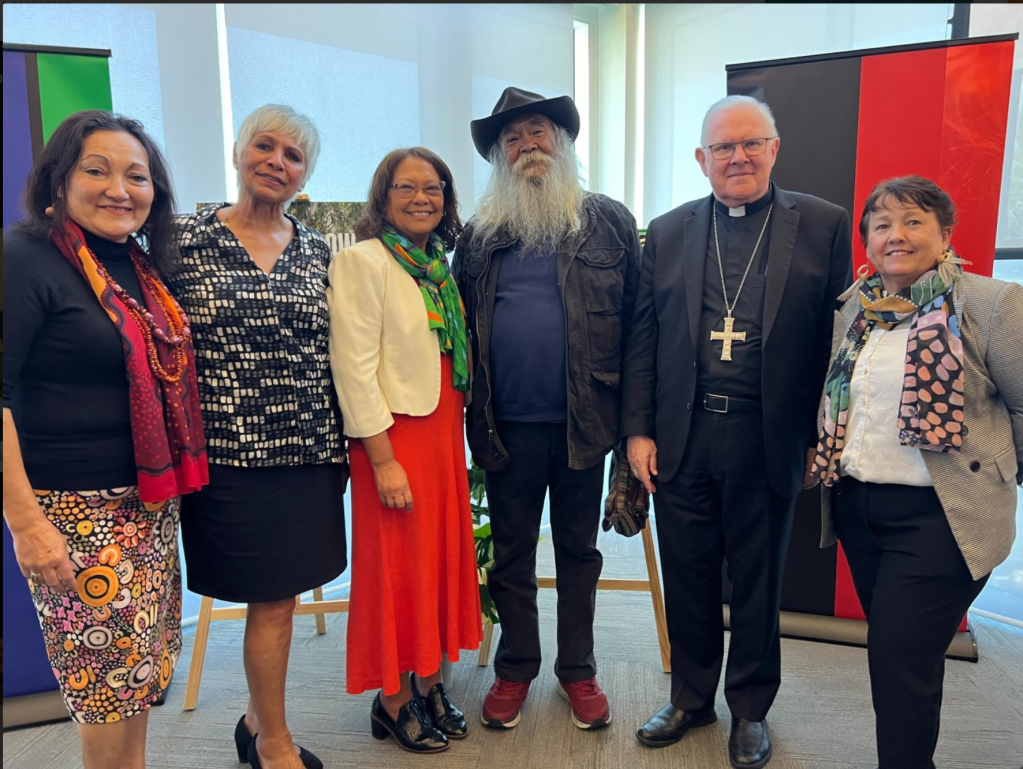
One leading proponent of this error is Archbishop Mark Coleridge of Brisbane (who is, by the way, a friend of the disgraceful Marco Rupnik.)

Archbishop Coleridge published the ‘Reconciliation’ roadmap (see below) on the Archdiocesan website, along with an expression of gratitude for the contributions made by indigenous Australians.
The Archdiocese of Brisbane acknowledges the Traditional Custodians who have walked and cared for this land for thousands of years and their descendants who maintain their spiritual connection and traditions. We thank them for their continual cultural and spiritual connection to Country as expressed through their history, music, language, songs, art and dance.
Archbishop Mark Coleridge

Pagan Practices
Smoking ceremonies have been mentioned on this site many times: they are rituals common to many different pagan traditions, including American Indians and Australian Aboriginals. The smoke is meant to ‘cleanse’ an area from ‘evil spirits’.
These rituals are unfortunately very common at Australian Novus Ordo parishes and are usually performed prior to Mass, outside the church building. The Archbishop of Melbourne infamously allowed one to be performed at the main altar of St. Patrick’s Cathedral in 2021 during Mass.
The Archdiocesan guidelines mention other occult practices like ‘deep listening’ – a kind of meditation, an emptying of the mind; and worship of mother-earth. Yet, somehow Catholics are expected to believe that these are merely cultural and not spiritual practices.
Prior to the RAP launch at St. James’, the friend who sent me this information emailed the Archdiocese of Brisbane, expressing his disapproval for the proposed smoking ceremony. He received this reply from an anonymous Archdiocesan employee:
“Please be advised the invitation states that the smoking ceremony on this occasion is to ‘culturally bless the launch of the RAP’ and thus is not intended as a spiritual action.”
Hmmm, sure. Just like this blessing of water, as found among the St. James materials isn’t intended to be spiritual: “Each time we perform these ancient rituals of a water blessing we connect our spirit with those of our ancestors –their spirit is reborn and becomes strong within us around us.“
Are we expected to believe that this “Presentation of Gifts at Offertory Procession – Mother Earth” is also not intended to be spiritual?: “We enjoy the physical and spiritual connections to Mother Earth, waters and environment. The physical and spiritual connections are the necessary elements of our life’s energy.”
The saddest part of this is that the average pew-sitter thinks that syncretism is perfectly acceptable and that it is Tradition which poses the greatest threat to their faith.
St. James explanation of pagan rituals
St. James Reconciliation Action Plan Implementation
Archdiocesan Planhttps://archdiocesanministries.org.au/reconciliation-action-plan/
 Ecclesiastical Freemasonry
One thought on “Bishop’s Blueprint for Pagan Worship”