Some of the problematic sections from Nostra Aetate are given below. For a fuller explanation of how this and other Vatican II documents deviate from traditional Catholic teaching, please read here.)
Tolerance for Eastern Religions
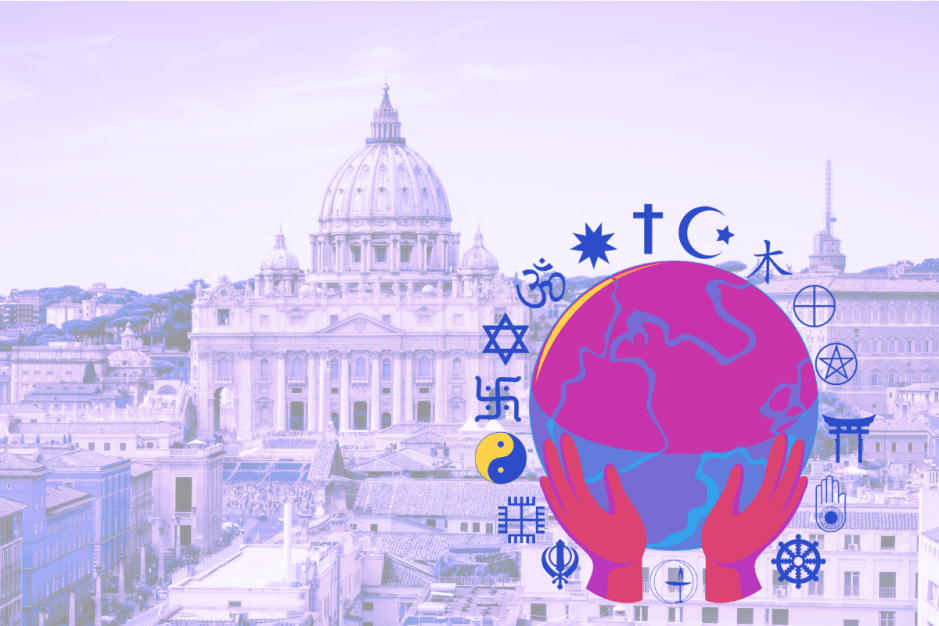
The Catholic Church rejects nothing that is true and holy (vera et sancta)in these religions. She looks with sincere respect upon those ways of conduct and of life, those rules and teachings which, though differing in many particulars from what she holds and sets forth, nevertheless often reflect a ray of that Truth which enlightens all men….… Thus in Hinduism, men contemplate the divine mystery and express it through an unspent fruitfulness of myths and through searching philosophical inquiry. They seek release from the anguish of our human condition through ascetical practices or deep meditation or a loving, trusting flight toward God….
…Buddhism in its multiple forms acknowledges the radical insufficiency of this shifting world. It teaches a path by which men, in a devout and confident spirit, can either reach a state of absolute freedom or attain supreme enlightenment by their own efforts or by higher assistance….
Nostra Aetate §2
Tolerance for Islam
Upon the Moslems, too, the Church looks with esteem. They adore one God, living and enduring, merciful and all-powerful, Maker of heaven and earth and Speaker to men (qui unicum Deum adorant etc…., homines allocutum). They strive to submit wholeheartedly even to His inscrutable decrees (cuius occultis etiam decretis toto animo se submittere student), just as did Abraham, with whom the Islamic faith is pleased to associate itself….
…”Though they do not acknowledge Jesus as God, they revere Him as a prophet. They also honor Mary, His virgin Mother1 ; at times they call on her, too, with devotion.”
… Although in the course of the centuries many quarrels and hostilities have arisen between Christians and Moslems, this most sacred Synod urges all to forget the past and to strive sincerely for mutual understanding. On behalf of all mankind, let them make common cause of safeguarding and fostering social justice, moral values, peace, and freedom.
Nostra Aetate §3

Misrepresentation of the Jewish Religion
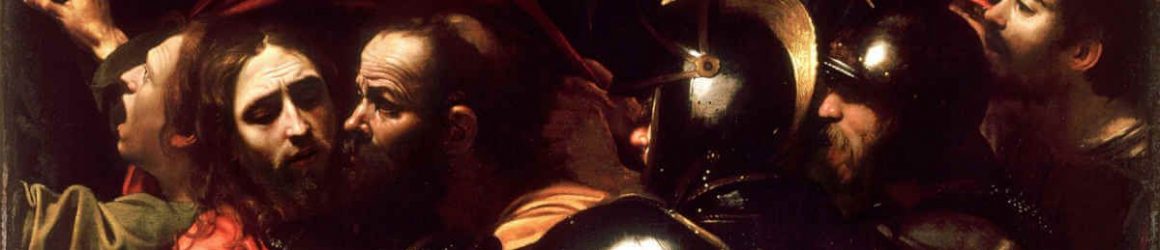
True, authorities of the Jews and those who followed their lead pressed for the death of Christ (cf. Jn. 19:6); still, what happened in His passion cannot be blamed upon all the Jews then living, without distinction, nor upon the Jews of today. Although the Church is the new people of God, the Jews should not be presented as repudiated or cursed by God, as if such views followed from the holy Scriptures.
Nostra Aetate §4
Refuting Nostra Aetate’s Claims about Judaism
“Necessary to note here is the attempt to limit the responsibility for Deicide to a small group of quasi private individuals, whereas the Sanhedrin, the supreme religious authority, represented all of Judaism. Therefore, in the rejection of the Messiah and Son of God, it had collective responsibility for the Jewish religion and the Jewish people, and this irrefutably is stated in Holy Scripture: “And from then on, Pilate was looking for a way to release him. But the Jews cried out, saying, ‘If thou release this man, thou are no friend of Caesar; for everyone who makes himself king sets himself against Caesar'” (Jn. 19:12); and “And all of the people answered and said, ‘His blood be on us and our children'” (Mt. 27:25).
“Also striking is the statement that “the Jews should not be presented as repudiated or cursed by God, as if such views followed from the holy Scriptures.” This lacks the necessary distinction between individuals and the Jewish religion. If the subject is individual Jews, the statement is true, and is exemplified by the great number of converts from Judaism in all eras. But if the subject is Judaism as a religion, the assertion is both erroneous and illogical: erroneous, because it contradicts the evangelical texts and the Church’s constant faith from her origins. (Cf. Mt. 21:43: “Therefore I say to you, that the Kingdom of God will be taken away from you and will be given to a people yielding its fruits.”) And it is illogical, because if God did not reject the Jewish religion or the Jewish people in the religious sense (which in Jesus’ time was one and the same thing), then the Old Testament has to be viewed as being still valid, and contiguous and concurrent with the New Testament. This, then, would sanction the unjustified awaiting of the Messiah, a hope still entertained by today’s Jews! All of this is a totally lying representation of Judaism and its relationship to Christianity.”2
 Ecclesiastical Freemasonry