Be silent no more! Cry out with one hundred thousand tongues. I see that, because of this silence, the world is in ruins, the Spouse of Christ has grown pale; the color is taken from… More

Be silent no more! Cry out with one hundred thousand tongues. I see that, because of this silence, the world is in ruins, the Spouse of Christ has grown pale; the color is taken from… More

It seems ironic that the same voices that condemn collegiality among the bishops are insisting traditionalist Catholics unite under a milquetoast banner of love, in an effort to secure their Latin Masses. This tactic is… More
Ah, the Greater Good. It’s a little like the Golden Rule (Those who have the Gold Make the Rules) except that in this case, those who think they are greater get to decide what is… More
THIS ARTICLE HAS BEEN UPDATED FOR LEGAL REASONS.
This article examines the heinous pedophile, Clarence Osborne, who played a prominent part in an international sex-ring which extended to all the way to the highest levels of the British government.
[For an example of the obfuscation that arises when attempts are made to investigate Masons protecting pedophilia networks, see this disgraceful series of responses from Boris Johnson, former PM of Britain. At the time of the investigation, he was the Mayor of London.]
FROM QUEENSLAND PARLIAMENT HANSARD:
Brisbane Court and Hansard reporter Clarence Henry Osborne who gassed himself in his car on September 12, 1979, was found to have committed sexual assaults against 2,500 under age boys–not one of them had reported him to the police.1
March 19, 2016 1:00am by MATTHEW CONDON, COURIER MAIL
FOR years he had lived quietly and alone in his simple, post-war austerity home on the corner of Eyre Street and Orb Lane in Mount Gravatt East, 12km south-west of Brisbane CBD. The single-level house sat on a generous block. It had a small front patio of red brick, a garage down the side, and two separate sheds in the deep backyard. It was in that yard that neighbours often saw their neighbour running fitness classes with young boys. In one of his sheds he had gym equipment, and in the other photographic gear. He liked taking pictures and almost always carried a camera. On weekends, too, he enjoyed nothing more than cruising down to the Gold Coast in his green car, or hanging out at the nearby Garden City Shopping Centre.
He was a world-class stenographer and his name was Clarence Henry Howard-Osborne. To an outsider, Howard-Osborne, known as plain Clarry Osborne, was nothing more or less than a mild eccentric, a perfectionist, a man who did not suffer fools gladly. Given he was a leading shorthand writer for the Queensland courts and later state parliament, he appreciated order. But as he lived unobtrusively in Eyre St – from at least the early 1960s – he harboured an extraordinary secret within the walls of that plain house.
In the spring of 1979, a suburban Brisbane mother accidentally overhead her young son talking about being photographed in the nude by a man. When she later pressed him for details, he volunteered that a person named Clarry Osborne had taken pictures of him and other boys.
Some weeks later, the mother mentioned the incident involving her son to a friend at a social function. As it turned out, the friend was married to a Queensland police officer. That officer – not a member of the force’s Juvenile Aid Bureau, the unit that might be expected to handle such matters – decided to have Osborne put under surveillance.
He was duly caught photographing boys in bushland near Mount Gravatt. Clarence Osborne Osborne was taken by police to Eyre St. There, they discovered thousands of pictures of naked children, hundreds of hours of tape-recorded conversations with boys and a meticulously organised filing cabinet filled with index cards bearing the details of his victims, from their names, ages and addresses, to their physical measurements.
It was later estimated that Osborne had been involved with more than 2500 under-aged males over a 20-year period. Police took Osborne back to headquarters in the city for questioning. They also confiscated three carloads of materials – a fraction of Osborne’s sordid trove of information.
Investigators were initially bewildered by the magnitude of the case. Here was a short, stocky, 61-year-old man, recently retired, who, if his own documents were to be believed, might go down in history as one of the world’s worst serial paedophiles. And his playground was southeast Queensland.
Down at headquarters, police noted that Osborne was remarkably cooperative. But what might they charge him with? It would take months to go through the photographs, index cards, tape recordings and pornographic material. The Juvenile Aid Bureau and the legal department would have to be consulted. So that evening in September 1979, detectives drove Osborne back to Eyre St.2
That night, Osborne wrote a note explaining he had been questioned by police and that “this was the best way”. He took some of his files and burned them in an incinerator in his backyard. He then went into the garage down a driveway on the northern side of the house, hooked a hose up to the exhaust pipe and into the cabin of his green car, started the engine and pressed “record” on the audio equipment he had rigged inside, used countless times to capture his illicit conversations with boys and the sounds of their sexual trysts.
Osborne then recorded his own last words: “I’ve been sitting here ten minutes and I’m still alive…”
Incredibly, Osborne and his voluminous files were never thoroughly investigated by police. According to officers who viewed the Osborne material at the time, the names on the index cards, so dutifully recorded by Osborne, were not only those of the boys he had seduced, but adults – members of the judiciary, the legal profession, politicians, academics, and even police officers – with sexual interests in children.
One former officer said the Osborne material was enough “to bring down the [then Queensland] government overnight”. The officer said when he suggested the Osborne case deserved a thorough investigation, despite the fact that Osborne himself was dead, he was warned off by a senior officer and told to leave the matter alone.
MacMillan added: “My understanding is the case went as high up as the premier’s [Joh Bjelke Petersen’s] office because of who Osborne was.”
By the early 1980s the Osborne case had been all but forgotten, and many of the diminutive stenographer’s secrets were presumed lost with him. Except a retired Queensland police officer with a conscience and a phenomenal memory, who wanted to pursue Osborne at the time – and was warned off by senior officers, and who received a death threat after he pushed the paedophile investigation too far – only to be drummed out of the force, never forgot the case. And in breaking his silence, he would link Osborne to an international paedophile ring, and the child abuse scandal currently rocking Westminster in the UK.
Clarence Henry Howard-Osborne was born in Brisbane on May 26, 1918. His father was James and his mother Anna Elizabeth (née Orth). Osborne had twin sisters, Anna and Irene, and a brother, Leonard. The family worshipped at the Church of the Latter-Day Saints in Woolloongabba, in the city’s inner south.
For a man who would develop powerful secrets, Osborne appeared to have had a need to communicate in his childhood. He was constantly submitting adolescent writings to newspaper competitions, and regularly winning shilling prizes and passes to the movies.
Living with his parents at 88 Dunellan St, Greenslopes, he was also an active youth. He once listed his favourite sports as tennis, cricket and swimming, and his hobbies as reading, writing and sketching. Osborne would later run a gymnasium. But he felt stifled by the family’s devotion to Mormonism.

A book on Osborne, The Man They Called a Monster, by criminologist and academic Dr Paul Wilson, exposed Osborne’s frustration. Wilson wrote that in a manuscript Osborne had penned about his own life, “Osborne constantly referred to his own very strict puritanical upbringing and often described his own childhood as being for this reason ‘hypocritical’.
He stated that he was born into a very repressive religion and was not allowed to play with children outside the particular church to which he belonged. He had a brother two years older than himself from whom he was emotionally distanced, but he often wrote warmly about the very cordial relationship he had with his twin sisters who were four years older. Osborne did not feel close to any other female figures, including his mother, whom he described as ‘strict’ and ‘aloof”.”
Osborne attended the State Commercial High School (on the campus of what would ultimately become the Queensland University of Technology), and later attained an associate certificate of accountancy from the University of Queensland. During wartime, he joined the civilian militia.
In 1940, the Osborne family made the papers again. This time it was reported that Clarry’s sister, Anna Elizabeth, was leaving Queensland for Salt Lake City in the United States to marry a Mormon elder, as was her cousin, Dorothea Darlene Orth. Anna’s mother refused to comment on the nuptials to the Brisbane Truth. “My daughter is too dear to me to discuss her affairs in public,” she “protested pleasantly”. “I would really rather not have anything to say.”
Ultimately, Osborne became an accomplished shorthand writer. His skills attracted the attention of the Pitman shorthand school in London, which often deferred to him for advice. By the 1960s he was a top government court reporter. On the side he bred budgerigars and remained a fitness fanatic.
During the 1970s, Osborne was a familiar face around Parliament House. Political staffers remembered his outgoing personality, and his obsession with holidaying in Thailand. And a trainee shorthand co-worker recalled Osborne’s most peculiar hobby.
“He used to take and develop his own photos -8 by 10s [20cm x 25cm] – of the boys he went with,” remembers the co worker. “He would show these photographs around at work. I saw hundreds of them. There were even pictures of babies. He was on about it every day in the office, about picking up hitchhikers and rooting them. He was a little muscular fellow, had plenty of money and was very clever.”
Complaints over Osborne’s behaviour were lodged. Two secret inquiries were held by the Public Service Board in 1973 into Osborne, and as a result, the chief court reporter was moved to the Hansard bureau at Parliament House where his contact with young people was monitored.
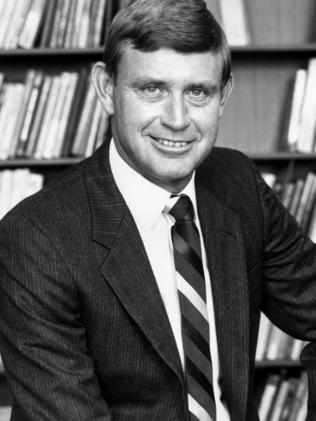
In 1976, Osborne went to the University of Queensland campus at St Lucia in Brisbane’s inner west to pay an unexpected visit to criminologist Wilson. He had brought with him paperwork and photographs. “Osborne said that he had come to see me because of my reputation as a civil libertarian, and because he was sure I would respect his rights to privacy,” Wilson later wrote. [Editor’s note: In 2016, Paul Wilson was convicted of sexually abusing a child around the period he was in contact with Osborne.]
Osborne was worried that a pornographic film of men having sex that he had purchased by mail order from Denmark had been seized by Australian Customs, and that if the police got involved, they might seize his “research” – the filing cabinet, photographs and audiotape of his sexual relations with more than 2500 boys.
“He was certainly close to his material and several times called it his ‘life work’ and continually worried about the Commonwealth Police taking it away from him and posterity,” Wilson later wrote. “Over the next two months I met Osborne on several Occasions and each time he brought me new material to look at. Transcripts, tape- recordings and his manuscript documenting his own life were freely given to me and supplemented by face-to-face conversations of how he had met the young men in his life and why he acted as he did.”
In the meantime, Osborne was found dead the day after he was questioned by investigators in September 1979. On Thursday, September 20, a small death notice appeared in The Courier-Mail: “Osborne, Clarence Henry, of Eyre Street, Mount Gravatt. Passed away at home 12.9.79. Sadly missed friend of John and Pauline and ‘Uncle’ of Peter and Geoffrey. There will be no funeral service as requested.”
In the winter of 1980, almost a year after Osborne had gassed himself at Mount Gravatt, a Juvenile Aid Bureau detective in the city branch headed down to the storeroom to retrieve a fresh police notebook. The detective had had several years’ experience in the JAB in North Queensland and was known as a straight, reliable and effective investigator. He could not know that that routine trip for some stationery would change his life.
In the storeroom, he noticed dozens of boxes on the shelves marked “Osborne”. “Within those boxes were all these index cards… I recognised names… it was quite obvious there were members of the judiciary, the legal fraternity, there were politicians, it was the top end… there were no bloody truck drivers and bricklayers amongst them,” the retired officer, who requested anonymity, said.
“I remember making an off-the-cuff comment to one bloke there that if this ever became public, the whole of George Street would just slide into the river, you know? It would just bring the whole government undone. It was all there.”
The officer, respecting protocol and the chain of command, approached a superior.
“I went to this inspector and I said to him – I’ve just come across all this stuff in the Clarry Osborne exhibits in there,” he recalled. “I said it’s like Pandora’s box, [and] is anybody doing anything about it? I said I’ve read some of the stuff very briefly and it’s just a goldmine of information.”
He said the inspector replied that he was to do nothing about it, “just sit on it and use it later on to further your career”. The officer was nonplussed. Regardless, he began to secretly return to the storeroom, read the files and smuggle out copies of photographs. The following year, another young detective was transferred into the JAB. The officer developed a trust and rapport with the newcomer, and they were soon digging through the Osborne files together.
“But we both realised we had to do it on the quiet, we had to sneak the stuff out,” he said. “We found magazines. There were German issue magazines. There were American magazines. And the thing that was very disturbing about them was that the Brisbane kids [photographed by Osborne] were appearing in the German magazines… then we’d find a copy of the same magazine in English … and it was almost like a tourist guide for paedophiles.
“They could come to Brisbane and meet these kids. And this was all arranged through bloody Clarry. We discovered that the motto of the paedophile group over there was – ‘sex before eight [years old] before it’s too late’.

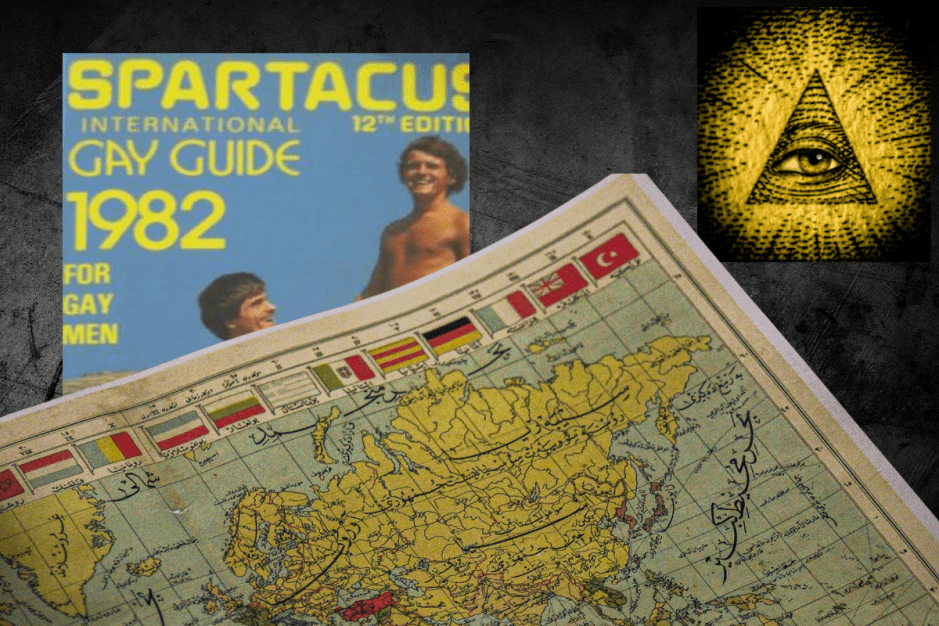
“One of the German magazines was named Spartacus and it was the codename of an international underground paedophile network. It was run by a bloke called John Stamford out of Amsterdam. He originated from the UK and I think sort of got himself in a bit of strife there and went over to Amsterdam and he was running this network, and Clarry Osborne was part of that.”
Spartacus was in fact published by former British Catholic priest {Editor’s note – apparently he had been a seminarian, but was not ordained] and pedophile Stamford, who had fled the UK for Amsterdam in the early 1970s after being convicted of sending obscene literature through the post.
Stamford also ran the Spartacus Club, part of the British-registered Spartacus International. The company described itself as “general publishers of trade and business directories, periodicals, newspapers and journals”.
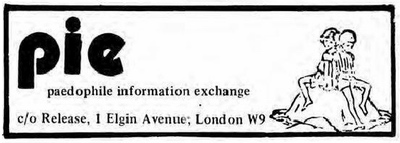
Through the 1970s Stamford also appeared regularly in the press as an advocate for gay rights, and was a leading member of what was known as the Paedophile Information Exchange. It was founded in 1974 as a pro-paedophile activist group. In addition, PIE had a “contact page”, a bulletin where members placed advertisements. They were required to quote their membership number, general location and their sexual predilections.
PIE managed the replies through a private post office. As Osborne was sitting down with Wilson at UQ on the other side of the world, PIE was causing a storm in the UK. Several members were charged with conspiring to corrupt public morals, and details of the outfit emerged during court proceedings. It was described as “sick and a force of evil”.
Media coverage of PIE intensified through the late 1970s, as did the group’s attempts to push its message, which included the abolition of the age of consent. And its contact point in Australia was Osborne.
“Clarry had been operating for so long that he virtually became the guru of
paedophiles,” the officer said. “All of the paedophiles that we looked at were all in there [in the Osborne files], and that was only scratching the surface. They all came from Osborne’s system.”
In the end, the officer and his partner were on the brink of launching a major sting. Through a contact, they planned to open a post office box in Fortitude Valley and infiltrate the international paedophile ring.
“[The contact] was going to open a post office box for us so that we could use Clarry’s code number and start communicating with Stamford in Amsterdam, to get more code numbers and contacts and stuff like that,” the officer said. “We were getting to the point… like I said, we didn’t know who to trust… it was making you feel you were being scrutinised, that people were watching you. The tension was just unbelievable. We took some of the Osborne files one day and we read them on a hill in Dayboro [46km north-west of Brisbane]. We couldn’t get caught with it.
“It got to the point where we actually said to each other, don’t be surprised if they find one of us dead in the Brisbane River… that’s how bad it was getting.”
The officer also found a bullet in the drawer of his desk at the Juvenile Aid Bureau. He took it as a death threat. In the end, his investigation petered out, having met with constant obstructions. His attempts to crack the Osborne case would haunt the rest of his police career, and he would retire “medically unfit” at the age of only 46.

More than three decades later, the impact of PIE continues to play out in Britain via its Independent Inquiry Into Child Sexual Abuse, announced by Home Secretary Theresa May in mid-2014 following the scandal surrounding late entertainer Jimmy Savile and his abuse of hundreds of children.
The statutory inquiry, expected to take five years, recently announced 12 separate investigations as a part of the overall inquiry. They include child exploitation by organised networks, and allegations of child sexual abuse linked to Westminster, the British Parliament.
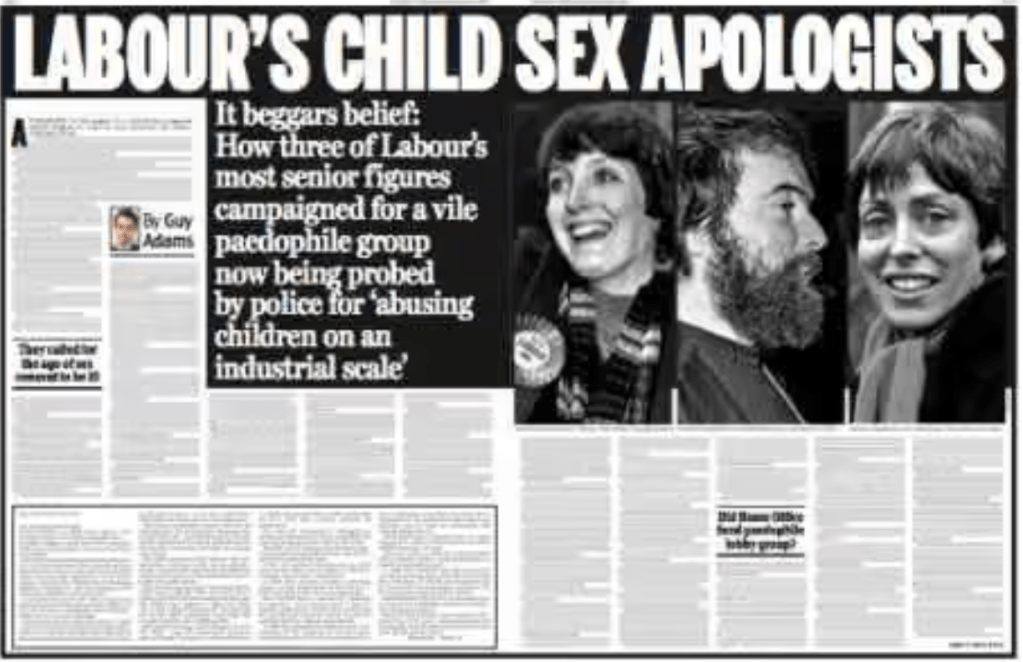
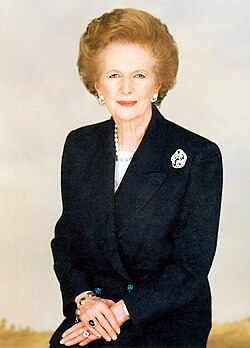
Last year it was revealed Thatcher did not want a senior diplomat linked to PIE and paedophilia named. In January last year, a file compiled in 1980-81 was released to Britain’s National Archives which revealed that the then British prime minister, Margaret Thatcher, did not want a senior diplomat linked to PIE and paedophilia named.
The late Sir Peter Hayman had been accused by Tory MP Geoffrey Dickens in parliament in March 1981 of sending pornographic material through the post. Hayman had come to the attention of police in 1978 after a package of sexually explicit correspondence, addressed to a Mr Peter Henderson of Notting Hill, was found on a London bus. Henderson was Hayman’s pseudonym with the Paedophile Information Exchange. Hayman died in 1992.
The Independent newspaper later wrote of Dickens: “Eighteen years after his death… the backbencher’s reputation as a political lightweight is being revised in the wake of a Scotland Yard investigation which is exhuming a scandal long buried in the Westminster of Margaret Thatcher’s premiership.
New evidence suggests that Dickens stumbled upon an Establishment paedophile ring in the early 1980s – and that his efforts to expose a cover-up left him in fear of his life. Dickens told fellow MPs that after warning of the existence of the network, he had received threatening phone calls and been burgled twice. He also claimed he had been placed on a ‘hit-list’, he told the House of Commons in a little-noticed speech.”
Incredibly, a part of that same massive ring had taken root in Brisbane, Queensland, courtesy of Clarence Osborne. Equally astonishing is that the extensive Osborne files were never properly investigated, despite the best efforts of a handful of honest officers. The boxes of material sat for years in the JAB storeroom under lock and key. Their whereabouts are currently unknown.
In Osborne’s wake remain a number of serious questions. Why did the Queensland police never look into the expansive Osborne material given that his notorious activities were known to some officers prior to his suicide in 1979? How did the Osborne material, given its global reach, manage to evade the serious scrutiny of various subsequent inquiries, including the Fitzgerald and Kimmins inquiries? And why hasn’t Australia’s current Royal Commission into Institutional Responses to Child Sexual Abuse not examined historic links with government and institutions such as the police?
For the officer who lost his career over the Osborne material, there’s nothing left but regrets. “It would have gone worldwide,” he recalled. “The connections were there. If there had been a proper team put in place, there’d be arrests, there’d be bloody suicides all over the bloody place. In the end we could do no more.
“I think they were glad to see the back of us anyhow. And it all happened in our own backyard.”
Facebook page for survivors of abuse at TSS: https://www.facebook.com/profile.php?id=100063789480833
More information here: https://goodnessandharmony.wordpress.com/2017/06/09/paedophile-clarence-henry-howard-osbornes-files-could-have-brought-down-government-2/

As Pope Leo’s papacy progresses, his role in advancing the Revolution is becoming clearer: make Modernism more palatable by gently “developing” his predecessor’s radical and destructive anti-Catholic doctrine. This is an opinion echoed by Atila Sinke Guimarães from Tradition in Action. He writes:
…. what the Conciliar Church needs now, more than anything else, is to have a long period to digest the progressivist “conquests” that Francis won for it. The aim is not to deny what he did. It is to “reinterpret” it under a more moderate light in order to make the average Catholic assimilate his legacy in small and less repulsive doses.
This attempt at reinterpretation is precisely what we are seeing from conservative Catholic circles – despite Bergoglian loyalists assuring us that Prevost is cut from the same cloth as Pope Francis. For example, there is an attempt to promote “Pope Leo’s version” of Liberation Theology, which is supposedly less extreme than the original version. Then there was the case of the conservative Catholic publication from Melbourne that wrote of its hopes to see the new Pope’s “interpretation of the application” of Synodality.
These are the hopes and dreams of naive Catholics who fail to understand the scope of the Crisis and the momentum it has gained: Prevost is not the Pope who is going to save the Church, any more than Trump was the politician “chosen by God” to save the free world.
Despite his smiling photo-ops and calm demeanour, Pope Leo has shown on more than one occasion that he is intent on applying critical theory to the Word of God. This includes playing down Christ’s miracles, by suggesting that the deaf-mute of the Gospels chose not to speak. “Just as it can sometimes happen to us, perhaps this man chose not to speak anymore because he did not feel understood; he chose to shut off every voice because he had been disappointed and wounded by what he had heard.”
This is a followup to previous occasion when Prevost suggested that the miracle of the loaves and fishes wasn’t so much about the sovereign power of God as it was about natural charity:
“However, when we read the account of what is commonly called the “multiplication of the loaves” (cf. Mt 14:13-21; Mk 6:30-44; Lk 9:12-17; Jn 6:1-13), we realize that the real miracle performed by Christ was to show that the key to overcoming hunger lies in sharing rather than in greedily hoarding.
Prevost has shown his tolerance for the errors of non-Catholics on many occasions since his election. Possibly the most concerning of these meetings was with representatives of the Eastern Orthodox church, which some Catholics hope will soon reconcile with Rome.
Yet, as pointed out by the WM Review, unless the Eastern orthodox church recognises the primacy of the Roman Pontiff, such a reconciliation can only take place if the Catholic Church embraces error. Specifically, these errors comprise the “redefinition of the Church’s property/note of unity, redefinition of the supernatural virtue of faith, redefinition of the nature of the papacy and constitution of the Church.”
The new Pope’s tolerance of clerical sex abuse is another marker which confirms that, morally, he is little different from Bergoglio. An article from May in the Chicago Sun Times points to Prevost’s role as a prominent leader within the Augustinians and suggests that he helped cover for an alleged clerical sex offender. In the article, Prevost is accused of “perceived inaction on improving transparency in his order over sex abuse.”
More than that, the article points to a previous one from the same news outlet that claims “while he was in charge of the Augustinians in Chicago in 2000, allowed an accused pedophile priest to live at a South Side monastery without telling a nearby Catholic elementary school the man was there. Indeed, church records assert there was no school nearby when there was.”
There are other abuse-adjacent claims by the website against Prevost: none of them directly accuse him of abuse, but rather, point to a repeated lack of transparency and accountability.
This leads to another point that should have been raising red flags from the beginning of Prevost’s pontificate: why has the media been so quiet? As a whole, mainstream generally can’t move quickly enough to cover a story with even the faintest scent of a cover-up of abuse by Catholic priests. Yet Prevost’s role in a number of these affairs has largely been ignored until now.
This case, now back in the news, was known prior to Prevost’s election as Pope, yet until now received little media coverage. The details of this case are conflicting and even sketchy, yet that has never proven to be an obstacle for the media, who in Pope Leo’s case, continually assume his innocence.
Then there is this case, where the Pope is allowing Cardinal Carlos Castillo of Peru to remain in his position past retirement date, despite his track record of covering for sodomites in his seminary. As has been mentioned in these pages before, Prevost, as former head of the Dicastery for Bishops, knows all there is to know about the hierarchy, yet continues to promote or tolerate anti-Catholic prelates.
The Jubilee of Young People, which has just taken place in Rome, is the perfect of example of the way Pope Leo is continuing the Modernist agenda of the previous Popes under the appearance of orthodoxy. Catholic media hailed the Pope’s presence at Adoration of the Blessed Sacrament, attended by up to a million young Catholics, as an indicator of the Church’s return to its glorious past.
Yet all conciliar and post-conciliar popes have led liturgies like this one. Images of all of them holding monstrances can be found online: all of them had moments of giving the appearance of a truly holy Pope, despite their many deviations from tradition on other occasions.
Without being too cynical, the question should be asked: what young Catholic would not want to attend an event like this one – a holiday in Rome, usually subsidised by the Archdiocese or family and friends, full of emotional experiences but without any substantial impetus for conversion to a holy life?
The truth is that large gatherings are the norm at events like this one, and that huge numbers for objectively excellent practices like Adoration and confession, while giving the appearance of a wholesome Catholic atmosphere, are not themselves indicators of a Catholic revival.
This is evidenced by the Jubilee meeting for Catholic “influencers”, most of whom attended the Holy Sacrifice of Mass in t-shirts and shorts. Despite being extolled as representatives for Catholicism, the majority of these “influencers” were not event aware of how to pray the Pater Noster in Latin.
Along with the trappings of tradition at the official events, Modernist novelties could also be found; novelties that undermined the reverence and decorum necessary for flourishing of true piety. There was the ubiquitous rock concert in St. Peter’s Square, which some thought was perfectly fine because the altar had been removed.
Then there was the strange group of ‘Extraordinary Ministers of the Eucharist’: they looked for all the world like neo-pagan priestesses, yet they distributed the Sacred Species at the Pope’s Mass. SOURCE

Events included a liturgical dance-show in front of the altar in the piazza near St. Peter’s. The group danced to Scripture being read in Italian by a woman. While their dress is quite modest by today’s (admittedly very low) standards, it does not reach the higher standards expected by anyone taking part in any form of liturgy. That is not to suggest that liturgical dance can ever be anything other than an embarrassing and inappropriate display of post-conciliar emotionalism.


Perhaps Leo’s papacy can be summed up in the image of Luce, which remains omnipresent throughout the Eternal City.
What appears to be Catholic, and even quaintly so, is in reality something sinister and dangerous to souls.
Like Luce, the Jubilee mascot with ties to the occult, and which was created by an artist who is a promoter of LGBTI rights (and a sex-toy vendor), the Vatican may seem newly orthodox, returning to tradition and appealing to young people.
Yet, the truth is that underneath the lace and Latin lies a cesspool of corruption and heresy, sodomy and vice, and that Prevost is the man of the hour, handpicked by the most corrupt men of all, to make Modernism palatable to unwitting Catholics. Please, dear friends, read the signs of the times and don’t be taken in by this latest Modernist deception.
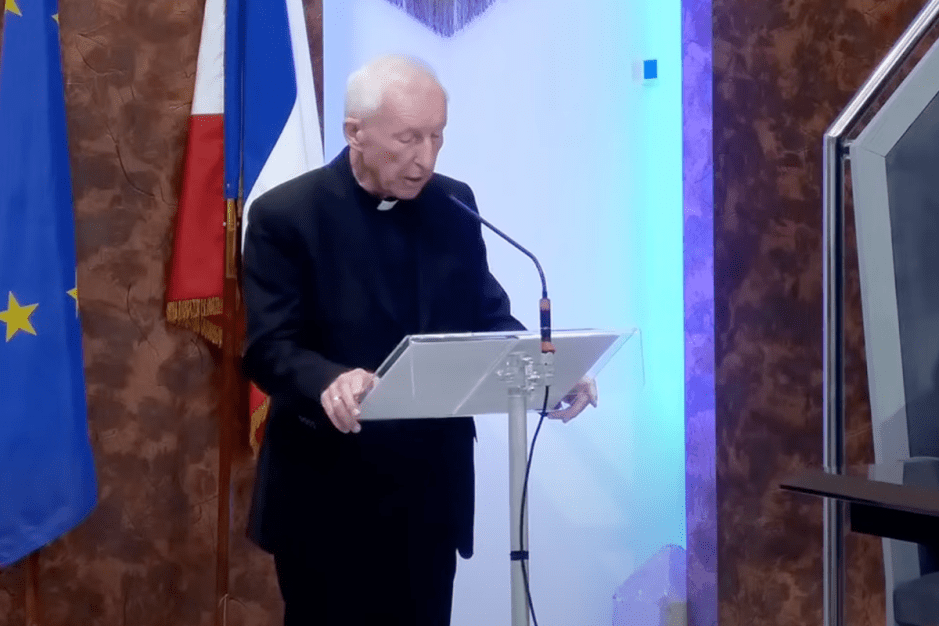
Fr. Michael Weninger is a priest who has been mentioned several times on this website, as he is one of the few ecclesiastical freemasons who makes no secret of his dual allegiance. (See articles here and here.)
Fr. Weninger, a former diplomat who entered the priesthood late, has never renounced his membership in Freemasonry, which scandalously has even been encouraged by his superiors. He is famous for publishing a book in 2019 called Lodge and Altar, which is based on his doctoral thesis. He studied under Cardinal Jean-Louis Tauran at the Pontifical Gregorian University which casts some doubt on Tauran’s own allegiance to the Catholic faith. Weninger also works under the Cardinal at the Pontifical Council for Interreligious Dialogue.

Last month, Fr. Weninger, gave an address at the French National Grand Lodge at which he again attempted to affirm a compatibility between Freemasonry and Catholicism. The lecture can be found here on Youtube, but as both the video and transcript are in French, it’s necessary to rely on translated reports for this article.
The Spanish website, Infovaticana, tells us that according to Fr. Weninger, the “Great Architect of the Universe” is synonymous with the God of the Bible, and that this is the same God “to the Yahweh of the Jews, to the Allah of the Muslims and to the Trinity of the Christians.” This is perfectly consistent with the heresy of indifferentism which is a hallmark of Freemasonry.
The priest also stated that “a Catholic Freemason is no longer excommunicated for the mere fact of his membership in Freemasonry” – an error he shares in common with the Australian Catholic Bishops Conference. Note that Weninger limits this apparent compatibility to Anglo-Saxon lodges; despite the Church making no exceptions to their centuries-old condemnation of Masonry.
Infovaticana suggests that the timing of Fr. Weninger’s address suggests that it is a test to the limits of the new pontificate’s authority – and to date no condemnation of the talk or of the Judas-priest’s dual allegiance has been issued by Pope Leo.
Fr. Weninger makes his claim of compatibility based on the removal of the penalty of excommunication for Masons from the 1983 Code of Canon Law even though then-Cardinal Ratzinger confirmed that “Membership in them remains prohibited. The faithful who belong to Masonic associations are in a state of serious sin and cannot approach holy communion.”
Even Pope Francis, through Cardinal Fernandez, re-affirmed the ruling in 2023 when he stated that “Active membership in Freemasonry of a faithful is prohibited, due to the incompatibility between Catholic doctrine and Freemasonry.”
The French media outlet, Tribune Chretienne, com made some insightful comments about Fr. Weninger’s address:
Note that during this same conference, an anonymous speaker testified to a word received during a confession, which alone sums up the constant teaching of the Church: “I absolve you of all your sins, you can do whatever you want, except… don’t go to Freemasonry. “ A revealing sentence which says a lot about the perceived seriousness of this belonging with regard to the Catholic faith.
Father Weninger took the liberty of concluding his intervention with “So be it”, which is not trivial. This expression, [the] liturgical translation of the Christian “Amen”, traditionally concludes a prayer, a blessing or a proclamation of faith. Using it to close a relativistic presentation on the compatibility between the Gospel and an initiatory organization based on secrecy and the rejection of Christian dogma demonstrates the confusion he wants to create to accredit his speech. This amounts to giving a liturgical anointing to a word which contradicts the Magisterium.
As Serge Abad-Gallardo, a former converted Freemason, recalled in a direct criticism addressed to Father Weninger: “Masonic principles are incompatible with Catholicism: they profess doctrinal relativism, refuse all revealed truth and reject the Kingship of Christ. Freemasonry claims to replace faith with human reason. However, man cannot save himself.“

On July 9th, Pope Leo offered his first Mass “for the Care of Creation”. The Mass contained many clues that show his agenda is no different from the human-centred goal of his predecessor, Pope Francis. Significantly, the press conference announcing the Mass featured Cardinal Michael Czerny, the man who promotes the Integral Ecology of Liberation Theologian, Leonardo Boff and Archbishop Francesco Viola, the man who wears Annibale Bugnini’s ring.
Firstly, I’d like to present an alternative view to mine, that is, a traditional Catholic’s interpretation of this Mass as being entirely orthodox and in line with the correct Catholic approach to creation. It seems solid, ending with the comment: “The keystone of the entire homily lies in the final sentence: ‘Only a contemplative gaze can change our relationship with created things’,” then providing a thoughtful explanation of what this means for faithful Catholics.
The only problem is, Pope Leo’s ‘contemplative gaze’ quote is taken from Laudato Si – that is, straight from the mouth of Papa Bergoglio. When one reads the entire sermon, it becomes obvious that Pope Leo is not, in fact, as the author suggests, referencing the traditional teaching on creation. Rather, he is continuing Francis’ mission which is none other than that of the subversive forces who gave us the Pact of the Catacombs. Clues such as ‘cry of the earth and cry of the poor’ abound, as do multiple references to Pope Francis and his pantheistic encyclical, Laudato Si. (For a complete analysis, see this article at Novus Ordo Watch.)
Apart from the obvious display of devotion to Pope Francis, there may be even more to this Mass than first appears. For this, it must be viewed through the lens of occult symbolism and so some speculation is in order.

The Mass for Creation took place at the Borgo Laudato Si (The “Praised be” Village) – the immense gardens of the Pope’s holiday residence, Castel Gandolfo. Pope Francis had this turned into a tourist attraction, meant to provide some income for the cash-strapped Vatican whilst educating the public about ‘integral ecology’ (worshipping the environment). Remember, this is the vision that would have us believe that “justice and peace will only dwell on the Earth” when everyone has access to clean water.
The gardens made the perfect setting for a pagan ritual: that is, outdoors, in a grove. Groves were condemned by God throughout the Old Testament for their relationship to paganism and the prophets were often instructed to destroy these places where adulterous Israelites would gather to worship false gods.
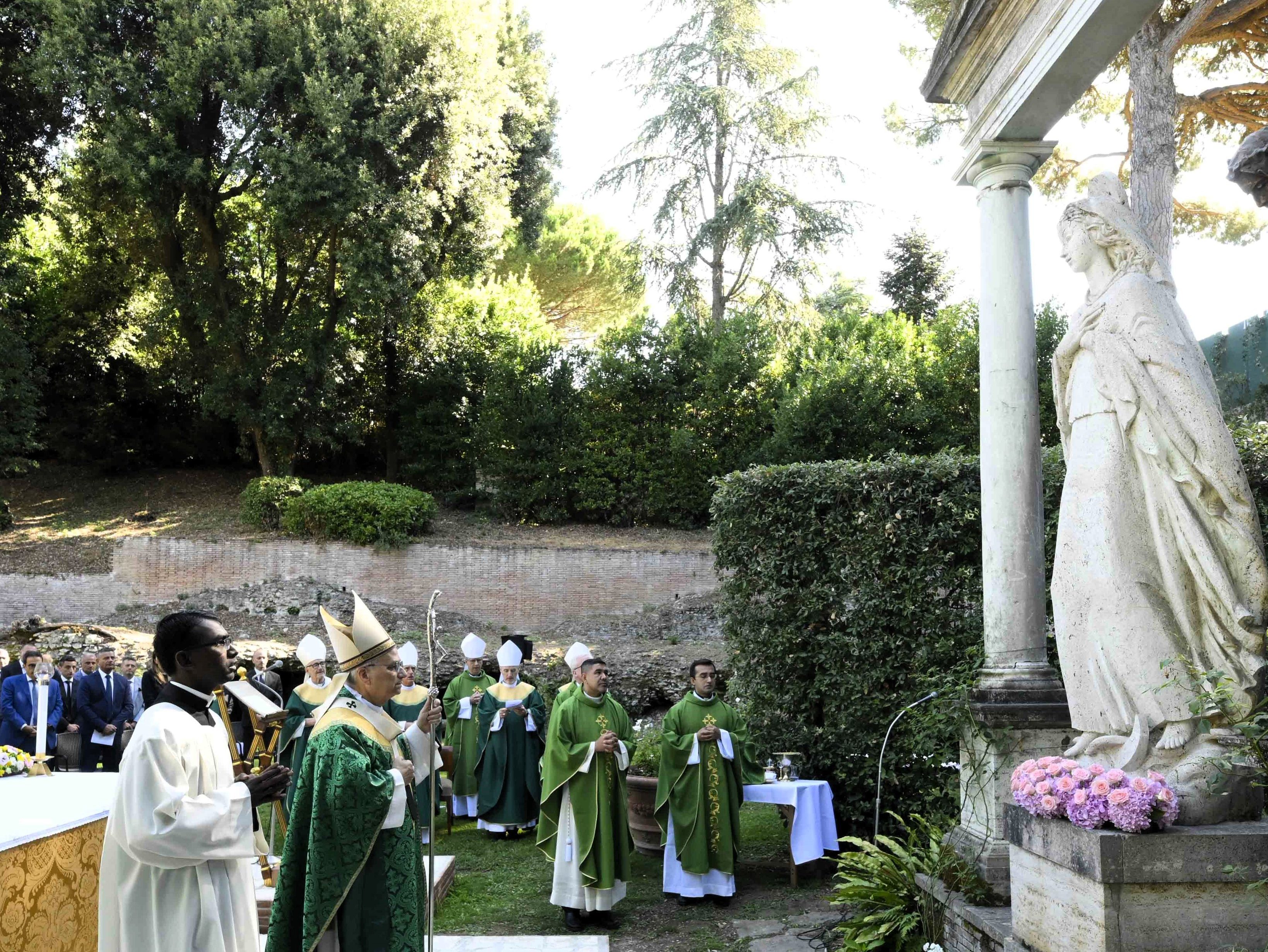
Is the statue behind the altar Our Lady? It’s certainly possible and at least she is dressed more modestly than Papa Bergoglio’s false Mary, undoer of knots. But in the current context, I’d like to explore another possibility: that this female figure represents a pagan goddess: Pachamama or perhaps Isis.
The Hebrew word for ‘grove’ is ‘Asherah’ which can also mean a sacred tree or wooden pole or totem which was worshipped as an idol. The name ‘Asherah’ (or ‘Ašratu’ in Akkadian), can also denote the pagan goddess of groves who was worshipped by the Phoenicians, the Akkaddians, the Hittites, and the Canaanites. Ashrerah was considered to be the ‘Queen of Heaven’ and is sometimes identified with the ‘Divine Feminine’.
The Queen of Heaven archetype appears often in pagan belief systems. For example, in Egyptian mythology the Queen of Heaven was Isis, the sister-wife of Osiris, sometimes known as the ‘World Virgin’. Isis is the personification of Nature and like other types of this goddess is associated with fertility.
As a mother-goddess who was and is blasphemously believed by some to be the consort of God, Asherah can be equated with the Pachamama of South America. Pachamama, as we know, is identified with Mother Earth and with the Divine Feminine. A common offering to Pachamama is the gift of flowers, especially yellow ones, and these can be seen on the altar at the Pope’s Mass of Creation – in violation of the GIRM (General Instruction on the Roman Missal).

Asherah/Isis was goddess of motherhood, and wisdom and as such may also be identified with ‘Sophia’ – the personification of wisdom. In Gnosticism, Sophia plays a fundament role, as she is an aspect of god and an agent of chaos and confusion which can only be countered by the ‘gnosis’ of ‘Jesus Christ’ which humans require to escape the physical world and return to the spiritual one.
To see a statue of a woman placed prominently behind the altar during the outdoor Mass of Creation, hands crossed over her chest in the gesture of Osiris and surmounted by a triangle (an important occult/Masonic symbol ) makes one wonder if this is not meant to represent Our Lady, but rather the anti-Mary World Virgin who is known as Ashrerah, Isis, Sophia or Pachamama.
The placement of the figure of Isis/Pachamama between two pillars provides further material for discussion as this is a specific arrangement in the occult with its own meaning:
The World Virgin is sometimes shown standing between two great pillars–the Jachin and Boaz of Freemasonry–symbolizing the fact that Nature attains productivity by means of polarity. As wisdom personified, Isis stands between the pillars of opposites, demonstrating that understanding is always found at the point of equilibrium and that truth is often crucified between the two thieves of apparent contradiction.
Manly P. Hall, The Secret Teachings of all Ages
Another interpretation of the setting of a female icon of Wisdom between two pillars comes from the Tarot. In this system, the woman is associated with the mythical ‘Pope Joan’ – a false female Pope! Surely, that’s not the message being conveyed here!?!
As has been repeated often among these pages, the Great Work of the occultist is to access gnosis in order to reconcile opposing forces. The placement of the female goddess figure between the two pillars echoes that principle. It is repeated in the elegant reflective pool which appears in front of the altar, a perfect embodiment of the principle of ‘as above, so below‘.

For the occasion of the Mass of Creation, Pope Leo wore a pectoral cross decorated with an image of the Good Shepherd. While this appears at first to be the same cross was worn by the infamous Cardinal Bernadin (see article here) on closer inspection, this doesn’t seem to be the case. A separate article studies these crosses and may be found here.

Despite any differences in the crosses, it’s worth noting for our purposes that in the original version of this cross – the one worn by Cardinal Bernadin and Pope Francis – the ‘Good Shepherd’ was modelled on the Egyptian god, Osiris and that as mentioned above, the wife of Osiris was the goddess, Isis.
Rather than merely hijacking the Holy Sacrifice of the Mass to promote the prevailing, disordered, emphasis on the environment, there were enough red flags here to indicate an occult ritual took place under the guise of, or in conjunction with, the liturgy.
Although we may never know the truth, it is educational to decode the hierarchy’s clues which were hiding in plain site in what at first appears to be a tranquil and thoroughly Catholic scene.
To see Mass offered outdoors in a lush grove, near twin pillars that are surmounted by a triangle, close to a reflective pool with all being overseen by the divine feminine should fill us with horror, rather than delight. It is yet another sign of the new papacy’s agenda: to present Modernism with a smile and to lure Catholics into nature worship using the tantalising bait of aesthetics.
An associate of Father Isaac Mary Relyea, made an interesting point on their Youtube channel : he said the name, Mass for the “Care of Creation” immediately reminded him of the “Cremation of Care” ritual performed at Bohemian Grove. Hmmm. Another ritual in an infamous grove. That certainly is food for thought.
This article has been updated.
SOURCES: This site (non-Catholic); Sophia (Wikimedia); The Secret Teachings of All Ages by Manly P. Hall. (affiliate link.)
Choose an amount
Your contribution is greatly appreciated.
Your contribution is appreciated.
DonateDonate monthly
In my recent article about Cardinal Bernadin, I referenced a pectoral cross he often wore which showed his allegiance to the occult and to other nefarious characters in the hierarchy. That article cited information from Rosicrucians which explained that their esoteric version of the ‘Good Shepherd’ was indicated by arms crossed over the chest.
Cardinal Fernandez and Pope Francis have also worn this same cross: in Bergoglio’s case, he wore it first as Archbishop and Cardinal of Argentina.
Crossed arms are also found in Masonry and in its offshoot, the OTO (Ordo Templi Orientis), and were inspired by the Egyptian god, Osiris.
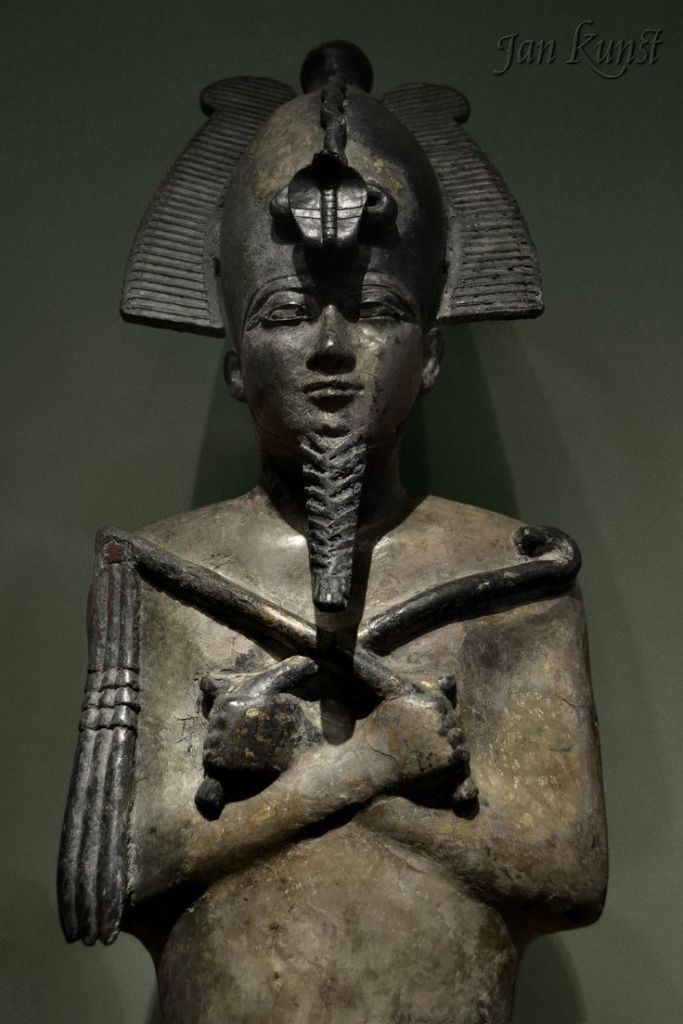


As an aside, celebrities seem to be as fond of being photographed making this gesture as they are of making the Illuminati ‘one-eye’ sign and devils’ horns.


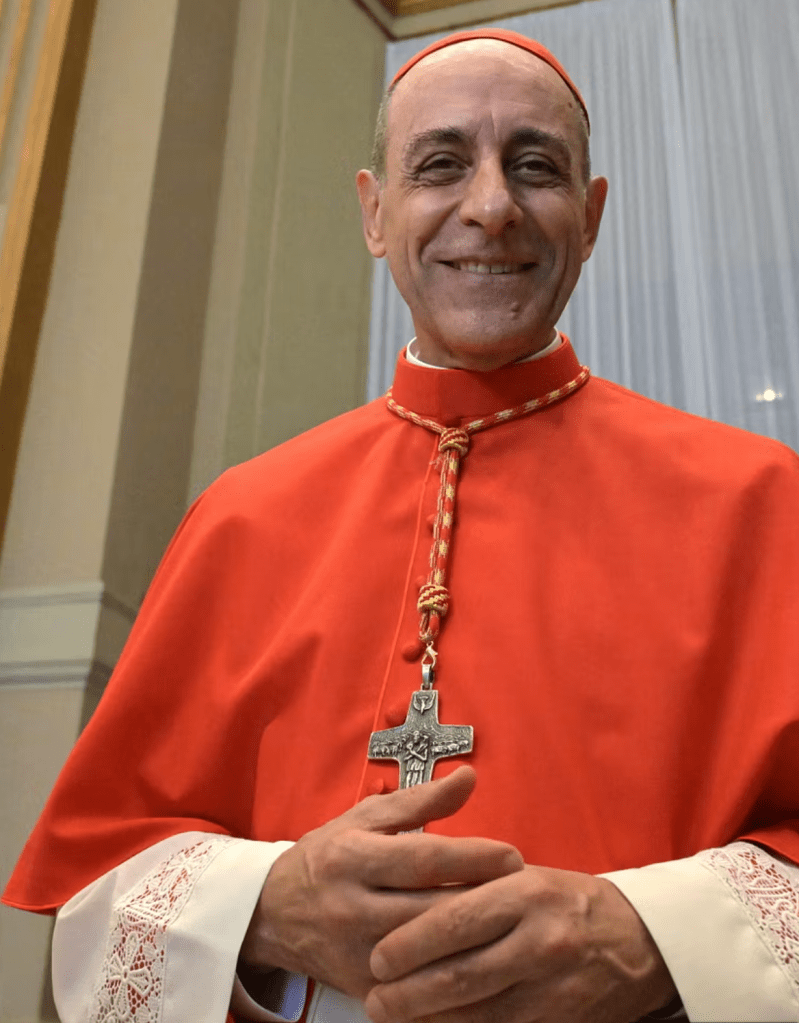


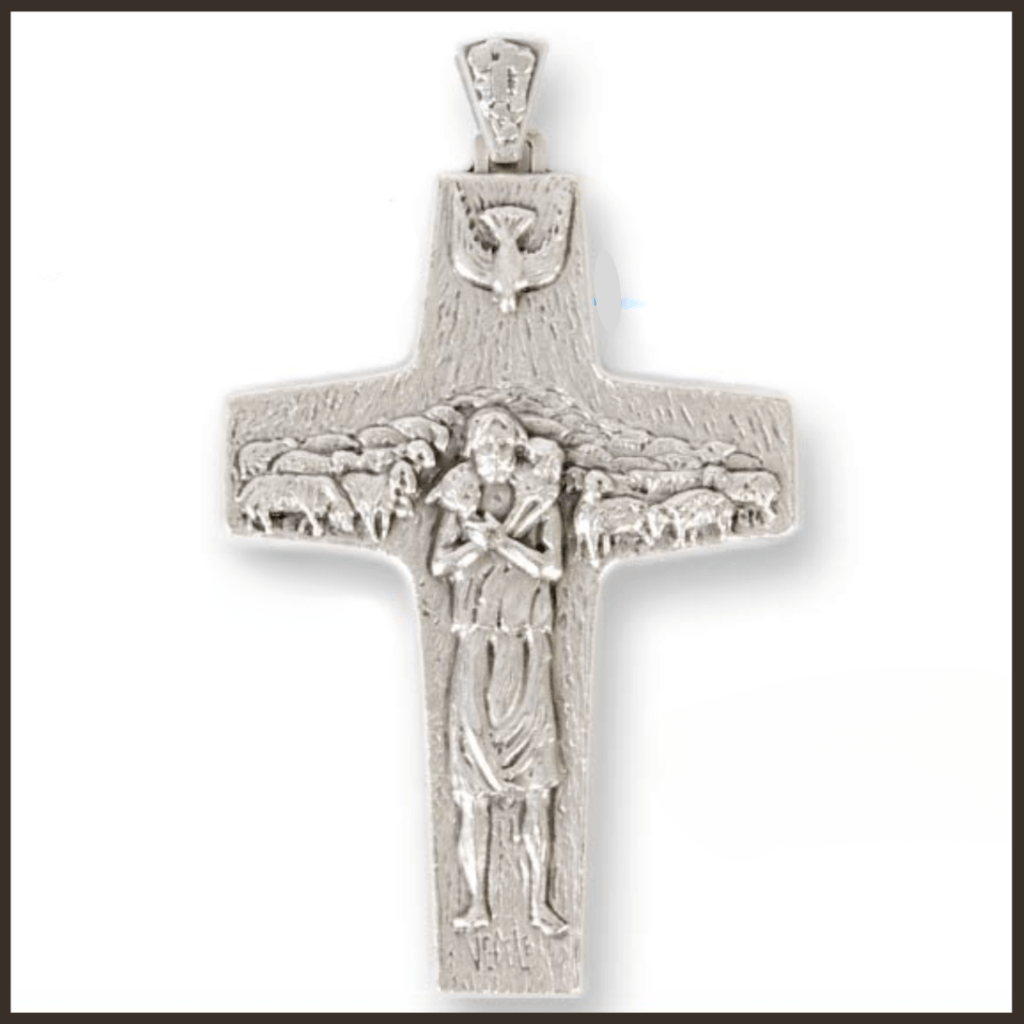
Pope Leo, as Robert Prevost, was apparently apparently photographed wearing the occult-version. I say ‘apparently’, because the photograph on the left is so outrageous that I had waited to see solid proof that it was not photoshopped. That is, proof was wanting until the photograph on the right was sent to me. It came from a Spanish website called Religion the Free Voice and shows Prevost againt wearing the occult-inspired pectoral cross.

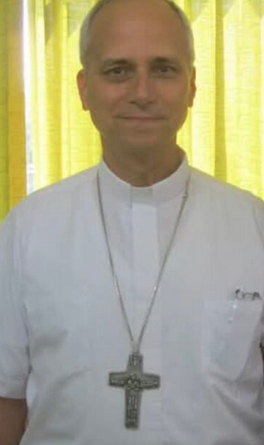
Here is a picture of Pope Leo XIV, taken on the day of his ‘Mass for Creation’. As can be seen, he is wearing a pectoral cross bearing an image of the Good shepherd.
However, there is something very significant about his cross. As the closeups show, this doesn’t appear to be identical with similar crosses worn by Pope Francis, or Cardinals Bernadin and Fernandez: it has been changed slightly.
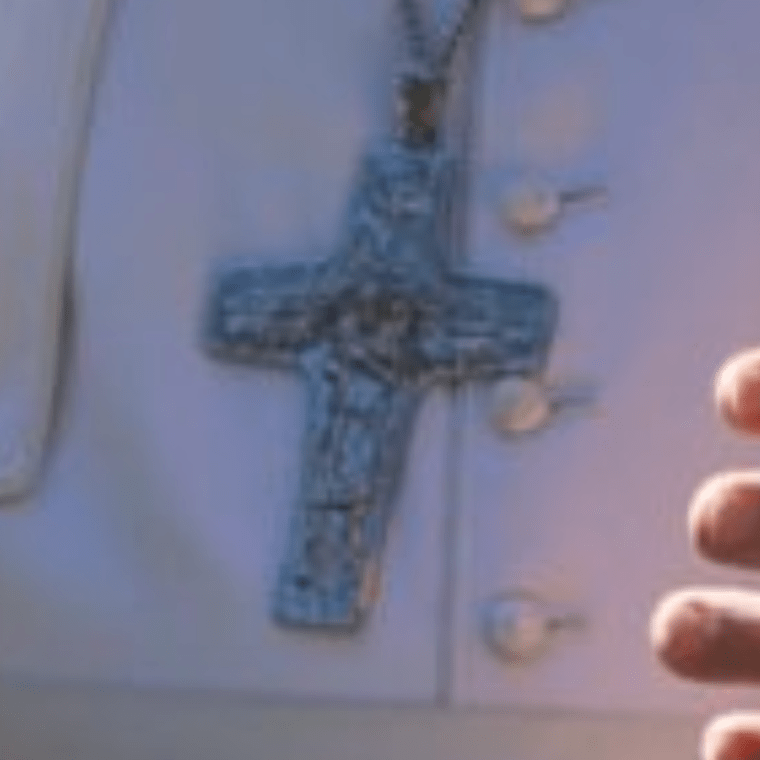


What say you, friends? Is this the same cross? In all truth, it appears not to be. The shepherd appears to have only one arm crossed over his breast – his left arm – and his body is a little shorter than in the Bergoglio/Bernadin version. The robe is raised slightly on the right-hand-side (the shepherd’s left) as if he is walking. The Holy Ghost dove is in the same position but the vertical lines/ridges in the background have been removed, or are at least not so prominent. In contrast to the other cross, the shepherd’s head seems to be oriented downwards and slightly towards his right.
What does is all mean? Is Leo playing the players? Has he tapped in to the graces of his new state as Pontiff of the Holy Catholic Church? While I’d like to think this is the case, here is a different theory (as presented to me by my son.) If this ‘Good Shepherd’ is inspired by a god of Ancient Egypt, we must cast our minds back to that period.
We know that at times, ancient Egypt was governed by Pharaohs who demanded that they be worshipped as gods, but this wasn’t always the case. There was a time known as the First Intermediate Period during which the Pharaohs ruled in a more ‘synodal’ style. They shared power with the nomes, who were the rulers of a series of city-states called nomarchs. Most notably, this time came after the more authoritarian period of the Old Kingdom – and was later followed by another time of absolute rule by the Pharaohs.
Is it possible that the updated version of the pectoral cross indicates that the authoritarian rule of Bergoglio has given way to Leo’s ‘synodal’ path of cheerfully allowing bishops to implement whatever degree of orthodoxy or error they desire in their own dioceses? (For that is precisely what synodality entails.) Is this cross the symbol of the next phase of the revolution?
No matter what is the meaning of this strange development, please, PLEASE, dear Catholics, choose a simple daily penance to offer to Our Lady that this Pope will consecrate Russia to Her Immaculate Heart and end the confusion which reigns around us. As I’m fond of saying: he doesn’t have to believe, he just has to do it!
Virgo potens, ora pro nobis!
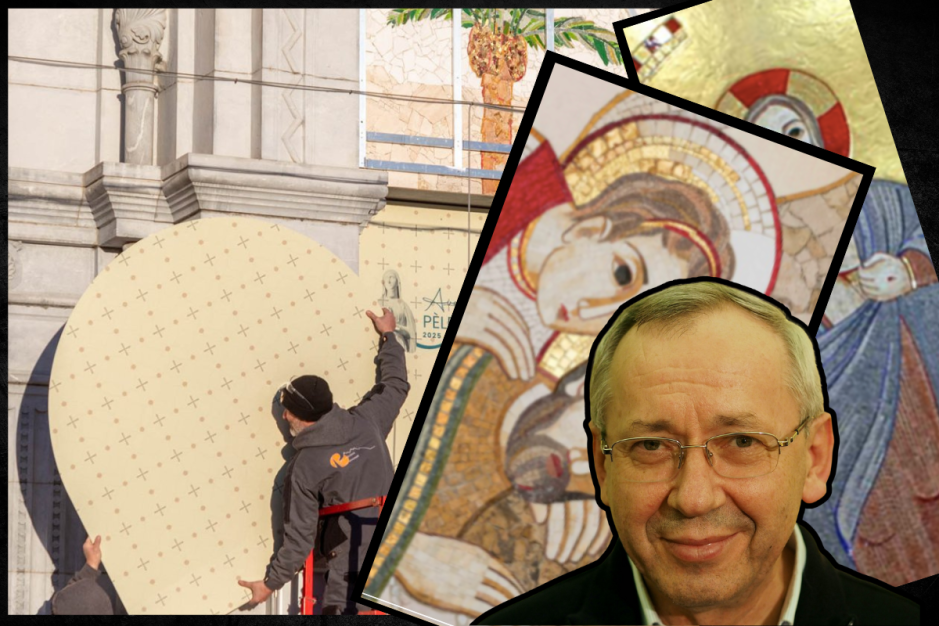
Some good news, finally, from the Vatican on the Rupnik case: it was announced that the notorious abuser of 30 nuns and occult-artist will soon be subject to an independent investigation.
Cardinal Fernandez, unusually this time the bearer of good news, reported that the panel “is made up of judges who are all independent and external to our dicastery” in order “to dissolve the idea that the Dicastery for the Doctrine of the Faith or the Holy See had any interest or were subject to pressure. People were chosen who would not give rise to any suspicion.”
It is certainly to be hoped that the individuals comprising the panel and will actually be independent and not secret minions of Rupnik’s – a man whose reach seems to be enormous.
Rupnik’s victims are pleased at the move, and their lawyer said “will certainly cooperate fully in reconstructing the facts and seeking the truth. We hope that this case will be concluded as soon as possible and that it will finally bring comfort to the victims.”
The news outlet responsible for bringing so much of the details of the Rupnik case to out attention is Silere non possum. This group interviewed victims and traced many appointments in the Dicastery for Communications back to the influence of Rupnik. This explains why Rupnik’s disturbing artwork continued to be promoted by the Vatican for years after his abuse was made public.
For reference, a timeline is given below to show how long the Vatican has known that Rupnik is an abuser and blaphemer: the first credible accusations were brought to the Jesuit’s attention back in 1995.
 Ecclesiastical Freemasonry