Open Letter to Australia’s Catholic Bishops regarding Freemasonry

Is something finally going to be done about this disgraceful state of affairs? Well, we won’t be holding our breath.

From the remnant newspaper

In a document dated 13 November 2023, the Dicastery for the Doctrine of the Faith has reaffirmed the incompatibility between Catholicism and Freemasonry and has reiterated the Church’s centuries-old prohibition on Catholics being members of Freemasonry.

Responding to a request for pastoral direction from the Most Rev. Julito Cortes, Bishop of Dumaguete, (Philippines) who expressed concern about the increasing numbers of his Catholic flock who were enrolled in Freemasonry, Cardinal Víctor Manuel Fernández, Prefect of the Dicastery for the Doctrine of the Faith, issued a “Note for the Audience With the Holy Father Regarding the Best Pastoral Approach to Membership in Freemasonry by the Catholic Faithful”1. The document was countersigned by Pope Francis. In addition to providing practical suggestions and pastoral guidelines, the document states that:

“ … active membership in Freemasonry by a member of the faithful is forbidden because of the irreconcilability between Catholic doctrine and Freemasonry (cf. Congregation for the Doctrine of the Faith, “Declaration on Masonic Associations” [1983], and the guidelines published by the Catholic Bishops Conference of the Philippines in 2003). Therefore, those who are formally and knowingly enrolled in Masonic Lodges and have embraced Masonic principles fall under the provisions in the above-mentioned Declaration. These measures also apply to any clericsenrolled in Freemasonry.”

The 1983 “Declaration on Masonic Associations” states:

“Therefore the Church’s negative judgment in regard to Masonic association remains unchanged since their principles have always been considered irreconcilable with the doctrine of the Church and therefore membership in them remains forbidden. The faithful who enrol in Masonic associations are in a state of grave sin and may not receive Holy Communion.”

Given this recent confirmation by the Apostolic See of the Church’s perennial ban on Catholic membership in Freemasonry, we feel it is an opportune moment to remind Your Excellencies of the ongoing deep concern among many Australian Catholics that was first sparked over six years ago by a letter of 11 July 2017 written by the then General Secretary of the Australian Catholic Bishops’ Conference, the Rev Stephen Hackett [see letter].

Fr. Hackett’s response to the Grand Master, written on behalf of the ACBC, clearly leaves the door open to sacramental reception by Australian Catholic Freemasons in many or most cases, even though that door had been totally and firmly closed – and remains closed – by the Church’s perennial doctrine and discipline.

Fr. Hackett was replying to a letter sent a year earlier to the ACBC by Mr Stephen Michalak, a Catholic who was then Grand Master of Freemasonry for South Australia and the Northern Territory. In this letter, which he said was written with the unanimous support of all Masonic Grand Masters in Australia, Mr. Michalak not only asked the Australian bishops to “outline a pathway for Catholics who are Freemasons to full participation in the sacramental life of the Church,” but appealed to the present Holy Father’s pastoral approach in support of this request. To deny Catholic Masons access to the sacraments, said the Grand Master, “seems totally at variance to my understanding of what Pope Francis is actively trying to promote – a spirit of understanding and reconciliation . . . love and forgiveness”.

Rome’s recent reiteration of the Church’s absolute prohibition of membership in Freemasonry shows how completely Grand Master Michalak misunderstood the Holy Father’s thinking on this matter. But it seems possible that Fr. Hackett, along with the members of the Bishops’ Commissions on Canon Law and Doctrine and Morals whom he says he consulted, and not a few others among Your Excellencies, may have shared that misunderstanding. For Fr. Hackett’s response to the Grand Master, written on behalf of the ACBC, clearly leaves the door open to sacramental reception by Australian Catholic Freemasons in many or most cases, even though that door had been totally and firmly closed – and remains closed – by the Church’s perennial doctrine and discipline. Fr. Hackett’s response is particularly shocking to many of the faithful in this country, given that it claims merely to “reiterate” an Australian episcopal policy dating right back to 1984 that has been “affirmed this year” (i.e., some time between January and July 2017). As if to drive the point home, Fr. Hackett ends his letter to the representative of Australian Freemasonry by stating that this essentially affirmative response to his request is “the preferred approach of the Bishops [sic] Conference”.

So what, precisely, does this “preferred approach” consist in? Fr. Hackett assures Mr. Michalak that “no penalty attaches to Catholic membership in the Masonic order”. This is technically correct, given that in the 1983 Code of Canon Law the previous Code’s canonical penalty of excommunication for Masonic membership was deleted and replaced by a more general penal sanction against those who join any society that “plots against the Church” (cf. c. 1374). But since Fr. Hackett did not insert the word “canonical” before “penalty”, and since most lay Catholic readers would certainly regard their exclusion from the sacraments as a “penalty”, his statement is wide open to creating the false and scandalous impression that the Church no longer excludes Freemasons from the sacraments in any way.

The second point Fr. Hackett ignores in his letter is the CDF’s insistence that local ecclesiastical authorities have no authority to mitigate or derogate from the Church’s total exclusion of Catholic Freemasons from the sacraments in places where (as in Australia, apparently) they may discern a benign, rather than hostile, attitude towards the Church in local Masonic lodges.

It is true that Fr. Hackett nuances this seemingly permissive generalization by acknowledging that “in some other countries, . . . Freemasonry can be antithetical to Catholic faith” (in which case, presumably, membership would fall foul of canon 1374). So because of such regional or local divergences within Freemasonry, says Fr. Hackett, the Australian bishops have “prudently” decided not to issue any general directive on “Catholic involvement in Freemasonry”. Rather, he says, “such involvement is in each instance best addressed personally with the local parish priest”. Nevertheless, Fr. Hackett, claiming to express the official position of the ACBC, makes it abundantly clear that admission to the sacraments is to be the norm for Australian Catholic Freemasons, and exclusion from them the exception. For he tells the Grand Master that “where a local pastoral response is not consistent with this expectation [i.e., the expectation of admission to the sacraments as a general rule following the Church’s elimination of any “penalty” for Masonic membership] and liturgical-sacramental participation is made difficult or refused, that this might be referred to the local vicar-general or to me”.

In all this, however, Fr. Hackett’s letter ignores what seem to us two fundamentally important points. The first is that even when Freemasons do not “plot against the Church”, and so don’t incur the canonical penalty laid down in c. 1374, Masonic membership as such is still affirmed by the Church to be a grave sin that excludes from Holy Communion. Why? Because of “the irreconcilability between Catholic doctrine and Freemasonry”. Masonic communities do indeed allow members to profess and practice the religion of their choice, Christian or non-Christian; but only as one human tradition among others. Freemasonry’s relativistic, deistic and anti-supernatural ideology rejects the Catholic Church’s claim to possess uniquely the fullness of divine revelation. Moreover, Freemasonry has its own syncretistic religious rituals (which it tries to keep a closely guarded secret), and participation in prohibited rites such as these remains penalized in the current Code of Canon Law. In the section “Offences Against Religion and the Unity of the Church”, we read, “One who is guilty of participation in prohibited religious rites is to be punished with a just penalty” (c. 1365).

The second point Fr. Hackett ignores in his letter is the CDF’s insistence that local ecclesiastical authorities have no authority to mitigate or derogate from the Church’s total exclusion of Catholic Freemasons from the sacraments in places where (as in Australia, apparently) they may discern a benign, rather than hostile, attitude towards the Church in local Masonic lodges. Indeed, Fr. Hackett’s message to this country’s Catholic Masons that the ACBC has in general opened the door to their liturgical and sacramental participation, and that exceptional or problematical cases may be referred to “the local parish priest”, the “local vicar general”, or Fr. Hackett himself, stands in open defiance of the 1983 Vatican ruling. For the Declaration ends with the following affirmation:

“It is not within the competence of local ecclesiastical authorities to give a judgment on the nature of Masonic associations which would imply a derogation from what has been decided above, and this in line with the Declaration of this Sacred Congregation issued on 17 February 1981. (cf. AAS 73 1981 pp. 240-241.)”

We present them with a view to mitigating the scandal experienced in this matter by the faithful, as well as by members of Freemasonry, whose immortal souls may have been put in jeopardy by rash assurances that such membership is not sinful and is compatible with the reception of the Eucharist.

In view of the above, we respectfully request a new clarification from Your Excellencies regarding Catholic involvement in Freemasonry that includes a formal repudiation of Fr. Hackett’s erroneous position. More specifically:

1. We ask that the Australian Catholic Bishops Conference formally state its commitment to upholding the 1983 Declaration from the Congregation for the Doctrine of the Faith and the November 2023 Note from the Dicastery for the Doctrine of the Faith. Both of these are in continuity with the Church’s longheld judgment when they affirm, “The principles [of Freemasonry] have always been considered irreconcilable with the doctrine of the Church and therefore membership in them remains forbidden. The faithful who enrol in Masonic associations are in a state of grave sin and may not receive Holy Communion.”

2. We ask that the Bishops’ Commission for Canon Law and the Bishops’ Commission for Faith and Morals, both explicitly mentioned by Fr Hackett as having been consulted prior to the release of his letter, clarify for those unfamiliar with canon law that the statement “no penalty attaches to Catholic membership in the Masonic order” refers only to the absence of an ecclesiastically imposed canonical punishment such as excommunication or interdict, and in no way implies that such membership is morally acceptable.

3. We ask that, in a manner similar to that which has now been recommended to the Filipino Bishops by the DDF, the Australian Bishops “conduct catechesis accessible to the people and in all parishes regarding the reasons for the irreconcilability between the Catholic Faith and Freemasonry”.

4. We ask that the results of any investigation into the preparation and publishing of Fr. Stephen Hackett’s 2017 letter be made public. For that letter, written on behalf of the ACBC, directly contradicts the well-known doctrine and discipline of the Catholic Church towards Freemasonry that had been declared in 1983 by the CDF under Pope St. John Paul II and has now been reaffirmed by the DDF under Pope Francis.

These requests to Your Excellencies are being respectfully made in the spirit of canon 212, sections 2 and 3, which recognize the right of Christ’s faithful to make known to the Pastors of the Church their spiritual needs and their views on matters which concern the good of the Church. We present them with a view to mitigating the scandal experienced in this matter by the faithful, as well as by members of Freemasonry, whose immortal souls may have been put in jeopardy by rash assurances that such membership is not sinful and is compatible with the reception of the Eucharist.

Be assured of our prayers for Your Excellencies as we thank you for your gracious attention to this submission ….
Grand Master Bisi’s speech at the Catholic-Freemason seminar.

From the grand orient of italy website

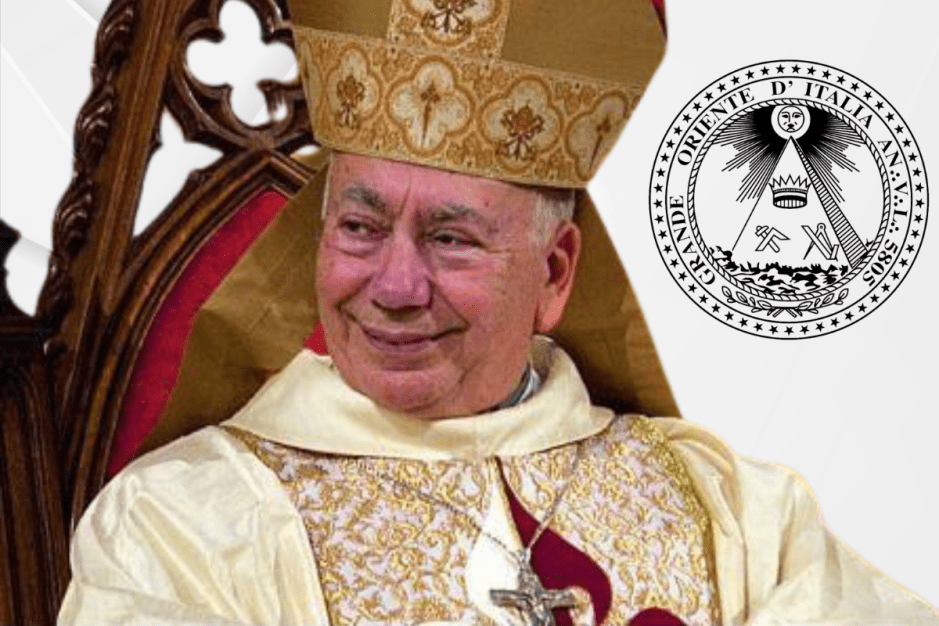
“Let’s start from the things that unite us. This morning three workers died on a construction site in Florence. May this fact unite us in mourning, in the respectful thoughts of three men who leave behind families. I think that strong thoughts should be addressed to the victims and their families.” This is how Grand Master Stefano Bisi began by speaking at the seminar on Church and Freemasonry, wanted by the Catholic association Gris, represented by the national secretary Giuseppe Ferrari, and organized in Milan at the Ambrosianum Foundation with the endorsement of the archbishop of the city Monsignor Mario Delpini, who spoke at the event which was attended among others by Cardinal Francesco Coccopalmerio, former president of the Pontifical Council for Legislative Texts, the president of the Pontifical Academy of Theology Monsignor Antonio Staglianò and Grand Master Bisi, who has always hopes for a thaw in mutual relations, has been the bearer of numerous initiatives to this end and whose dream is, as he revealed in an interview, to walk together with the Pope under the sky of the Great Architect of the Universe.

Below is the speech that the Grand Master gave during the meeting

I would like to thank the Group for socio-religious research and information for this invitation to a meeting which I consider very significant. It is not the first time since I have been Grand Master of the Grand Orient of Italy of Palazzo Giustiniani that I have discussed the complex topic of relations between the Church and Freemasonry. I did it in Turin, Pescara, Arezzo, Matera, Gubbio and I talked about it several times around Italy and before that. I confess to you that the first table I sculpted in my long 41 and a half years of belonging to the Grand Orient of Italy was precisely on this topic. Maybe it was a joke from my older brothers who wanted to better understand why, this young man, I, saw him enter a church for a few minutes which is located along the main street of Siena, along the struscio. The truth is that I wanted to spend a few moments in meditation, away from the noise, the noise of words and chatter. Maybe they wanted to understand why, I, who went to nursery school thanks to a country priest; that I went to middle school thanks to a priest who wanted to help the children of workers, blacksmiths, truck drivers; that I made the first printed newspaper thanks to the parish priest of the neighborhood; my older brothers perhaps wanted to investigate the reason for my choice to seek admission to Freemasonry.

So I’ve been passionate about the topic for a long time. I would like the prelate, the man of the Church in front of me, not to be afraid of me and I would like not to be afraid of him. And I’m pleased to be here today because it means that progress has been made along the path of knowledge and respect. And I hope that the participants in this seminar do not end up in the media pillory as happened to two bishops, from Arezzo and Terni, who participated in public initiatives of the Grand Orient of Italy. Over the course of its more than 300 years of life, no institution has been opposed, fought, mystified, slandered and feared as much as Universal Freemasonry. From the Catholic Church which saw Freemasonry as a potential competitor in the spiritualisation and elevation of Man, to dictators of all colours, up to certain populist political forms which fear the inexhaustible and libertarian strength of its profound human and social charge.

A long history that starts from 1738 and, with ups and downs, between pseudo tolerances and small glimmers of hope, has in fact continued until today without ever resulting in a desirable and true opportunity to change the course of History by opening the doors of constructive dialogue and putting an end to that excommunication which – although attenuated by the modification of article 1374 of the Canon Code with the disappearance of the precise reference to Freemasonry – still hangs over millions of free masons scattered around the globe, many of whom are wondering how to overcome that presumed and substantial dogma of irreconcilability which would preclude any rapprochement between the two realities.

The Church and Freemasonry both place Man at the center of everything, albeit with different bases. For us we must work internally to sublimate his being and strengthen him “in virtue and against vice” to elevate him in that fraternal love aimed at the Good of Humanity and the Glory of the Great Architect of the Universe. The Freemason, who lives in doubt and polishes his own stone, tends towards Good and divine Love by following the steep Path of Knowledge in the constant search for the Truth. By nature and mindset I do not subscribe to the circle of doctors and lovers of irreconcilability, a word that I don’t like and which has never produced bridges on which to unite but has divided men.

I believe, but I use this term only secularly, instead of never thinking that something is impossible to achieve. And, for this reason, in 2016 I greatly appreciated the writing of Cardinal Gianfranco Ravasi, to whom I sent a letter after the publication of his article entitled “Dear Freemasons” in the newspaper “Il Sole24Ore”. On that occasion I too hoped for the path of dialogue and discussion starting from the things that in some way unite the two institutions. Here is what I wrote: “As the president of the Pontifical Council for Culture wisely recalled, citing the document of the German bishops of 1983, the points of contact between Freemasonry and the Church cannot be ignored, which find common values ​​in the community dimension, in human dignity, in fight against materialism, in charity. In this we can have an open and free discussion, maintaining the differences but reducing the distances that the Philippine bishops instead articulate in their document”. But what matters is perhaps starting from a limited reconcilability and discussing it instead of still professing an absolute, intransigent and dogmatic irreconcilability. Who has the Truth? Man or just God? Cardinal Ravasi himself wrote a few years ago: “The Truth is only one but like the diamond has many faces, we can, from our angle of vision, see only one of these faces”. Those who think they see everything and hold the only Truth are therefore deluding themselves. This is why Freemasons with humility and many doubts perpetually seek it, leaving dogmas to others. But always looking for dialogue and discussion with anyone. At that time there was certainly no shortage of criticism of the cardinal and there was no further development of dialogue. And two bishops present at our initiatives at the invitation did not fail to be the target of heavy attacks. In 2019 the then archbishop of Arezzo-Cortona-Sansepolcro Riccardo Fontana went to one of our conferences for the 150 years of the Benedetto Cairoli lodge organized by the Grand Orient of Italy and in the provincial council room he said: “The historical fences remain but we must look forward, to what unites” and subsequently received the reproach and dismay of circles close to the Episcopal Conference, wrote a newspaper. In October 2022 the bishop of Terni Monsignor Francesco Antonio Soddu took part in the inauguration of the Masonic house showing courage and desire for dialogue. They told him all kinds of things. Yet already in the 1960s, during the pontificate of Paul VI, contacts began between a group of priests, such as Rosario Esposito and Giovanni Caprile and the bishop of Livorno Ablondi and the leaders of the Grand Orient of Italy, to understand each other. Numerous meetings followed but then the death of Paul VI stopped the dialogue.

And let’s go to current times. Both during the pontificate of Pope Benedict XVI and that of Pope Bergoglio there was no significant attempt at openness. The then Cardinal Ratzinger, in the role of prefect of the Congregation for the Doctrine of the Faith, intervened with a “Declaration” on 26 November 1983 – approved by Pope Wojtyla – in which he maintained that “the negative judgment of the Church remains (…) unchanged with regards to Masonic associations, since their principles have always been considered irreconcilable with the doctrine of the Church and therefore membership in them remains prohibited”.

The text did not speak of excommunication but added that the faithful registered in the lodges “are in a state of grave sin and cannot access Holy Communion”. Pope Francis made the famous statement “who am I to judge?” at the beginning of his pontificate aimed at homosexuals, he then opened the doors to divorced people but he forgot that among the Freemasons there are also many Catholics who are prevented from receiving communion and when it came to granting credentials to a Freemason ambassador said “no”.

Finally, the last act took place last November with the document made known by the Dicastery of the Doctrine of the Faith signed by Prefect Victor Hernandez with the approval of the pontiff. Catholics remain prohibited from joining Freemasonry. A solution to the problem of reconcilability between the Catholic faith and membership of Freemasonry appears not to be close, through no fault of ours, but in the meantime let’s talk about it. Just like we do today. Let’s start again from what Father Josè Ferrer Benimeli and Father Giovanni Caprile stated: desiring, encouraging, attempting, conducting dialogue prudently “does not mean betraying the Catholic faith, nor opening the doors to presumed enemies, nor giving in to irrefutable ideas. It involves only the patient search for common points of understanding, the desire to exchange the real goods possessed by each, the tension so that the truth (without any possessive adjective) has the upper hand, the search for union for the good of all”.

Freemasonry is a great tree of Freedom that sways in the wind but does not break and continues to work for the good of Humanity by creating better men, available to listen and which makes Tolerance a principle that everyone should practice with great love. This is why we speak today – in broad daylight and without preconceived plans – in the various meetings organized in every part of Italy with exponents of all religions and we strive to find syntheses that can help people overcome prejudices, conflicts, wars, fanaticism and selfishness which are the evil of a Society. Why is the Masonic lodge beautiful and why does the ecclesiastical authorities not like it? Because under the same sky – which represents Creation – every man is the brother of the other, the bond of brotherhood is independent of faith. We just need to believe in the Great Architect of the Universe. The starry sky is the same for the Buddhist, for the Catholic, for the Waldensian, for the Islamic, for all those who believe in a supreme being. For all those who have the awareness that we are a point within something greater which is the universe, which we can call god. And as Vito Mancuso says, “by saying God I mean a reality perceived as bigger and more important than one’s own self. This something more important can be called in many ways, but the essential point is that, by perceiving it, one lives for a different and higher value than oneself”, that is, “the real difference is not between those who believe and those who do not believe, but between those who surpass themselves and those who don’t. Between those who know a god, and those who only know their own self.” In short, look beyond. Towards the sky or infinity, which are the same thing.

We leave our brothers free to adhere to any religion and practice it. Absolute truths and the walls of the mind do not belong to us and must be torn down for us. As for the feared danger for the Church of exposing itself to a dangerous dialogue with the Freemasons because it is against the Faith, I add that I do not think in the slightest that this thesis can lead to such extremes consequences. Reconciliability, on the contrary, if well rooted and illuminated by reason, can only strengthen it. And give all men the opportunity to meet on bridges of light to travel together while respecting the different paths. Our doors are perpetually open. The world has changed, the breach of Porta Pia dates back to 1870 and, as Paul VI said, it is a date desired by Providence because it leaves the spiritual power to the church and the government of earthly things to the civil authority. In 2010 the then Secretary of State Cardinal Tarcisio Bertone went to the Breccia monument together with the President of the Republic Giorgio Napolitano. An important act. And it would be even more significant if tomorrow, February 17, the anniversary of the fire of Giordano Bruno, a man, dressed in white, walked a few hundred meters to gather in front of the Nolan monument. Maybe? I hope that the dialogue continues, I would like the compatibility between belonging to a Masonic lodge and belonging to the Catholic faith to be declared. I say this because the path in this direction is still long, and many brothers experience access to the sacraments in a clandestine way because they know that they are in a state of grave sin. From the canon code the word excommunication has been removed but the effects are the same.

We move forward with tolerance and trust. I want to quote a thought from Luciano De Crescenzo who says: doubt the men who have certainties, they are usually the most intolerant and anti-democratic, however when you encounter question marks, prefer those who have doubts, they are usually almost always people open to dialogue , tolerant.

Well, I prefer these people. And I would like to remember, among these people, Cardinal Carlo Maria Martini who was at home here. I still remember today a response from him in the Corriere della Sera to a reader who wrote to him: “I am an atheist but I see Beauty around me”. Martini replied: “I, a Catholic, and you, an atheist, are fundamentally united by the same wonder of Creation.” This message, which is also a universal response, still seems very beautiful to me today. My wish – which is also a hope – is that one day a Pope and a Grand Master will be able to meet and travel a part of the way together, in the light of the sun. It comes to me to say in the light of the Great Architect of the universe.

Historic Debate on Church-Masonry Relationship in Milan

from “il messagGero” by Franca Giansoldati

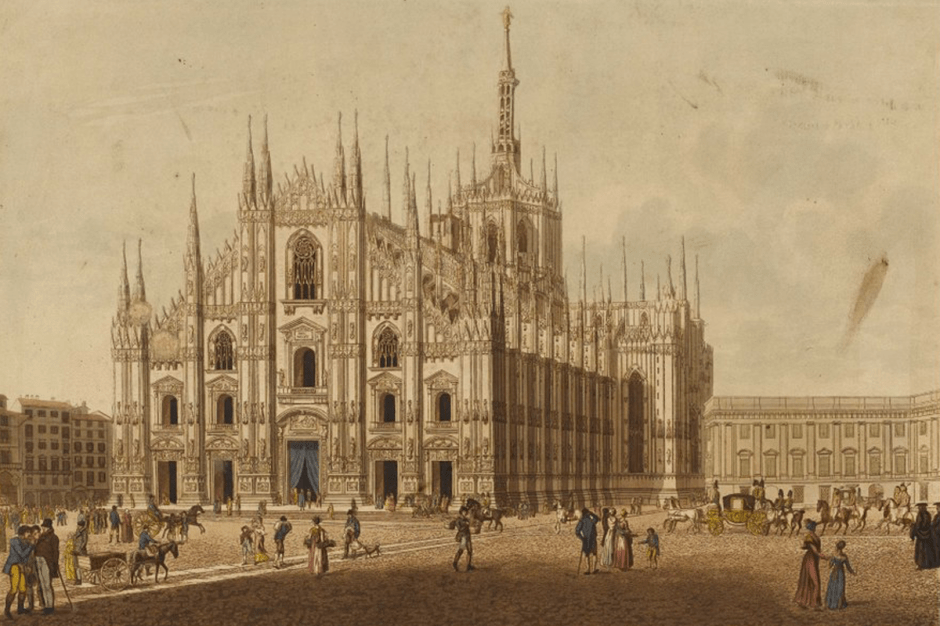
All eyes are on the Church-Masonry confrontation organized in the shadow of the Milan cathedral. The Milanese archbishop, Mario Delpini and the Grand Master of the Grand Orient, Stefano Bisi will be the protagonists of an open discussion on a controversial relationship that has been dragging on for centuries. Two months after the declaration on the absolute incompatibility for Catholics to be part of Masonic lodges («On a doctrinal level active membership is forbidden because of the irreconcilability of the doctrine») signed by Pope Francis at the foundation of the Ambrosianum, an event defined as “historic” by the Masons was organized. Alongside Monsignor Mario Delpini there will also be the president of the Pontifical Academy of Theology Monsignor Antonio Stagliano’ and Cardinal Francesco Coccopalmerio, former president of the Pontifical Council for Legislative Texts. On the website of the Grand Orient it is explained that they will openly discuss how the Church formulated the excommunication under the pontificate of Clement XII up to the present day. Bisi’s report is titled: “Freemasonry between Ratzinger and Bergoglio”.

The last Vatican condemnation dates back to last November. It was raised by a Filipino bishop Julito Cortes rather worried about the continuous increase of faithful enrolled in Freemasonry in his diocese and turned to Rome for guidance on how to deal with the phenomenon from a pastoral point of view. Over the centuries the pronouncements have been different and always with negative connotations. In total there are about six hundred: from the excommunication bull ‘In eminenti apostolatus specula’ (1738) of Clement XII to the important declaration of the Congregation for the Doctrine of the Faith of 1983, drawn up by the then Cardinal Ratzinger and approved by Saint John Paul II.

A declaration, the latter, which reaffirmed «the negative judgment of the Church towards Masonic associations, since their principles have always been considered irreconcilable with the doctrine and therefore membership in them remains prohibited». Pope Francis has also expressed himself several times in critical tones. Talking about the many saints who enriched social life in Turin in the nineteenth century, Bergoglio in 2015, during his Piedmontese trip, emphasized: «In this land – and this I also said to the Salesian Family – at the end of the nineteenth century there were the worst conditions for the growth of youth: there was full-blown Freemasonry, even the Church could do nothing, there were the priest-eaters, there were also the Satanists… It was one of the ugliest moments and places in the history of Italy. But if you want to do a nice homework, go and look for how many saints and how many saints were born at that time! Why? Because they realized that they had to go against the current compared to that culture, to that way of life».

Also in 2015, in Avvenire, a letter from the Grand Master, Bisi, was published, raising the reasons for the incompatibility between the Church and Freemasonry. The occasion to address such an uncomfortable topic was a conference organized by the Grand Orient of Italy in Syracuse at which the then bishop of Noto, Monsignor Antonio Staglianò, had spoken. Bisi explained to Avvenire that the Masons «do not have to convince anyone» but certainly the «Freemasonry will never and never endorse dogmas and fideistic axioms that are far from its centuries-old tradition».

To the letter responded the then director of the newspaper of the Cei, Marco Tarquinio who, while praising the dialogue, clarified that there were two opposing visions. “If the Masons were once excommunicated ipso facto by the Church, over time the judgment seems to have mitigated a bit. In November 1983 the Congregation for the Doctrine of the Faith published a declaration on Masonic lodges. The then prefect Joseph Ratzinger specified that membership constitutes objectively a serious sin and that members of a Masonic association cannot access Holy Communion. Hence the conviction that there is a fundamental incompatibility between the principles of Freemasonry and those of the Christian faith».

The controversies then continued with Monsignor Nunzio Galantino (at the time secretary of the Cei) who from the pages of Famiglia Cristiana had repeated that «everything that by individuals or groups attacks the common good for the benefit of a few cannot be accepted» and condemned those priests or those bishops who had joined the Free Masonry. Bisi’s immediate reply was: «Those of the general secretary of the Italian Episcopal Conference seemed to us very heavy and inappropriate words for a high representative of the Vatican who should have great familiarity in measuring the verb with wisdom, balance and extreme caution before accusing so glaringly and personally excommunicating Freemasonry».

Jesuit Freemasons during JPII’s pontificate

taken from “the jesuits” by malachi martin. something to remember: this is written from Fr Martin’s perspective, as he saw it in 1988. judging from his later books, it appears that he had a less-than-rosy appraisal of JPII’s effectiveness in geopolitical strategy.

” …. there were continual streams of complaints arriving at the papal office, all detailing the unorthodox opinions being taught by Jesuits in Europe and the United States. There were, in addition, revelations that certain circles of the international section of the Masonic Lodge in Europe and Latin America were actively organising opposition to the Pontiff in Poland, that Vatican prelates – some twenty in all – were formal members of the Italian lodge; and that once again Arrupe’s [Superior General of the Jesuits] Jesuits seemed involved with Lodge circles opposed to the Pontiff.

“Paul VI had already in 1965 warned Arrupe and the Delegates to the 31st Jesuit General Congregation of the dangers in belonging to the Compact; it began to appear to John Paul that the warning had not been too wide of the mark.” p 76

“And then, too, there was the strange case of Jesuit Father Caprile, who wrote in the official Jesuit magazine, Civilta Cattolica, published in Rome. At issue for Caprile was the Roman Catholic prohibition, under pain of excommunication, against Catholic membership in the lodge. Excommunication was a dead letter, Caprile wrote in his article, and lodge membership was open to any Catholic. That was a blatant undermining of the Pope’s own decisions about morality….The alliance between the Cardinal Secretary [Cardinal Agostino Casaroli] and Civilta Cattolica was a matter of record….”

Lefebvre thought Silvestrini was a Mason?

In an old interview, Archbishop Marcel Lefebvre, founder of the SSPX, said he thought then-Archbishop (and later Cardinal), Achille Silvestrini was a Freemason. The 1986 article can be found in the archives of the Society’s United States website. The pertinent question and answer are given below – the entire interview is quite enlightening.

Q. I have read that many of the high-ranking members of the Roman hierarchy are secret Masons. Is that true? If so, how deeply have they penetrated the Church?

A. It’s very difficult to say, “This man is a Freemason,” “This man is a Freemason,” or “This man is a Freemason.” We don’t know. It’s very difficult. It is certain that there are some cardinals, some bishops, cardinals in the Curia, or monsignors or secretaries of congregations in Rome that are Freemasons. That is certain because the Freemasons themselves have said that. They have said that they have in their lodge some priests and bishops. It is certain that there are some cardinals and many monsignors in Rome who do the same work as the Freemasons; they have the same thinking, the same mind. Willebrandt is Prefect of the Secretariat for the Unity of Christians, and Archbishop Silvestrini is the first secretary of Cardinal Casaroli who is Secretary of State – and his right hand is Silvestrini. He is a great power in the Curia. He nominates all the nuncios in the world. He has a very great influence and he is probably a Freemason.

According to Malachi Martin in Windswept House, Silvestrini was present at the infamous “Enthronement of Satan” ceremony in the Vatican, which took place sometime during the 1950’s – ’60’s. In the book, Silvestrini was known by the pseudonym, Silvio Aureatini.

Silvestrini, who died in 2019, was also known to be a member of the St Gallen Mafia, the nefarious group which conspired to promote Jorge Bergoglio at both the 2005 and 2013 conclaves.

Fraternity replaces Corpus Christi

Bergoglio’s Vatican treated Sunday’s feast of Corpus Christi as if it were an ‘optional memorial’, by replacing that solemn occasion with the first “World Meeting on Human Fraternity”. Freemasonic “fraternity” was the order of the day – along with dreadfully tiresome entertainment including gay dance moves. The sodomite dancer pictured below apparently also performed for JPII back in the day. (You know, the day before we were all citizen journalists and trusted that everything our popes did was in the best interests of the Church. Image courtesy of Michael Haynes )

There was yet another official signing of yet another universalist document: this one promoted “environmental” and “spiritual fraternity” and as you may guess, omitted any reference to Catholicism. Bergoglio himself wasn’t able to make it due to his recent surgery, but good old Pietro Parolin (Secretary of State) and Mauro Gambetti (Archpriest of St. Peter’s Basilica) held the fort.

According to LifeSite News, this anti-Catholic event was planned months ago, pushing the feast of Corpus Christi out of mind and out of sight. By all accounts, it was not well-attended, by either regular punters or distinguished invitees. Even Andrea Boccelli on a sunny Roman afternoon wasn’t enough to draw people along.

Silere Non Possum gives us a few more details. His translated headlines reads “THE POPE IS HOSPITALIZED AND GAMBETTI TRANSFORMS THE BASILICA INTO A PUB”! From the article:

If Bergoglio feeds on a liquid diet, Mauro Gambetti does not. Today in via della Conciliazione the main guest is Parmigiano Reggiano. For the Franciscan friar , who loves dining with the powerful and certainly not with the poor, this event of Human Fraternity is an opportunity to send clear messages to HE Mons. Salvatore Fisichella. Gambetti, in fact, is strongly opposed to the fact that the Pope has entrusted the archbishop with the management of the Jubilee 2025. After all, it could not have been otherwise, given the disastrous results of the management of St. Peter’s Basilica.

While the Pope, also to the bishops of the CEI, has once again addressed the invitation to poverty, Mauro Gambetti does not abandon the path traced since his arrival in the Vatican. Nobel prizes, celebrities and thousands of money spent on advertising and organization of an event that has no reason to exist. The Vatican Basilica has become a content to be filled as it has been emptied of its essence: prayer. The falling plaster, the dust, the naked men on the altar weren’t enough. Today, a real banquet has been set up in the atrium of the Basilica which probably reminds Gambetti of the fields of Romagna where you can have an aperitif with hay and crates.

“From the Vatican to Camporella is a moment”, reports a cardinal . No Masses, no prayer. In the first vespers of the solemnity of Corpus Domini, the square of Christianity is transformed into a real circus.…..In the meantime, however, numerous law enforcement officers have been employed, the basilica is not accessible and the amount of money lost is staggering.