

There has been much criticism of a decision by the Vatican to issue a document which included the dating system ‘BCE’ rather than the customary ‘BC.’ The document in question was a letter from the Pope about the usefulness of literature; he included two dates to exemplify St. Paul’s ‘evangelical discernment of culture’ (whatever that is.).
Although some historians believe that BCE (before the common era) is not meant to be an insult to Jesus Christ (BC of course refers to ‘before Christ’), a look into the origin of the term shows that this is unlikely to be the case. That is because the inventor of BCE was a Mason and as such was influenced by anti-Christian ideology.
The origins of the Christian dating system of BC and AD can be traced back at least as far as the 6th century, when a monk tabled the dates of Easter in reference to anni Domini nostri Jesu Christi, that is, “years of our Lord Jesus Christ.”
The system was popularised by the Venerable Bede, who was active in the 7th century. Bede’s works included the phrase, ante incarnationis dominicae tempus, meaning ‘before the time of the incarnation of the Lord’ as well as anno ab incarnatione Domini, meaning ‘in the year from the incarnation of the Lord’ and anno incarnationis Dominicae, meaning ‘in the year of the incarnation of the Lord.’ Bede’s dating system became standard by the time of Charlemagne and was abbreviated over time to the two letters now in use.
BCE, however, was brought into use much later by the scientist, Johannes Kepler. Kepler, a German, lived from 1571 to 1630 and was ostensibly a Lutheran. He is known for his contributions to the study of planetary motion and celestial mechanics; his three laws governing planetary motion are still used today by astronomers.
As well as studying astronomy, Kepler was also an adept in astrology – something omitted from modern school textbooks!
Kepler is said to have been initiated into Freemasonry in 1620 at Prague’s Bohemian Union Lodge.
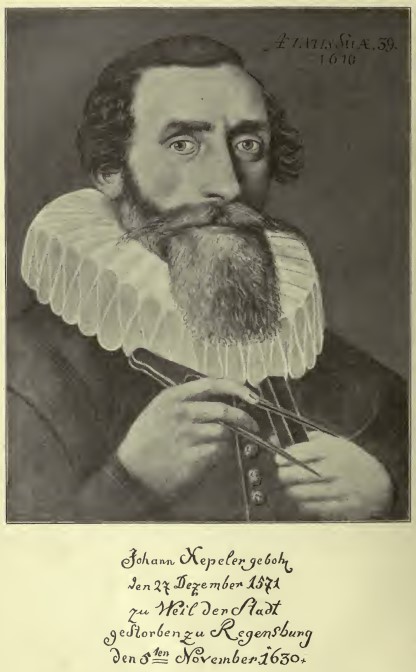
Kepler, left, shown with a compass.
SOURCE: Ludwig Günther, Public domain, via Wikimedia Commons
In his book, Eclogae Chronicae, published in 1615, Kepler used the terminology anno aerae nostrae vulgaris (in our common era.) Kepler offered no explanation for the change, and it was repeated here and there over the next couple of hundred years, in several non-English-speaking parts of Europe.
1708 marked the first time the phrase ‘common era’ was used in an English book, The History of the Works of the Learned. By the mid 19th century, CE and BCE had come into common use, popularised by Jews who did not want to honour the salvific birth of Christ. Nowadays, BCE and CE continue to be promoted by atheists who refuse to ‘privilege Christianity,’ as well as by those who do not wish to offend non-Christians.
Thus when a Pope decides to use BCE instead of BC, he reveals a Masonic preference for religious indifferentism or worse: that the Incarnation and birth of Jesus Christ were not the pivotal events in the history of mankind.
SOURCES: https://talesoftimesforgotten.com/2021/12/05/a-history-of-the-common-era-bce-ce-dating-system/
https://www.learnreligions.com/bc-vs-bce-which-should-we-use-250186
https://esotericfreemasons.com/most-famous-modern-day-freemasons











 Ecclesiastical Freemasonry