Ecclesiastical Masonry in Liberia

In his book, Vigilant Catholic, David Dionisi details unresolved scandals among the hierarchy in Liberia and claims that top Churchmen are members of a local variant of Freemasonry known as The Poro.

Dionisi worked as a missionary in Liberia for many years and helped to break the news of the sexual abuse of seminarians by an two prelates, Archbishop Lewis Zeigler and Bishop Andrew Karnley. He claims that sex abuse is “a weapon” used by secret societies to pressure good priests into leaving the Church. Homosexuals are routinely ordained and promoted while those men who are faithful to the Magisterium are often passed over, denied medical care or may even become the victims of false accusations.

Local secret societies based in witchcraft, such as Liberia’s Poro, have always existed in Africa, but there is evidence that Freemasons gained control of The Poro more than a hundred years ago. Traditional rituals of passage for boys still continue: these include invocations of demons, sex magic and sodomy. Girls are initiated into a corresponding group known as Sande, and also experience physical and sexual abuse during the rituals. Sometimes the rituals are so harsh that the children do not survive and members are bound under a code of silence similar to Freemasonry’s prohibition on revealing its secrets. Some members began to speak out when accusations of abuse became public, verifying details of the rituals that had up until then been completely shrouded in secrecy.

Shockingly, some Catholic associations have adopted similar initiations and as well as the code of extreme secrecy. The founder of one group has also been accused of covering up the sexual abuse of minors and is a close friend of the sexually-abusive bishops mentioned above. David Dionisi names sixteen Catholic priests and prelates whom he believes to be members of the Poro sect; some of the group are said to belong to more than one secret society.

One of this group, a priest by the name of Fr Gareth Jenkins groomed numerous boys, allowing many to sleep at his home. Those boys who accepted his sexual advances were allowed to later enter the seminary, whereas those who rejected Fr Jenkins were stopped from becoming priests.

The code of silence has led to the widespread failure to act against the predatory bishops and appeals to the Nuncio fell on deaf ears. This is hardly surprising, though, as Dionisi claims a former nuncio, Archbishop George Antonysamy was part of the homosexual network in Liberia. The current nuncio, Bishop Borwah, is named on the list of Poro society members, and told Dionisi that Pope Francis personally put a stop to an investigation of the Liberian Church.

A former priest-turned-whistleblower, Fr Gabriel Sawyer, wrote a seventeen page testimony which has many similarities to Archbishop Carlo Maria Vigano’s explosive 2018 expose. Like Archbishop Vigano, Fr Sawyer was forced into hiding after receiving death threats. He claims he married his life-long friend in order to escape from the persecution. This fits a pattern that has occurred in other parts of Africa, eg Cameroon, where a bishop was assassinated for refusing to cave in to a homosexual priest cabal in 2017. The Liberian prelates unsurprisingly denied the allegations and pointed to the priest’s marriage as an indication of his lack of credibility, despite his having corroborating testimony from five other priests and laymen. Fr Sawyer’s case reached the Vatican in June of 2019 but despite two years having passed, there has been no public investigation or statement made on the case.

In a further attempt to launch an investigation into the multiple allegations of abuse, David Dionisi met with Cardinal Sean O’Malley in the United States in 2019. After hearing the testimony of this credible witness and refusing to speak via Skype with a senior Liberian priest, O’Malley dismissed him, saying: “At my level, I do not deal with individual cases, I establish best practices.”

Those words would have been of little comfort to those children who were denied access to medical care or funding for their education when David Dionisi’s outreach was suspended or worse, became victims of sexual abuse.

On a continent where corruption is rampant, it is no surprise that Freemasonry should also be very prominent. Its melding with witchcraft also explains how the syncretism which plagues the Catholic Church in Africa has come to be so entrenched. The case also highlights the fact that Pope Francis routinely rejects his own protocols for clerical sex abuse allegations, as laid out in the Motu Proprio, Vos Estis Lux Mundi.

Catholics should have little hope that Pope Francis is sincere about conquering this scourge which has wounded many thousands of children and adults and has decimated the Church. It is time to acknowledge that there exists in the Church a loyalty that surpasses that of thieves and sodomites: it is the blood-tie of Ecclesiastical Masonry.

Origins of a Fake P2 List

The Italian website and Youtube channel, Italia Misterio, is a helpful source of authentic evidence in the search for clues about Masonic infiltration into the Vatican’s financial departments. In fact, it is a good source of material on Vatican intrigues and Masonry in general.

New videos are being constantly released, which show photographs, newspaper clippings and testimonies from witnesses at the trials of some of the most infamous Vatican-related personalities like Licio Gelli, Michael Sindona and Roberto Calvi. Even Archbishop Marcinkus and Pope John Paul I occasionally get a mention.

One video entitled “The Real P2 List” caught my eye. This article looks at the content of that video, with some facts checked and a few more details added.

Licio Gelli’s List

On March 17, 1981, Gelli’s Abruzzo villa was searched by members of the Guardia di Finanza. The search had been secretly ordered by Magistrate Gherardo Colombo, who was hoping to find missing money belonging to the Vatican-swindler Michele Sindona. Sindona and the primary accomplice in his staged kidnapping, the Freemason Joseph Micalli, had both been seen in the Arezzo area prior to the raid. Apparently, Micalli was ostensibly visiting his dentist, but Colombo was suspicious.

The raid on Arezzo’s villa found nothing of interest, but a search of Gelli and Micalli’s Company Giole, which operated as a front for their illegal activities, turned up something very interesting. Police found a suitcase full of documents, the most notable of which was a list of one thousand names of men said to be members of the infamous P2 Lodge.

Immediately upon the document being found, Orazio Giannini, the General Commander of the Guardia di Finanza, confided to his employees that his name would be on the list. Among others on the list were: two government Ministers, five Undersecretaries, 33 Parliamentarians, twelve Generals of the Carabinieri, five Generals of the Guardia di Finanza, 22 Italian Army Generals, four Air Force Generals and many magistrates and state officials, including Silvio Berlusconi. Also included on the list were Gelli himself, as well as other personalities linked to financial scandals involving the Vatican Bank – Roberto Calvi, Michele Sindona, Umberto Ortolani and Mino Peccorelli.

The discovery of the list and the subsequent raid on the Grand Lodge’s Rome headquarters led Italy’s Grand Orient Lodge to cut its ties with Gelli. In 1982, it is said to have dissolved P2 completely.

Although there is little doubt that the organisation has remained active in some form, discovery of the list and legal action against its corrupt, high-ranking members was the beginning of the end of P2’s popularity. Rumours began to circulate suggesting that P2 had never been a legitimate Lodge and that it was part of a KGB plot to destabilise Europe. While it is true that P2 members were implicated in murderous terrorist attacks, it is more likely, as author Martin Short suggests, that the Grand Lodge of London started those rumours to discredit P2. Until that time, the London Lodge had enjoyed a close relationship with its Italian counterpart: later it was in danger of becoming tainted by the scandals surrounding P2.

Gelli escaped to Switzerland where he was arrested, then escaped again and fled to Chile. A bizarre story links Gelli to the desecration of the body of former Argentine President Juan Peron. Peron’s hands were removed and a ransom (which was not forthcoming) was sought. Apart from the money angle, it is thought that the removal of the dictator’s hands was related to an occult practice designed to empower the new owner with Peron’s political charisms.

Gelli Approaches the Masons

According to Italia Mysterio, Gelli later approached his old Lodge, seeking to rejoin it. Gelli allegedly took the list of names to the Grand Master of the Great East Lodge, Ennio Battelli, who flipped through the file, then thrust it back at Gelli, saying, “I’ve never seen it. Take it back.” Gelli apparently tried again with Battelli’s successor, Giuliano Di Bernardo, who also refused to have anything to do with the list.

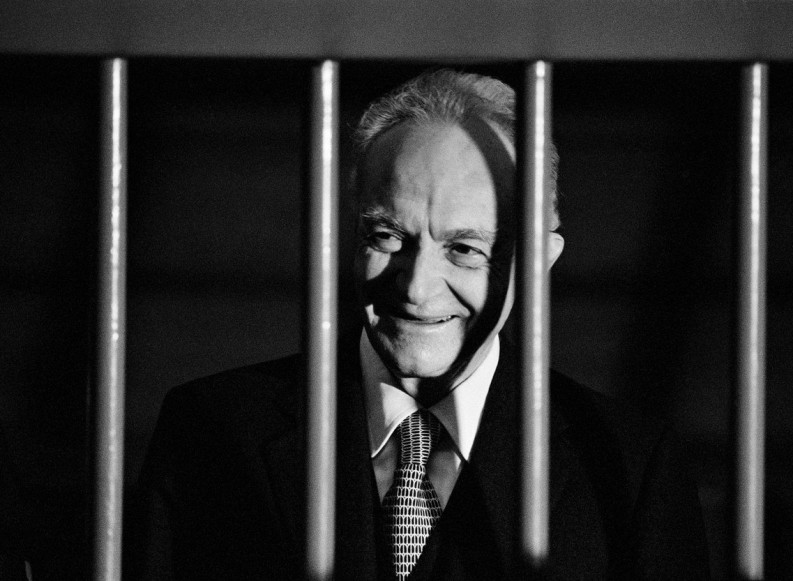
Gelli remained on the run for many years until he was finally found guilty of a string of crimes and imprisoned. He died in 2015.

Licio Gelli’s will apparently included a map showing the location of 163kg of gold ingots buried at his property in Arezzo. The will also pointed to a huge property and investment portfolio owned by Gelli, which included 172,000 ha in Paraguay, 14 palaces, part ownership in two companies, an orange plantation in Brazil and a 30 ha residential development package in Argentina.

Where are the Cardinals?

Assuming even part of this strange tale is true, we are left with many questions: What did Gelli hope to achieve by taking the list to the Grand Orient Lodge? Blackmail? Influence? If, as the author at Italio Mysterio suggests, this list was fake, then why would Gelli risk trying to pass it off as the true list to the very men who were sure to know the identities of P2’s members, that is, the Grand Masters?

Several theories suggest that Gelli was never the real head of P2. One theory is that this was instead Giulio Andreotti, the Italian politician. There are also rumours of a super-lodge, even more secret and more exclusive than P2.

Another theory is that this was all a huge hoax designed to throw suspicion away from the man believed by Italio Mysterio to be the real head of P2, that is: Umberto Ortolani. With all of this in mind, it is possible that the true P2 list is stashed safely away in an archive somewhere in one of Gelli’s former estates in Paraguay?

If this list was accurate, then where are the prelates whom we have been told – quite credibly – were Masons: Cassaroli, Villot, Tauren, Ravasi – none of these are included in this “P2” list? Remember, Gelli’s list was found only three years after the mysterious death of Pope John Paul I: the man who was ready to completely reshuffle the Curia in order to remove the one hundred or so prelates who had already been identified as Masons.

Is there a connection between the international scrutiny of P2 and the Vatican’s weak pronouncement of the incompatibility of Masonry and Catholicism in the 1983 Code of Canon Law?

What of the presence of the many Argentinian Masons on Gelli’s list? Is it a coincidence that the man who would become Pope was Provincial of the Jesuits in Argentina at the same time P2’s active membership included a strong Argentinian presence?

Francis Preaches on Corpus Christi but fails to mention the Real Presence

Vatican News reported on the homily given by Pope Francis at Sunday’s Mass for the Feast of Corpus Christi. But instead of preaching on the Real Presence of the Most Holy Body and Blood of Christ, the pontiff played down the true meaning of the Eucharist.

While he mentioned the “Food and Drink of eternal life” it was lost in all the talk of encounter, community and welcoming. Continuing with what may be considered a theme of this pontificate, Pope Francis said that “a Church of the pure and perfect is a room with no place for anyone.” These are such strange words, as those who receive Our Lord worthily are no strangers to the Sacrament of Confession and thus do not in any way think of themselves as “pure” or “perfect.”

By contrast, the Sacrificial Victim of the Mass, Our Lord Himself, is the pure and perfect offering to God the Father.

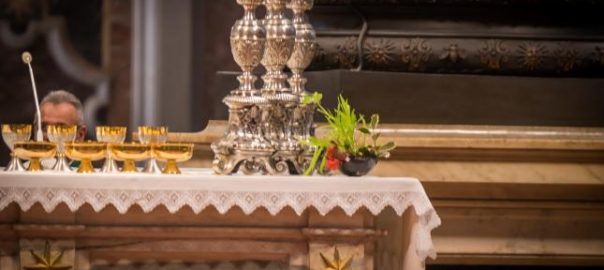
Mass was offered at a side altar in St. Peter’s, rather than at the main altar, which apparently has not been used since the closing Mass of the Amazon Synod in 2019. It was at that Mass that a bowl containing earth and plants, not unlike an offering made to the demon Pachamama, was placed on the altar, in violation of Liturgical rubrics.

As is often the case with this Pope, he offered some words that would become very meaningful if placed in the context for which they were meant. He spoke of our need to be receptive to God’s presence, and of how the world becomes a better place when we go out and share what we have received in Mass. He vaguely mentioned God’s presence and Jesus’ sacrifice, but not in a way that would be offensive to a Protestant’s ears.

What Pope Francis did not explain clearly and precisely is the reality that Jesus’ Sacrifice on the Cross is perpetuated at each Mass, and that the Sacred Host is the True Body and Blood, Soul and Divinity of Our Lord.

This is the message that the world most needs to hear: that Jesus is alive and among us in every tabernacle of every Catholic Church in the world.

What Modernists fail to see is that Jesus is not present – in the Eucharistic sense – in meetings between Catholics and Protestants or in a social gathering of the poor and marginalised or in a simple hut in the Amazon. He is present, that is true, but not in His Body, Blood, Soul and Divinity, as He is in the Blessed Sacrament.

Do Modernists not realise that Jesus Christ comes to all people – to rich capitalists, to “rigid” Traditionalists, to “clericalist” priests, whose only crime is their orthodoxy – yes, He brings His blessings and graces to all those classes and to anyone who is in a state of grace.

As the Pope sat (he alone did not kneel at the sight of the Lord exposed in the Monstrance) he looked unwell and unhappy, as he contemplated …… we shall never know.

Let us hope and pray that one day before he dies – and that day cannot be too far in the future – this Pope will repent of his grievous sins against Holy Mother Church, reject his Masonic agenda and implore God’s mercy for himself and for his corrupt hierarchy.

The Bugnini Effect: part 1

FROM: Liturgical Time Bombs in Vatican II: The Destruction of Catholic Faith Through Changes in Catholic Worship

by Michael Davies

The Rise and Fall and Rise and Fall of Annibale Bugnini

Before discussing the time bombs in the Council texts, more specifically those in its Constitution on the Sacred Liturgy, which would lead to the destruction of the Roman Rite, it is necessary to examine the role of Annibale Bugnini, the individual most responsible for placing them there and detonating them after the Constitution had won the approval of the Council Fathers.Annibale Bugnini was born in Civitella de Lego [Italy] in 1912. He began his theological studies in the Congregation of the Mission (the Vincentians) in 1928 and was ordained in this Order in 1936. For ten years he did parish work in a Roman suburb, and then, from 1947 to 1957, was involved in writing and editing the missionary publications of his Order. In 1947, he also began his active involvement in the field of specialized liturgical studies when he began a twenty-year period as the director of Ephemerides liturgicae, one of Italy’s best-known liturgical publications. He contributed to numerous scholarly publications, wrote articles on the liturgy for various encyclopaedias and dictionaries, and had a number of books published on both the scholarly and popular level.

Father Bugnini was appointed Secretary to Pope Pius XII’s Commission for Liturgical Reform in 1948. In 1949 he was made a Professor of Liturgy in the Pontifical Propaganda Fide (Propagation of the Faith) University; in 1955 he received a similar appointment in the Pontifical Institute of Sacred Music; he was appointed a Consultor to the Sacred Congregation of Rites in 1956; and in 1957 he was appointed Professor of Sacred Liturgy in the Lateran University. In 1960, Father Bugnini was placed in a position which enabled him to exert an important, if not decisive, influence upon the history of the Church: he was appointed Secretary to the Preparatory Commission on the Liturgy for the Second Vatican Council. [Biographical details are provided in Notitiae, No. 70, February 1972, pp. 33-34.] 

He was the moving spirit behind the drafting of the preparatory schema (plural schemata), the draft document which was to be placed before the Council Fathers for discussion. Carlo Falconi, an “ex-priest” who has left the Church but keeps in close contact with his friends in the Vatican, refers to the preparatory schema as “the Bugnini draft.” [Carlo Falconi, Pope John and His Council (London: Weidenfeld & Nicholson, 1964), p. 244.] It is of the greatest possible importance to bear in mind the fact that, as was stressed in 1972 in Father Bugnini’s own journal, Notitiae (official journal of the Sacred Congregation for Divine Worship), the Liturgy Constitution that the Council Fathers eventually passed was substantially identical to the draft schema which he had steered through the Preparatory Commission. [Notitiae, No. 70, February 1972, pp. 33-34.] According to Father P. M. Gy, O.P., a French liturgist who was a consultor to the pre-conciliar Commission on the Liturgy, Father Bugnini “was a happy choice as secretary”:

He had been secretary of the commission for reform set up by Pius XII. He was a gifted organizer and possessed an open-minded, pastoral spirit. Many people noted how, with Cardinal Cicognani, he was able to imbue the discussion with the liberty of spirit recommended by Pope John XXIII. [A. Flannery, Vatican II: The Liturgy Constitution (Dublin: Sceptre Books, 1964), p. 20.]

The Bugnini schema was accepted by a plenary session of the Liturgical Preparatory Commission in a vote taken on January 13, 1962. But the President of the Commission, the eighty-year old Cardinal Gaetano Cicognani, had the foresight to realize the dangers implicit in certain passages. Father Gy writes: “The program of reform was so vast that it caused the president, Cardinal Gaetano Cicognani, to hesitate.” [Flannery, p. 23.] Unless the Cardinal could be persuaded to sign the schema, it would be blocked. It could not go through without his signature, even though it had been approved by a majority of the Commission. Father Bugnini needed to act. He arranged for immediate approaches to be made to Pope John, who agreed to intervene. He called for Cardinal Amleto Cicognani, his Secretary of State and the younger brother of the President of the Preparatory Commission, and told him to visit his brother  and not return until the schema had been signed. The Cardinal complied.Later a peritus of the Liturgical Preparatory Commission stated that the old Cardinal was almost in tears as he waved the document in the air and said: “They want me to sign this but I don’t know if I want to.” Then he laid the document on his desk, picked up a pen, and signed it. Four days later he died. [Fr. Ralph M. Wiltgen, S.V.D., The Rhine Flows into the Tiber: A History of Vatican II (1967, rpt. Rockford, IL. TAN, 1985), p. 141.]

A Future Pope’s Masonic/Mafia Connections

From: THE RITE OF SODOMY V by Randy Engels

Montini and the Mafia:

Archbishop Montini Meets “the Shark”

Michele Sindona, aka, “the Shark” was an underworld financial fixture in Milan long before Montini became Archbishop.[80]

Born in Messina at the eastern end of Sicily in 1917, the Jesuit educated Sindona was studying law when the British and American troops invaded Italy during World War II. The enterprising Sindona decided to take advantage of the lucrative black market and went into the lemon and wheat business. Since the Sicilian Mafia controlled the produce trade, Sindona cut a deal with Mafioso head, Vito Genovese, whereby he would turn over a certain percentage of his earnings for protection from the mob for his business and his person.

In 1948, Sindona left the poorer war-ravaged southern boot of Italy and migrated north to the richer industrialized city of Milan where he became a “financial advisor” to a number of influential and wealthy Milanese. His Mafia credentials traveled north with him.

In 1954, when Sindona learned that Pius XII had appointed Msgr. Montini to the See of Milan, he secured a letter of introduction to the new Archbishop from the Archbishop of Messina, his home diocese. Sindona soon had a new client in Montini and the Milanese Church.

Archbishop Montini was so grateful to Sindona, that he took the Sicilian to Rome and introduced him to Pope Pius XII and Prince Massimo Spada, a senior official at the Istituto per le Opere de Religioni (the Institute for Religious Works). The IOR, which is popularly known as the Vatican Bank functions as a depository for the Church’s patrimony earmarked for charitable works.[81] Sindona became “a man of confidence” and was given virtually full control over the IOR’s foreign investment program.

The gross assets of the IOR at the time were over $1 billion, but money was secondary to the IOR’s tax-free status and its potential as a laundry for washing dirty money, specifically, Mafiosi earnings from heroin trade, prostitution and illegal political contributions from underground sources including Freemasons.[82]

In 1960, Sindona, operating under the old adage “the best way to steal from a bank is to own one,” purchased his own bank, the Banca Privata, and within a very short time was receiving deposits from the IOR. He used these funds to pyramid his own financial investments and started to launder illegal funds through the Vatican Bank.

After the election of Pope Paul VI, Sindona followed Montini to Rome and became a major player at the IOR. His operations and financial portfolio grew exponentially. In 1964, Sindona formed an international currency brokerage firm called Moneyrex with 850 client banks and annual financial dealings of $200 billion. Many members of the Palazzo, the rich and famous of Rome, used the firm to shield their fortunes from taxation through illegal offshore accounts. Sindona kept a secret ledger of his clients’ transactions with Moneyrex as insurance for a rainy day. The Vatican and Pope Paul VI, along with the name and numbers of the secret accounts of high ranking members of the Christian Democratic Party as well the Socialist and Social-Democratic Parties were all in Sindona’s little black book.

By the late 1960s, the “Gruppo Sindona” included six (later nine) banks in Italy and abroad and more than 500 giant corporations and conglomerates. One of the banks, the Franklin National Bank of New York, the 18th largest bank in the United States with assets of more than $5 billion, was purchased in part with money Sindona had skimmed off from his Italian banks.[83] He also skimmed off funds from his secret masters, that is, the Sicilian Mafia and, after 1971, from the Propaganda Duo (P2), a Mafia-inspired Masonic Lodge catering to Italy’s elite headed by Grandmaster Licio Gelli. In addition, Sindona was handling financial transactions for the U.S. Central Intelligence Agency (CIA) which during the post-war period was pouring large sums of money into Italy, some of which made its way to the Vatican Bank.[84]

Meanwhile Sindona’s friend, Pope Paul VI was the recipient of bad tidings from the State. The Italian government was threatening to remove the fiscal tax exemption on the Church and Church properties and investments that the Holy See had enjoyed since the days of Mussolini’s Fascist regime. Under the revised tax-code, the Vatican State would be taxed like any other corporate entity. Sindona proposed a scheme to hide Vatican money in offshore investments and the pope agreed.

One of Sindona’s prominent protégés was a native Milanese by the name of Roberto Calvi.

Calvi was the central manager of the Banco Ambrosio, Italy’s most prominent Catholic bank as distinguished from the lay or secular banking institutions operated by the Jews and Freemasons. Calvi was a man after Sindona’s own heart, which spelled disaster ahead not only for the Banco Ambrosiano, but also for its major depositor, the Holy See. Calvi had his own connections to the IOR through Monsignor Macchi, Montini’s personal secretary. He was also on excellent terms with an American priest at the Secretariat of State, Msgr. Paul Marcinkus.

FOOTNOTES

Footnotes.

  1. This section on Vatican finance is based in information taken from a large number of publications and web sites including Conrad Goeringer, “History of the IOR – Murder, Bank, Strategy – the Vatican.” See also David A. Yallop “In God’s Name – An Investigation into The Murder of Pope Paul I.” (Free downloadable e-book available at this site.)

Other footnotes available on request.

Freemasons on the Second Vatican Council

From The Devil’s Final Battle by Fr Paul Kramer, p 61-62; footnotes in original

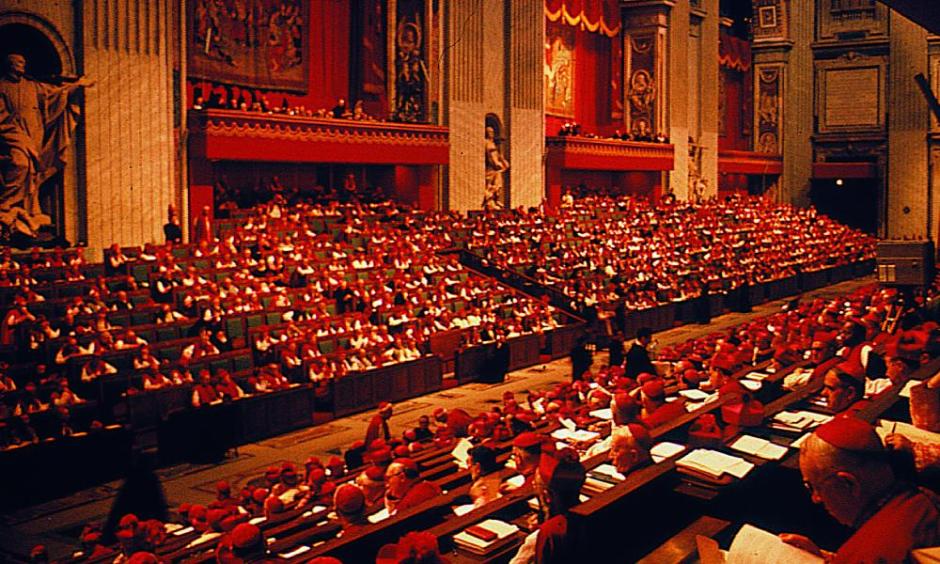
“Along with the neo-modernists, the Masons and Communists have rejoiced at the Council’s outcome. Just as the authors of the Permanent Instruction of the Alta Vendita had hoped, just as the Communist infiltrators spoken of by Bella Dodd had hoped, the notions of liberal culture had finally won adherence among the major players in the Catholic hierarchy. Freemasons and Communists have celebrated the astounding turn of events wrought by the Council. They rejoice that Catholics have finally “seen the light,” and that many of their Masonic principles have been sanctioned by the Church.

For example, Yves Marsaudon of the Scottish Rite, in his book Ecumenism Viewed by a Traditional Freemason praised the ecumenism nurtured at Vatican II. He said:

Catholics …. Must not forget that all roads lead to God. And they will have to accept that this courageous idea of free-thinking, which we can really call a revolution, pouring forth from our Masonic lodges, has spread magnificently over the dome of St. Peter’s.”1

Yves Marsaudon was delighted to add that “One can say that ecumenism is the legitimate son of Freemasonry.”2

The post-Vatican II spirit of doubt and revolution obviously warmed the heart of French Freemason Jacques Mitterand, who wrote approvingly:

Something has changed within the Church, and replies given by the Pope to the most urgent questions such as priestly celibacy and birth control, are hotly debated within the Church itself; the word of the Sovereign Pontiff is questioned by bishops, by priests, by the faithful. For a Freemason, a man who questions dogma is already a Freemason without an apron.3

Marcel Prelot, a senator for the doubs region in France, is probably the most accurate in describing what has really taken place. He wrote:

We had struggled for a century and a half to bring our opinions to prevail within the Church and had not succeeded. Finally, there came Vatican II and we triumphed. From then on the propositions and principles of liberal Catholicism have been definitively and officially accepted by the Church.3

  1. Cited from Open Letter to Confused Catholics, pp 88-89
  2. Yves Marsaudon, Oecumènisme vu par un Maçon de Tradition, pp 119-120
  3. Cited from Open Letter to Confused Catholics, pp 88-89
  4. Ibid.