Mar-A-Lago MEGA Mistake

When Calvin Robinson and I crossed paths on X a few days ago, our exchange exemplified the frustration many Trump-questioners are having with the Trump cheerleaders. Try to explain your concern that Trump is bringing about a repackaged Great Reset and you receive the same kind of disbelief or even disrespect formerly reserved for those trying to question the mRNA injection.

Fr. Robinson (or is it Mr. Robinson?) posted about the ‘Catholics for Catholics’ event held at Mar-a-Lago, Trump’s luxury country club, which was ostensibly to gather prominent Catholics to offer prayers for America, including for the President’s conversion. The idea was objectively a good one, but the optics and the execution left much to be desired.

According to Robinson, this is an effective method of ‘evangelising and discipling’ Trump. Bear in mind that tickets for this black tie cost $1200-$1500 USD!

Speaker list, including Michael Flynn and Roger Stone.

Regardless of what anyone thinks about the effectiveness or otherwise of such a strategy, there were a couple of highly unsavoury characters involved. Mike Flynn and Roger Stone, who are also part of the planning committee, gave addresses on the night yet their backgrounds make their involvement extremely problematic.

Mike Flynn

General Mike Flynn was National Security Advisor to Donald Trump during his first term. He is now a Senior Advisor for the group ‘Catholics for Catholics’. However, Flynn’s Catholic credentials are highly questionable, as shown by his behaviour in both the moral and spiritual realms.

Mike Flynn speaks at the Mar-a-Lago event

Firstly, his moral failings are quite evident. Although there is much mis and disinformation surround Trump’s Russian collusion controversy, it is a matter of fact that Flynn twice pleaded guilty in US federal district courts to lying to the FBI. Not a great look for a Catholic no matter how you spin it.

Then, in late 2024, Flynn responded to a question about the possibility of executions of political rivals under the next Trump administration by laughing and saying that “The gates of hell — my hell — will be unleashed.” Whether meant literally or not, those are unsettling words.

But it gets worse.

In 2021, Mike Flynn prayed at a Kenneth Copeland prayer meeting – Copeland is a Protestant televangelist with a huge international following. Flynn’s prayer, although it contained elements of Catholic terminology, was not a Catholic prayer. It had more in common with the prayers of theosophists, particularly Alice Bailey’s Great Invocation, which according to a former occultist, is meant “to call the power of the Hierarchy of Mahatmas, Angels, and other cosmic forces into action to further the evolution of mankind as well as save it from self-destruction.”

One American cult that had it roots in theosophy was the I AM movement. I AM was part of the ‘name it – claim it’ groups that popularised the idea that Christians weren’t meant to suffer and could make good things happen simply by telling God what they wanted. This is not any different from the New Age ‘manifesting’ spells which have become so common these days.

I AM proponents “believed in an Ascended Master called The Great Divine Director”. The head of the cult was a woman known as Elizabeth Clare Prophet, who often recited her own version of the Great Invocation and it is this version that Flynn prayed, almost verbatim at the Copeland event.

Below is a video which compares Flynn’s prayer to that of Prophet.

In the video to the right, you can find a snippet from an interview where Flynn says he carries the occult prayer around in his pocket – yet, he makes it sound as though this is the Catholic prayer to St. Michael the Archangel – in his words, it’s a “rendition of that prayer.” (To learn about the false St. Michael of the occult, click here.)

This is patently untrue yet Flynn received more backlash from Protestants than from mainstream conservative Catholics.

The second video shows how concerned many Christians were about Flynn’s demonic prayer.

Is this really the kind of Catholic who should be invited to a ‘prayers for America’ event?

Roger Stone

Roger Stone is another speaker whose presence should be a source of embarrassment to the attendees of the Catholics for Catholics event. Stone has been an outspoken advocate for LGBTI rights for decades.

This 2017 article, written by a gay republican, explains how Stone was one of the first members of the Advisory Council of GOProud, an advocacy group for gay Republicans. The author, who was the founder of GOProud, also mentioned Trump’s longtime support for the gay community and claims that Stone was behind a push for former Presidential candidate, Gary Johnson, to support same-sex ‘marriage.’

The article also states that Stone told an LGBTI activist that he was “trysexual,” by which he meant that he had “tried everything.”

Back in 2010, Stone attended a Pride parade in New York, when campaigning for a candidate for governor who was a prostitutes’ ‘madam’, Kristin Davis. Davis, also known as “Manhattan Madam” had once supplied prostitutes to disgraced former New York Gov. Eliot Spitzer.

Well, someone must have twigged that Stone’s past would not help the Catholic cause at Mar-a-Lago: pictures of Stone taken at the Pride parade have recently been scrubbed from the Internet. A few weeks ago, they were circulating on social media, shared by outraged former-Trumpers.

One was quite disgusting, with Stone being licked by the “Manhattan Madam” who, from memory, was dressed very scantily. When I tried to find the picture for this article, the image at left is all the best I could do. It has been removed from every news article related to the incident! Even the image I saved on X has disappeared along with the post.

No Presidency Without the Catholic Vote

After the ‘Catholics for Catholics’ event, Stone made a comment which confirmed just how crucial it was to get Catholics on board with Trump’s second presidential run. He explained in an interview with Newsmax why it is that there has been such an effort to endear Trump to Catholics.

He said, “It has actually been the fundamental basis of every Republican victory at the presidential level for the last 50 years. When we lose the Catholic vote, we lose the White House.”

The hubris of Trump receiving a scapular, Trump tweeting special messages on Catholic feast days, Melania photographed near a statue of Our Lady – it all makes sense given how necessary Catholics were to his success. All it took was a little marketing tailored specifically for conservative Catholics to make them forget that Trump removed protections for the unborn and for traditional marriage from the Republican platform and that he is, still proudly, the “Father of the Vaccine.”

And it is worth remembering the silence of most Catholic commentators on Trump’s more recent, very alarming acts: promoting arch-technocrat Larry Ellison and his mRNA cancer vaccines, threatening to annex Canada and Greenland, supporting Netanyahu’s genocide in Gaza, making American taxpayers fund IVF and much more.

One final point of note is that both Roger Stone and Mike Flynn have been suspected of being the identities behind the Q-Anon phenomenon. Both men certainly know a lot about Trump and a lot about marketing. Whether or not it is true, these men are far from conservative Catholics and should absolutely no involvement with anything marketed to Catholics.

Their presence was a disgrace and only adds to the unsavoury air surrounding everything Mar-a-Lago. Don’t forget, it’s only a few weeks since a fundraising auction at Mar-a-Lago included a hideous goat statue which was covered in fake $100 bills featuring Trump’s image and the blasphemous words, “In Trump We Trust”. Some may argue that this fundraiser was nothing to do with Trump himself, but given that he autographed the statue, that position is hard to justify.

So, pray for Trump, by all means. He and his administration certainly need it. His Catholic supporters just need to think twice about how and where that is done and to do some homework about the shady agendas of some of their so-called fellow ‘Catholics’.

Esoteric Sacrilege in a Viennese Church

Update – readers from Austria have assured me that Villach is a small town south-west of vienna, rather than a suburb, as I previously thought. Apologies for the error!

A new art exhibition displayed in an Austrian Catholic church is not only sacrilegious, but also shows indications of an occult influence.

The exhibition was launched during Mass on March 9 with the enthusiastic blessing of the parish priest. Entitled CROSS: WAY: STATION (“Kreutz: Weg: Station” in the native tongue) the installation will be displayed in St. Jakob Church in Villach, Austria until April 4.

Artist Michael Kos has taken classic images of Christ and subjected them to abuse in the name of his spiritualised ‘art’. Kos claims that his three pieces, a crucifix, a tabernacle and a bizarre architectural structure in front of the altar are meant to represent the Son of God being subjected to a ‘real ordeal’ – something he undoubtedly managed to achieve by his disrespectful display.

According to Gloria TV, the diocese is run by the heterodox bishop who gave the world an “Episcopal Vicaress.”

Body Cube

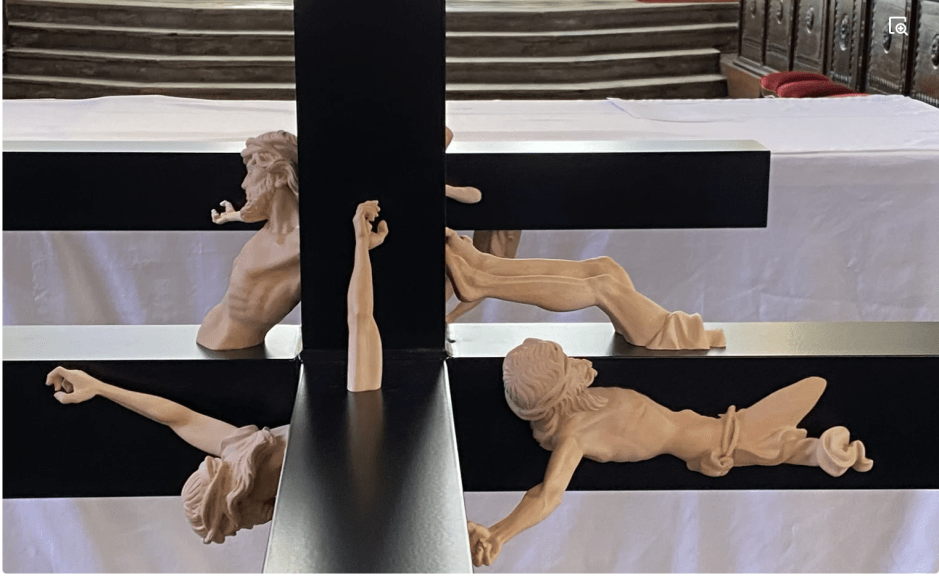
The so-called ‘Body Cube’ is set in front of the altar and is large enough to stand in. It is quite disturbing, containing 49 dismembered body parts of Jesus Christ.

Kos explains the structure as a three-dimensional cross and says “the open axis structure of the cube creates a variable play of cross shapes. From every other point of view, different forms arise, from the simple cross to the half cross, the cross of the room to the swastika.”

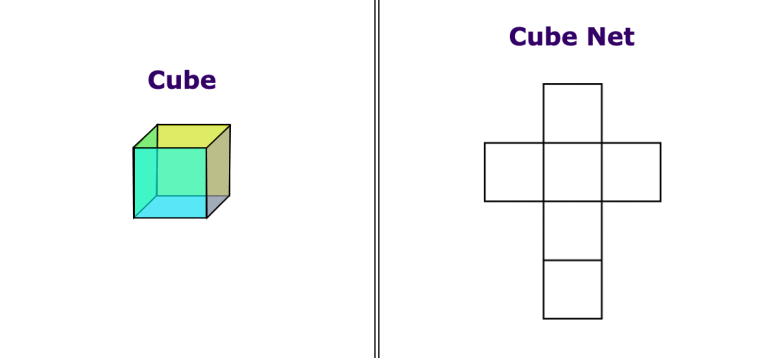
The use of cubes is the first clue to the display’s occult meaning as adepts appreciate the cube’s secret: when unfolded, it becomes a cross. As explained here in an article about liturgical design, cubes are ‘inherently Masonic.

Kos’ reference to the swastika, is another red flag since the swastika is a well-known New Age symbol. The composition of the structure, black-painted aluminium is a further clue since in the occult, the use of a base-metal for construction of a cross symbolises humiliation.

‘Body Cube’ shown in its entirety
The cube bears a resemblance to the ‘triple-tau’ cross, revered by Freemasons.

Balance Act

A second piece of artwork in the installation is a wooden figure of Christ, covered with white chalk and appearing to balance on a tightrope. The artist believes that this represents “a kind of resurrection happening through a rapture” and that it also refers to the concept of ‘balance.’

As mentioned many times in these pages, the principle of balance is very significant in the occult world. In choosing this theme, the artist underscored the balancing of chaos with order, sin with grace.

Although black-and-white tiled floors are not unusual in Catholic churches, it is perhaps no coincidence that one is found in this particular church. The contrast between black and white is yet another reference to finding ‘balance’ between opposites.

Here is what article Michael Kos says about “Balance Act”:

“Art is very often a balancing act because it can support values but also overthrow them.”

The installation balance.AKT is an unusual, sacred representation that not only shows the change in religion and culture, but also the wafer-thin dividing line between play and existential fall.

No god can be safe in the long run. Every individual and a son of heaven can experience the loss of balance. Man has become one who knows about the light-footed play and the bottomless abyss. [Emphasis added.]

Kos makes no attempt to hide his disdain for the Son of God.

Christpower

The final and most blasphemous of all the artworks is entitled, “Christpower.”

Believe it or not, this is a tabernacle (or at least represents a tabernacle – it isn’t clear whether or not the Blessed Sacrament is actually housed in this monstrosity.)

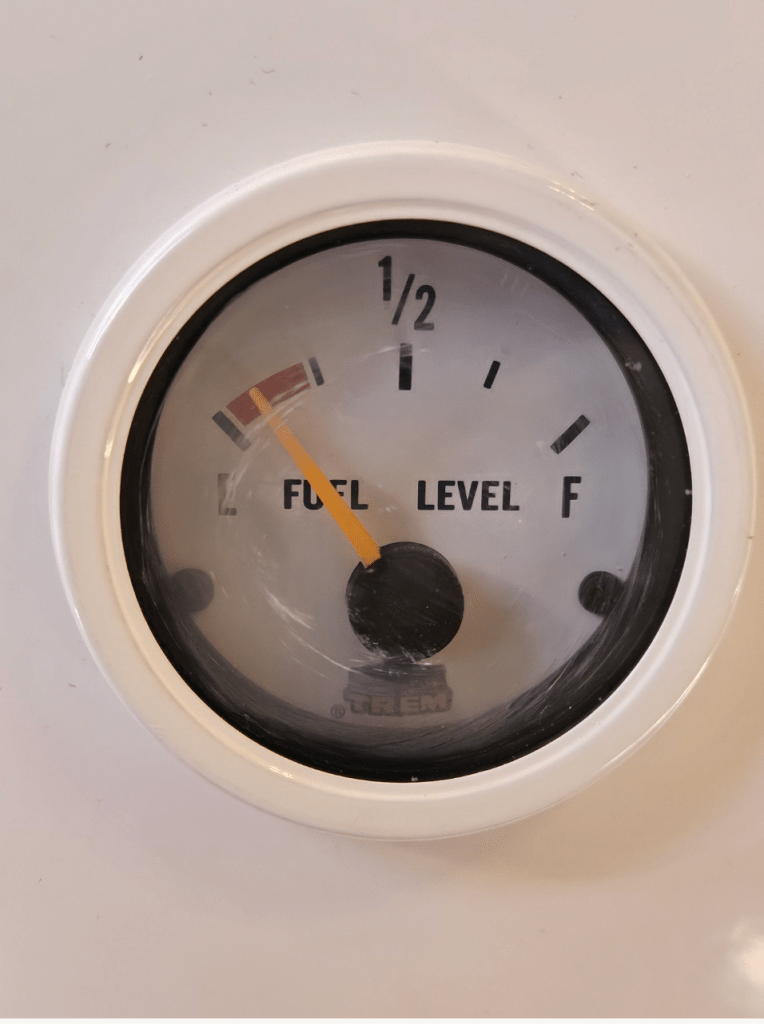
“Christ Power” is a white lacquered steel tank with a fill indicator which the artist says was inspired by the idea of “a critical tabernacle – or rather a tabernacle in crisis.”

Again, references to the occult are peppered in the artist’s explanation: he says that “shrine”, “transformation” and “secrecy” are all aspects of the tabernacle. ‘Transformation’ is of course, the ultimate ‘balancing’ act.

In his explanation of the work, Kos again shows his disregard for the Catholic faith, calling its veneration for the Blessed Sacrament ‘exaggerated.’ He goes on to suggest that divinity is found within the individual. This is the immanentism of esoteric philosophy and may be contrasted with the Christian idea of transcendence – that God is found beyond the individual.

“The question arises as to the relevance of a unique object today, which was characterized for centuries by cult dramaturgy and symbolic exaggeration.

This work of art oscillates between affirmation and negation of the religious level. The fill indicator is just before the vacancy rate and refers to a vacuum where there could also be spiritual abundance. But what is this abundance? Who fills up at all?

… Isn’t CHRISTPOWER also a psychoanalytic transmission that the believer unconsciously performs himself? So less an external force than an active internal force. A intrinsic force that fades away.

SOURCES: Carinthia Diocese website and Gloria TV.

B’nai B’rith

B’nai B’rith is a name that pops up from time to time as one researches events surrounding the Second Vatican Council. Many sources call the group straight-out ‘Jewish Freemasons’.

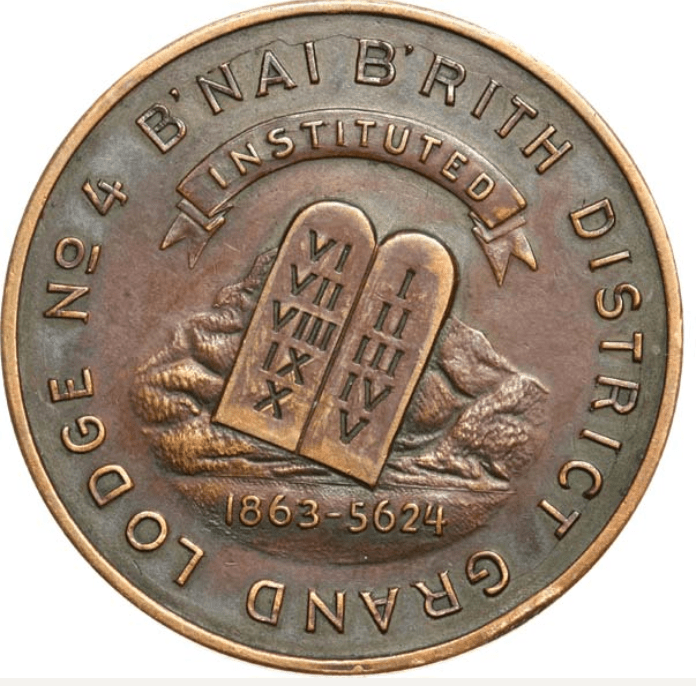
B’nai B’rith coin with the numbers of the Ten Commendmants reading from right to left. Hebrew read from the right, of course, but we also know how occultists love to reverse things.

Origins

According to Masonic sources, B’nai B’rith was founded on October 13, 1843 in the USA. (Note the date – it’s a Fatima day.) The twelve founders were Jewish German immigrants who had met each other through various Masonic and Odd Fellows Lodges and other secret societies. They ostensibly wanted to provide support for immigrant families, especially those in need.

B’nai B’rith means ‘sons of the covenant.’ The group went on to become involved in a number of philanthropic ventures and created the Anti-Defamation League. It is a strong opponent of ‘anti-semitism’ and a vocal supporter of the State of Israel and also attends the UN as a non-government organization, where it lobbies for the rights of Israel.

B’nai B’rith and Ecumenism

Members of the B’nai B’rith International Council also visited John XXIII, as reported at its January 1960 meeting in Amsterdam. President Label A. Katz, reported that “the Pope’s serious intentions to guide the Catholic Church toward brotherly understanding of the Jews were unmistakable” and that Cardinals Bea and König were enthusiastic promoters of reconciliation.

Later, B’Nai B’rith recalled the desire expressed by John XXIII at the opening of the Council “to make up for millenias’ persecution of the Jews and to recall instead the common heritage.” One of the members of B’Nai B’rith suggested that religious textbooks be revised to reflect the Jews’ unhappiness at being painted as the killers of God – something they believed resulted in anti-Semitism.

“We’ll be here ’til there’s no more hate.”

B’nai B’rith and Ecclesiastical Freemasonry

There are a couple of ties between this quasi-Masonic group and some prominent clerics. One is Fr. Malachi Martin, who according to E. Michael Jones “was being paid by both B’nai B’rith and the American Jewish Committee to subvert the Catholic claim that the Jews had killed Christ.”

It is difficult to know how much truth there is to this accusation, but it is certainly true that Fr. Martin was once secretary to ecumaniac Cardinal Bea (before his apparent conversion to orthodoxy and tradition) and also that the Jews did have an agenda to make the Church repeal its historical condemnation of them.

Also linked to B’nai B’rith was Cardinal Albert Decourtray who accepted a humanitarian award from the group in 1991 for his work in promoting inter-religious relations.

I have a feeling there are lots of links that are yet to be discovered when it comes to this influential Masonic/Zionist lobby group.

For more information please see this video on Bitchute.

 Jules Isaac – Jesus and Israel

Extract from Jesus and Israel: A Call for Necessary Corrections on Christian Teaching on the Jews, published in 1948 (Impact-Site-Verification: 8dad7fd3-e727-499b-bef3-6d8d25dba811)

For purposes of greater clarity, may I be allowed to submit for the examination of Christians of good will—who are agreed in principle on the need for rectification—the following Eighteen Points, meant to serve at least as a basis for discussion.

Christian teaching worthy of the name should

  1. give all Christians at least an elementary knowledge of the Old Testament; stress the fact that the Old Testament, essentially Semitic—in form and substance—was the Holy Scripture of Jews before becoming the Holy Scripture of Christians;
  2. recall that a large part of Christian liturgy is borrowed from it, and that the Old Testament, the work of Jewish genius (enlightened by God), has been to our own day a perennial source of inspiration to Christian thought, literature, and art;
  3. take care not to pass over the singularly important fact that it was to the Jewish people, chosen by Him, that God first revealed Himself in His omnipotence; that is was the Jewish people who safeguarded the fundamental belief in God, then transmitted it to the Christian world;
  4. acknowledge and state openly, taking inspiration from the most reliable historical research, that Christianity was born of a living, not a degenerate Judaism, as is proved by the richness of Jewish literature, Judaism’s indomitable resistance to paganism, the spiritualization of worship in the synagogues, the spread of proselytism, the multiplicity of religious sects and trends, the broadening of beliefs; take care not to draw a simple caricautre of historic Phariseeism;
  5. take into account the fact that history flatly contradicts the theological myth of the Dispersion as providential punishment for the Crucifixion, since the Dispersion of the Jewish people was an accomplished fact in Jesus’ time and since in that era, according to all the evidence, the majority of the Jewish people were no longer living in Palestine; even after the two great Judean wars (first and second centuries), there was no dispersion of the Jews of Palestine;
  6. warn the faithful against certain stylistic tendencies in the Gospels, notably the frequent use in the Fourth Gospel of the collective term “the Jews” in a restricted and pejorative sense—to mean Jesus’ enemies: chief priests, scribes, and Pharisees—a procedure that results not only in distorting historic perspectives but in inspiring horror and contempt of the Jewish people as a whole, whereas in reality this people is in no way involved;
  7. state very explicitly, so that no Christian is ignorant of it, that Jesus was Jewish, of an old Jewish family, that he was circumcised (accordsing to Jewish Law) eight days after his birth; that the name Jesus is a Jewish name, Yeshua, Hellenized, and Christ the Greek equivalent of the Jewish term Messiah; that Jesus spoke a Semitic language, Aramaic, like all the Jews of Palestine; and that unless one reads the Gospels in their earliest text, which is in the Greek language, one knows the Word only through a translation of a translation;
  8. acknowledge—with Scripture—that Jesus, “born under the [Jewish] law” (Gal. 4:4), lived “under the Law”; that he did not stop practicing Judaism’s basic rites to the last day; that he did not stop preaching his Gospel in the synagogues and the Temple to the last day;
  9. not fail to observe that during his human life, Jesus was uniquely “a servant to the circumcised” (Rom. 15:8); it was in Israel alone that he recruited his disclples; all the Apostles were Jews like their master;
  10. show clearly from the Gospel texts that to the last day, except on rare occasions, Jesus did not stop obtaining the enthusiastic sympathies of the Jewish masses, in Jerusalem as well as in Galilee;
  11. take care not to assert that Jesus was personally rejected by the Jewish people, that they refused to recognize him as Messiah and God, for the two reasons that the majority of the Jewish people did not even know him and that Jesus never presented himself as such explicitly and publicly to the segment of the people who did know him; acknowledge that in all likelihood the messianic character of the entry into Jerusalem on the eve of the Passion could have been perceived only by a small number;
  12. take care not to assert that Jesus was at the very least rejected by the qualified leaders and representatives of the Jewish people; those who had him arrested and sentenced, the chief priests, were representatives of a narrow oligarchic caste, subjugated to Rome and detested by the people; as for the doctors and Pharisees, it emerges from the evangelical [Gospel] texts themselves that they were not unanimously against Jesus; nothing proves that the spiritual elite of Judaism was involved in the plot;
  13. take care not to strain the texts to find in them a universal reprobation of Israel or a curse which is nowhere explicitly expressed in the Gospels; take into account the fact that Jesus always showed feelings of compassion and love for the masses;
  14. take care above all not to make the current and traditional assertion that the Jewish people committed the inexpiable crime of deicide; and that they took total responsibility on themselves as a whole; take care to avoid such an assertion not only because it is poisonous, generating hatred and crime, but also because it is radically false;
  15. highlight the fact, emphasized in the four Gospels, that the chief priests and their accomplices acted against Jesus unbeknownst to the people and even in fear of the people;
  16. concerning the Jewish trial of Jesus, acknowledge that the Jewish people were in no way involved in it, played no role in it, probably knew nothing about it; that the insults and brutalities attributed to them were the acts of the police or of some members of the oligarchy; that there is no mention of a Jewish trial, of a meeting of the Sanhedrin in the fourth Gospel;
  17. concerning the Roman trial, acknowledge that the procurator Pontius Pilate had entire command over Jesus’ life and death; that Jesus was condemned for messianic pretensions, which was a crime in the eyes of the Romans, not the Jews; that hanging on the cross was a specifically Roman punishment; take care not to impute to the Jewish people the crowning with thorns, which in the Gospel accoounts was a cruel jest of the Roman soldiery; take care not to identify the mob whipped up by the chief priests with the whole of the Jewish people of Palestine, whose anti-Roman sentiments are beyond doubt; note that the fourth Gospel implicates exclusively the chief priests and their men;
  18. last, not forget that the monstrous cry, “His blood be on us and on our children!” (Mt. 27:25), could not prevail over the Word, “Father, forgive them; for they know not what they do” (Lk. 23:34).

Bishop’s Blueprint for Pagan Worship

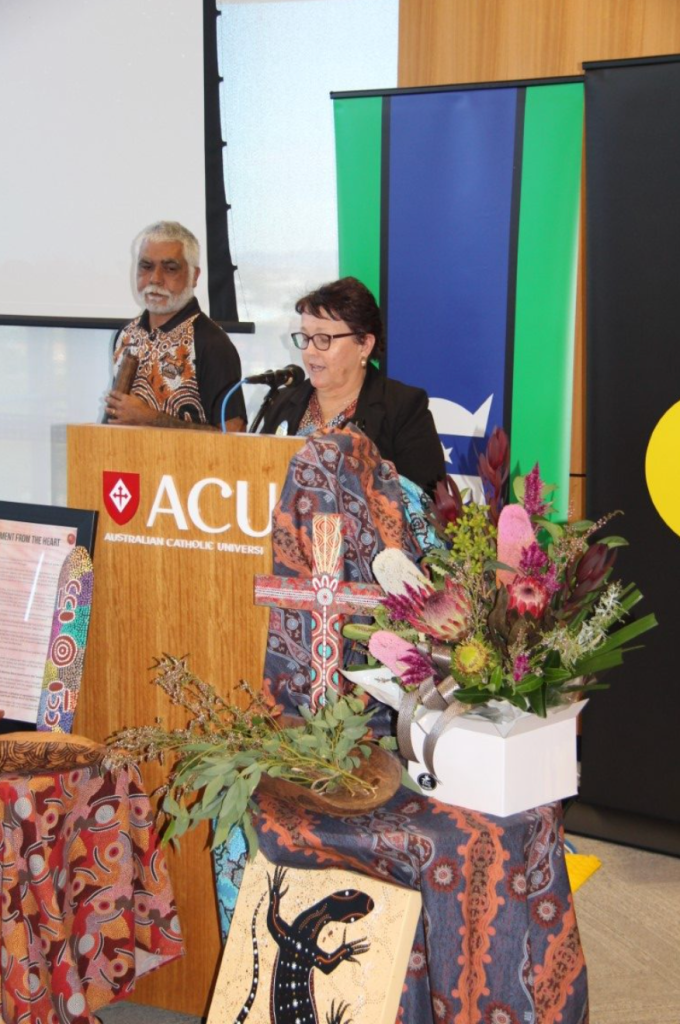
A reader has supplied some concerning information about a parish in his state of Queensland: St. James at Coorpooroo in Brisbane. St. James has published its ‘Reconciliation Action Plan’ to implement indigenous ‘dialogue and accompaniment’ and includes adding Welcome to Country ceremonies to parish events as well as adding pagan elements into Masses throughout the year. Worst of all, the plan is based on guidelines that come straight from the notorious Archdiocese of Brisbane, meaning that similar plans are being rolled out all across Queensland.

St. James published its plan online and the document is reproduced below. As you can see, it involves lots of bureaucratic jargon (e.g. ‘stakeholders’, ‘actions’ and ‘deliverables’) and woke appeasement (‘reconciliation’, ‘truth-telling’ and ‘listening’) but mentions absolutely nothing about evangelising or Catholic formation.

Catholics are expected to ‘learn’ from indigenous Australians and put up with pagan additions to their Masses while celebrating imaginary indigenous feast days. St. James plans to hold events to mark at least four of the following victimhood days: Sorry Day, Close the Gap, Coming of the Light, Apology Day and Mabo Day.

Also mentioned is the anti-Christian Statement from the Heart document: four weekly sessions are planned to discuss this Marxist-inspired hymn to Gaia.

Cui Bono?

As is to be expected, local, urbanised Aboriginals will benefit financially from the parish programme: multiple plaques to honour the Indigenous have been purchased by the parish; Welcome to Country ceremonies are planned (presumably led by paid activists); indigenous businesses will be prioritised by the parish. There is no mention of assistance going to those indigenous Australians living in rural areas who are truly victims of poverty, often surrounded by violence, addictions and sexual abuse.

The Plan was officially launched during Sunday Mass on February 9th. The Mass was preceded by a pagan smoking ceremony, and the Entrance Procession was accompanied by music from the indigenous instrument, the didgeridoo, as well as ‘cultural significant statements, artwork and symbols’. This means that pagan symbols and representations of mythological beings were brought into the church during the Liturgy.

From the parish website.

Reconciliation

The entire ‘Reconciliation’ movement is based on the lie that white settlers stole the land of Australia from deeply spiritual natives, violently imposing their imperialistic culture and faith on them. This Noble Savage myth is perpetuated in schoolrooms and universities around the country and is unfortunately promulgated by many of our bishops as well.

Of course, when the British arrived in Australia with their ships, tools, seeds, uniforms and Christian (albeit Protestant) faith, the indigenous inhabitants still running around in animal skins, eating each other and worshipping lizards. Yet, our hapless prelates insist that they have something to teach Catholics about spirituality and culture.

Of course, at the root of all this talk of reconciliation and dialogue is the complete absence of faith among the majority of the Australian hierarchy. They simply do not believe in the tenets of the Catholic Faith, especially not, it would seem, in the necessity of repentance and sanctification through the sacrifice of Our Lord Jesus Christ. They are simply well-paid bureaucrats who exploit the prestige of Catholicism while subverting its truths.

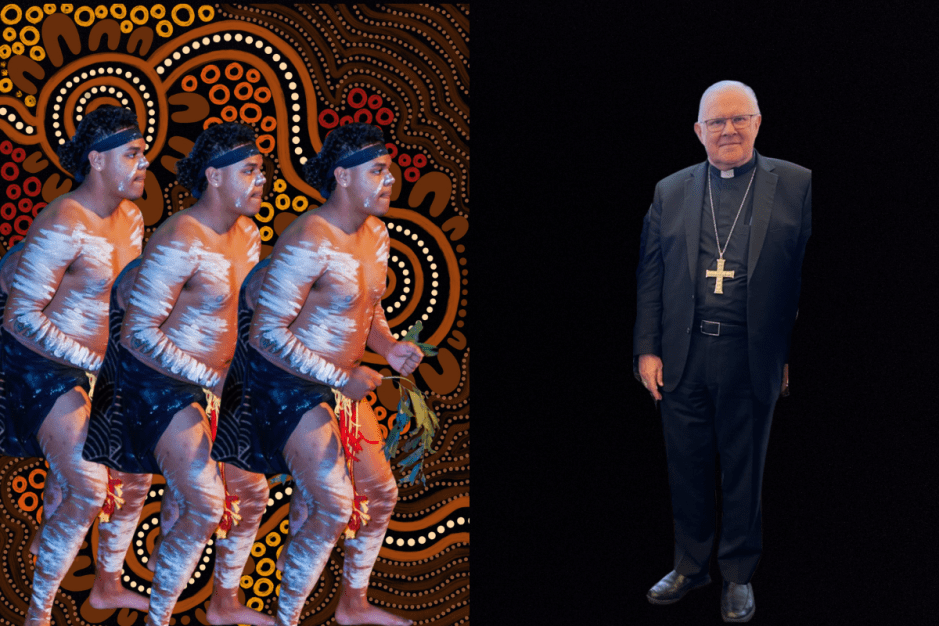
One leading proponent of this error is Archbishop Mark Coleridge of Brisbane (who is, by the way, a friend of the disgraceful Marco Rupnik.)

Coleridge and Rupnik.

Archbishop Coleridge published the ‘Reconciliation’ roadmap (see below) on the Archdiocesan website, along with an expression of gratitude for the contributions made by indigenous Australians.

The Archdiocese of Brisbane acknowledges the Traditional Custodians who have walked and cared for this land for thousands of years and their descendants who maintain their spiritual connection and traditions. We thank them for their continual cultural and spiritual connection to Country as expressed through their history, music, language, songs, art and dance.

Archbishop Mark Coleridge

The lizard has pride of place.
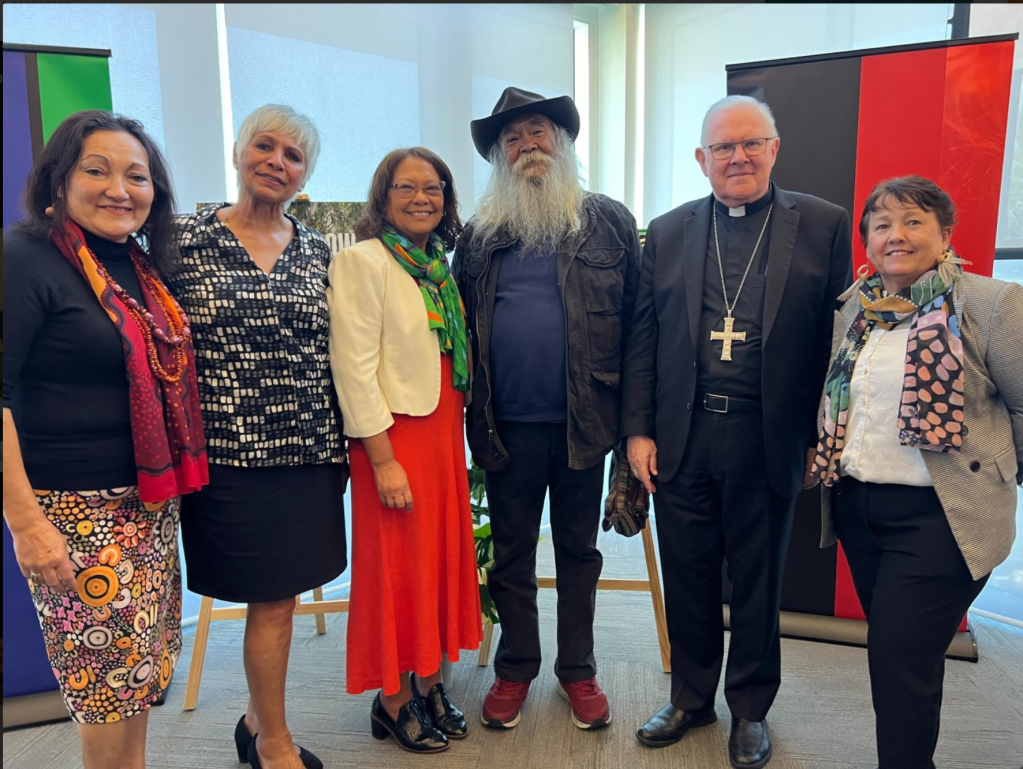
Archbishop Coleridge with some highly-urbanised Noble Savages.
Preparing for a smoking ceremony

Pagan Practices

Smoking ceremonies have been mentioned on this site many times: they are rituals common to many different pagan traditions, including American Indians and Australian Aboriginals. The smoke is meant to ‘cleanse’ an area from ‘evil spirits’.

These rituals are unfortunately very common at Australian Novus Ordo parishes and are usually performed prior to Mass, outside the church building. The Archbishop of Melbourne infamously allowed one to be performed at the main altar of St. Patrick’s Cathedral in 2021 during Mass.

The Archdiocesan guidelines mention other occult practices like ‘deep listening’ – a kind of meditation, an emptying of the mind; and worship of mother-earth. Yet, somehow Catholics are expected to believe that these are merely cultural and not spiritual practices.

Prior to the RAP launch at St. James’, the friend who sent me this information emailed the Archdiocese of Brisbane, expressing his disapproval for the proposed smoking ceremony. He received this reply from an anonymous Archdiocesan employee:

“Please be advised the invitation states that the smoking ceremony on this occasion is to ‘culturally bless the launch of the RAP’ and thus is not intended as a spiritual action.”

Hmmm, sure. Just like this blessing of water, as found among the St. James materials isn’t intended to be spiritual: “Each time we perform these ancient rituals of a water blessing we connect our spirit with those of our ancestors –their spirit is reborn and becomes strong within us around us.

Are we expected to believe that this “Presentation of Gifts at Offertory Procession – Mother Earth” is also not intended to be spiritual?: “We enjoy the physical and spiritual connections to Mother Earth, waters and environment. The physical and spiritual connections are the necessary elements of our life’s energy.”

The saddest part of this is that the average pew-sitter thinks that syncretism is perfectly acceptable and that it is Tradition which poses the greatest threat to their faith.

St. James explanation of pagan rituals

St. James Reconciliation Action Plan Implementation

Archdiocesan Planhttps://archdiocesanministries.org.au/reconciliation-action-plan/

Archdiocese of Brisbane RAP

Freemasonry’s Removal from the Code of Canon Law

During most of the twentieth century, the prohibition on Catholics being Freemasons was well known, as it was explicitly mentioned in the the 1917 Code of Canon Law. Canon 2335 conferred the penalty of excommunication on any Catholic who was the member of a sect which conspired against the Church or the State, including Freemasonry.

However, as time progressed, various clerics began to engage in an appeasement approach which caused confusion among the faithful – and indeed, among the clergy themselves. This came to a head in the 1970’s when Cardinal John Krol of Philadelphia requested clarification on the matter from the Congregation for the Doctrine of the Faith. The Prefect of the CDF at that time was Cardinal Franjo Seper, who wrote to Cardinal Krol assuring him that the penalty of automatic excommunication only applied to members of those organisations which actively plotted against the Church.

Coming as it did, with the apparent authority of the CDF, this statement was seen by many as a blanket lifting of the penalty for Masonic membership.

The Revised Code of Canon Law

Pope John Paul II established the Plenary Congregation of the Pontifical Commission for the Revision of the Code of Canon Law in 1981 to make the changes which were eventually promulgated two years later. The majority of the members of the Plenary Congregation were not in favour of renewing canon 2335, the Canon referring to Freemasonry, and so it was dropped from the 1983 Code.

Instead, a new canon was created, canon 1374, which omits any explicit mention of Freemasonry. Canon 1374 reads: “One who joins an association which plots against the Church is to be punished with a just penalty; one who promotes or moderates such an association, however, is to be punished with an interdict 1.”

Those in favour of the Change

The arguments in favour of not renewing the Code included the belief that in most countries, Freemasonry no longer posed a threat to the Church; that if a threat did in fact exist, many Masons were unaware of a anti-Catholic agenda within their sect; and that Communism posed more of a threat than Freemasonry. There was also a desire to conform to guidelines set down by Paul VI which sought to reduce the number of latae sententiae penalties in the Code.

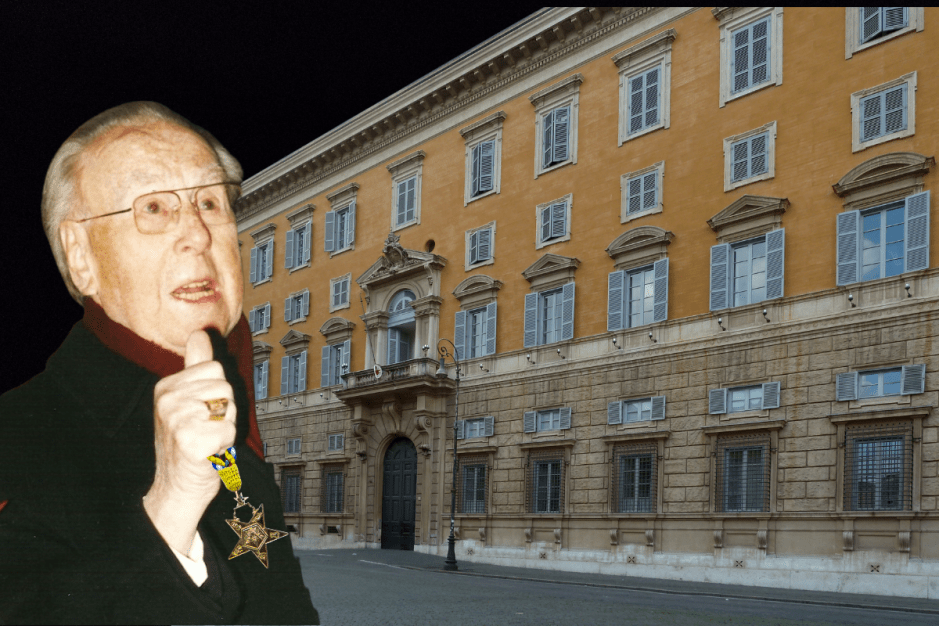
Included among those who held this position were Esteban Gomez, OP, an instructor at the Angelicum in Rome; Cardinal Rosalio José Castillo Lara, SDB, Secretary of the Pontifical Commission for the Revision of the Code of Canon Law; Bishop José Vicente Andueza Henriquez of Venezuela; Bishop Roman Arrieta Villalobos, President of the Bishops’ Conference of Costa Rica; and Cardinal Franz König, Archbishop of Vienna.

The inclusion of Cardinal König’s name is somewhat unsurprising as he was well-known to the Italian Freemasons who even claimed to have given him money on several occasions:

First, he started a confidential dialogue with the most important Masons. Once it was accepted, he waited for the right moment to propose a different image of Masonry to Catholics. His influence in the Code was decisive. Koenig is well aware of what the Institution is. He has a good understanding of Masonic “solidarity,” because every time he asked help from us, he received it, without having to explain the purpose for that money.

Italian Grand Master Armando Corona, from a 1990 interview

Those Against the Change

Those who were in favour of retaining Canon 2335 included the German Bishops’ Conference, who had been engaged in extensive dialogue with Freemasons, yet concluded that in its essence, Freemasonry remained hostile to the Church. Cardinal Siri was also against any change, saying that nothing in Freemasonry had changed. Cardinal Ratzinger, then Prefect of the CDF, declared that Freemasonry posed an ‘extraordinary danger’ and that if it was thought in some countries to have changed, then that only indicated that its danger was not understood by the bishops there.

Further, Cardinal Pietro Palazzini, Prefect of the Congregation for the Causes of the Saints, stated that retaining the penalty of excommunication for Freemasons did not violate Paul VI’s guidelines. He said that:

….. their “creed” is “apostasy, at least implicitly”; that is, it eliminates truth and revealed religion while welcoming Catholics as “useful idiots”. In pastoral practice there is a need to avoid equivocating and to clearly show the sure way to salvation. Freemasonry is more dangerous than Communism, because while Communism is the explicit enemy of the Church, Freemasonry is more subtle.

Fr. Paolo M. Siano, referring to Cardinal Palazzini’s statement.

Ratzinger Fights Back

Cardinal Ratzinger, obviously unhappy with the outcome, released his “Declaration on Catholic Membership in Masonic Associations” in 1983. Ratzinger explains that the omission of specific mention of Freemasonry in the 1983 Code was due to “editorial criteria” and goes on to reiterate the Church’s long-held view:

Therefore the Church’s negative judgment in regard to Masonic association remains unchanged since their principles have always been considered irreconcilable with the doctrine of the Church and therefore membership in them remains forbidden. The faithful who enrol in Masonic associations are in a state of grave sin and may not receive Holy Communion.

The Subsequent “Commentary”

A Commentary on the Code of Canon Law was released in 1985 then republished in 2001. Both editions were edited by Monsignor Pio Vito Pinto, whose name curiously appeared on the famous Pecorilli’s List of Ecclesiastical Freemasons. Msgr Pinto went on to become Dean of the Roman Rota and is known to have expressed great outrage at the Dubia of the Four Cardinals against the heretical actions of Pope Francis.

Notably absent from the Commentary is any mention of the long-standing prohibition on Catholics being members of Freemasonry. Rather the Commentary mentions only Canon 1374, the Canon requiring a “just punishment” for members of any association which conspires against the Church. According to the Commentary, “it is not easy to apply canon 1374 unless the competent universal and local ecclesiastical authority clearly indicate which organizations fall under the authority of that canon…”

One can only wonder at the blindness of those clerics who failed to see that Freemasonry never lost its anti-Catholic agenda.

SOURCES

Declaration on Masonic Associations, 1983. Vatican website.

How the Prohibition on Freemasonry Disappeared from the Code of Canon Law. One Peter Five.

The Catholic Church & Masonry. Tradition in Action.

Cardinal Franz König Receives Money from the Masonry. Tradition in Action.

Msgr Pinto reiterates His Opinion NC Register

  1. A prohibition which excludes the faithful from certain activities such as participating in the Mass and Sacraments or from having a Christian burial. ↩︎