The Anti-Marian Current at Vatican II

It is widely acknowledged among traditionalists that the Second Vatican Council contained many elements which were designed to appease non-Catholics. This is most obvious in the changes which were later made to the Mass and the failure to condemn Communism at the time of the Council itself. However this non-Catholic appeasement also worked in an extraordinary way against devotion to the Mother of God, who was in many ways directly insulted by the progressive Council Fathers.

While the main reason for this was the all-pervading Masonic ecumenism of the Council, two lesser motives were also at work. One of these is a Modernist trend toward denigrating miracles. Modernists do not mind acknowledging Our Lady as an historical fact; after all, there is little doubt that She was a real person who existed in time and gave birth to Jesus Christ. Other religions and cults also venerate the mother of their prophets. But Modernists are less tolerant of miracles associated with Our Lady: Her apparitions, Her messages and especially Her appearance at Fatima.

A second factor at play is the significance placed on the female type by occultists. The ‘Sacred Feminine’ is important to the Rosicrucians, for example, where Our Lady is blasphemously referred to as one of the ‘Great Women Initiates.’ The Pachamama incident at the Amazon Synod was another reference to this female type. Pachamama is a version of Gaia, the earth goddess, who is venerated by Wiccans and climate worshippers as well as by tribalist pagan cults.

These motives led the progressive element among the Council Fathers to downplay or ‘cancel’ the Mother of God in three main ways. The first was in regard to the proclamation of Our Lady as Mediatrix. There had been a movement among orthodox prelates to have the Mother of God honoured by the proclamation of the Fifth Marian dogma: that She is Mediatrix of all Graces. Many bishops and countless faithful were optimistic that this would be proclaimed by John XXIII at the Council, but the good bishops’ campaign was thwarted at every opportunity. Petitions in favour of the proclamation were not delivered to the correct authorities and speeches bordering on blasphemy against Our Lady were delivered during Council sessions.

The second insult was in regard to Fatima. Readers will recall that the Virgin Mary, through her messenger, Sr. Lucia of Fatima, asked that the Third Secret be revealed by the year 1960, that is, at the latest, under the pontificate of Pope John XXIII. It is known that John read the Secret in August 1959 by which time, preparations for the Council were well underway. After reading the message from Our Lady, John stated, “This does not concern the years of my pontificate.”

These are remarkable words, considering that several sources claim the Secret refers to an evil Council! It is worth remembering that the convening of an ‘evil Council’ was also among the predictions made by the occultist and Synarchist, the false priest Roca.

Even if the Secret contained no reference to a Council, John deliberately disobeyed the Mother of God by failing to make its details public. He further added to the disobedience by failing to consecrate Russia to the Immaculate Heart and formally promulgate First Saturday devotions.

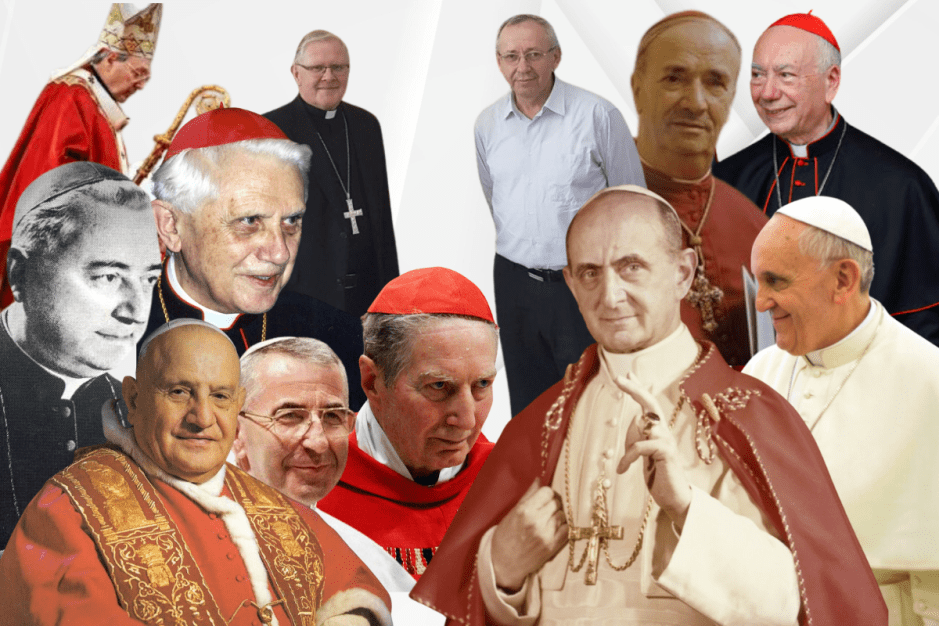
To further disrespect Our Lady, Pope John insulted Her in his Opening Speech to the Council in October 1962. The speech, which had heavy input from Cardinal Montini, the future Paul VI, contrasted John’s highly optimistic aggiornamento with the attitude of the so-called ‘prophets of doom’. This was a clear reference to the children of Fatima who carried Our Lady’s message, as well as to those conservative bishops and Cardinals who were concerned about threats to the Church and to the world at large. John XXIII criticised those who dwelled on ‘ruin and calamity’, echoing the words of the Fatima seers who saw in a vision that ‘the Holy Father crossed a large city half in ruins.’

The insults to Our Lady did not end there, however. The final part of the campaign to denigrate the Mother of God was the denial of the dangers of Communism. It is well-documented that John XXIII made a secret pact with the Communist-run Russian Orthodox Church prior to the Council. John, always anxious to boost his ecumenical credentials, wanted Russian Orthodox ‘observers’ at Vatican II. The Orthodox agreed – but only on condition that there was no condemnation of Communism from the Council. Encouraged by Montini, John went even further, ensuring there was no mention of Communism at all, despite many petitions from the prelates present.

As the Abbe de Nantes wrote, “The greatest Council of all time (supposedly) would therefore remain deaf and blind to the greatest phenomenon of inhumanity of all time: the global expansion of Bolshevism. Thus did it secretly lend its aid.”

Once Montini was elected Pope after the death of John XXIII, this anti-Mary agenda became even more clear. Throughout 1964 particularly, there were many attempts by the more conservative prelates to have Russia consecrated to the Immaculate Heart in the presence of all the world’s bishops. There could have been no better time for such an event as the Bishops were already gathered in Rome for the Council’s next session.

But instead of taking the opportunity to consecrate Russia while all the world’s bishops were present, Paul VI ignored the pleas of the hundreds of Bishops who heeded Our Lady’s warnings. By the end of 1964, however, as Pope Paul could see the damage already being wrought by his reckless Council, he made one small concession: Paul ‘recalled’ the Consecration made by Pius XII in 1942, while declaring Our Lady “Mother of the Church”.

Of course, this feeble response could in no way be said to fulfil the requests made by Our Lady at Fatima.

So it was that Popes John and Paul presided over a Council during which there was a concerted effort to insult, disrespect and denigrate the Mother of God. By refusing to condemn atheistic Communism, the Progressive Popes took the insult even further by refusing to acknowledge the greatest danger posed to the world, one which had precipitated a Divine visitation to earth in the form of the apparitions of Our Lady at Fatima.

REFERENCES:

“vatican council II and the fatima revelations” by the Contre Reforme Catholique

Timely Reflections on the Third Secret | The Fatima Center

The Whole Truth about Fatima – Vol III (click here to purchase)

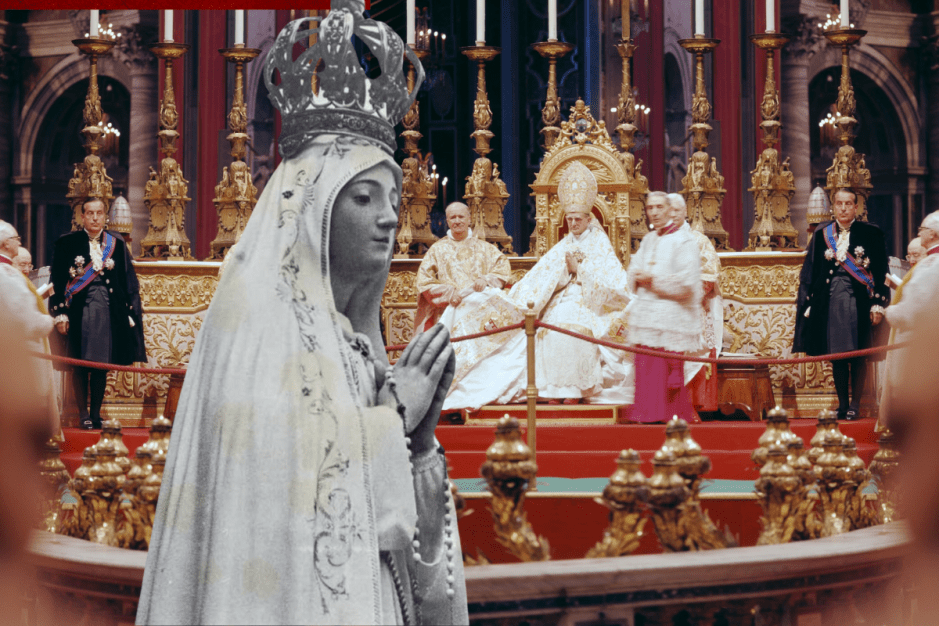
IMAGES: Lothar Wolleh, CC BY-SA 3.0 https://creativecommons.org/licenses/by-sa/3.0, via Wikimedia Commons; https://upload.wikimedia.org/wikipedia/commons/9/95/Our_Lady_of_Fatima_1968.jpg

The Pact of the Catacombs

Four files are shown below: a document outlining the Pacts of the Catacombs, the text of both the 1965 and the 2019 Pacts, and a biography of the instigator of the original Pact, Dom Helder Camara.

The Masonic Portrait of Paul VI

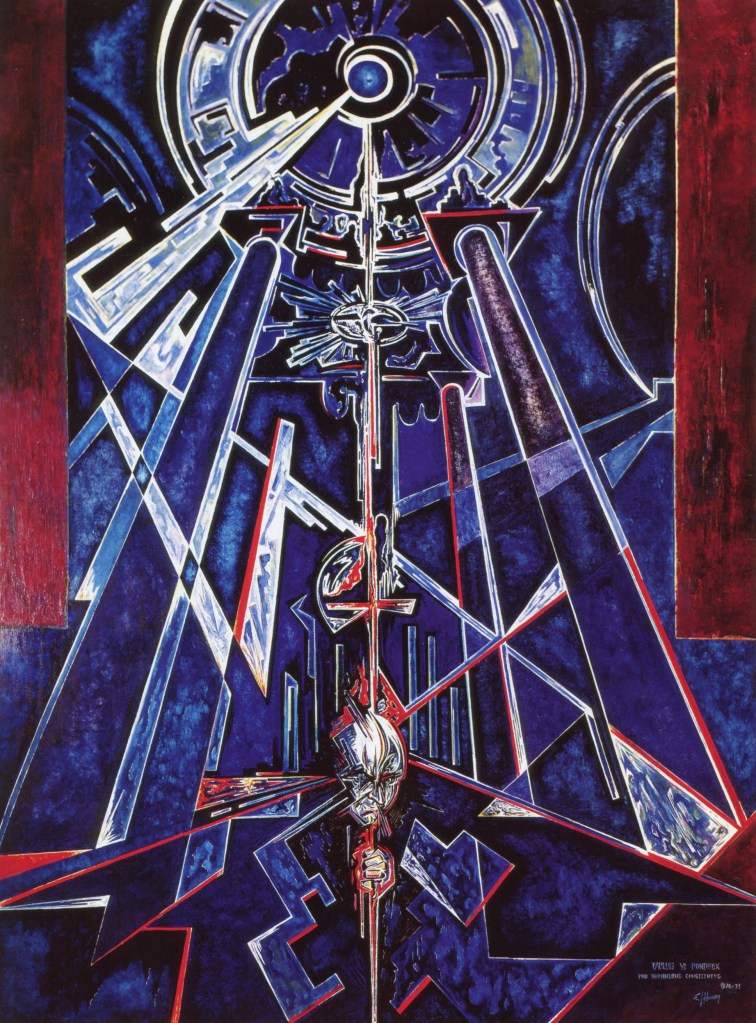
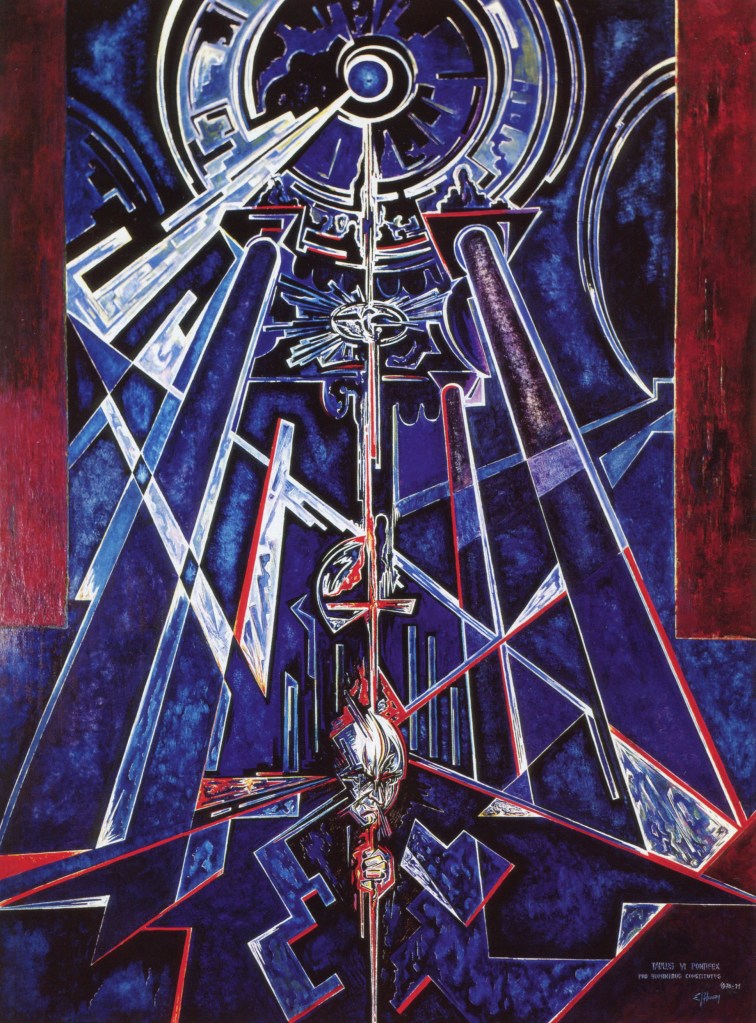
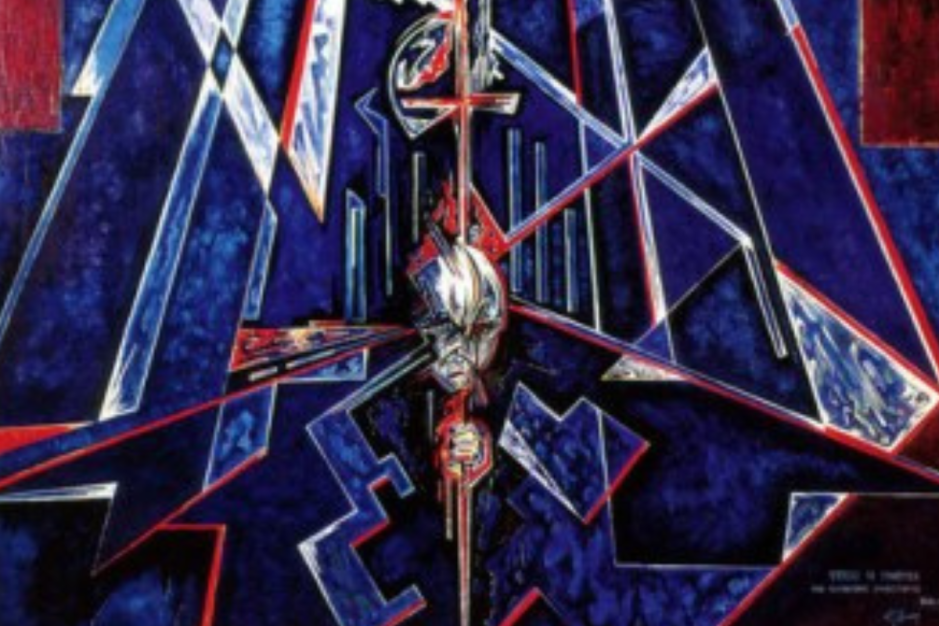
In 1971, Paul VI was presented with a painting, said to be his portrait, and which, to be honest, is one of the more disturbing images this author has come across. The picture emits a demonic violence that almost leaps out of the frame, leaving the viewer feeling oppressed and unsettled.

Most startling of all, the Supreme Pontiff of the Catholic Church is surrounded by cold, dark Masonic symbols, hiding in plain sight.

Hansing described the portrait as showing “the tension-fraught situation of the church, caught in a multiplicity of issues, as reflected in the countenance of the Pope.”

I don’t profess to be the first to discover this particular connection between Pope Paul VI and Masonry – the articles cited in this one are testimony to that. But since I have only just come across this rather disconcerting episode in Paul’s life, I thought I’d write on it anew and add some further research.

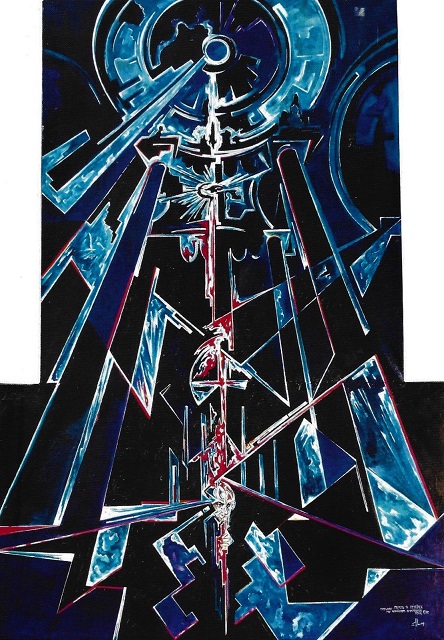
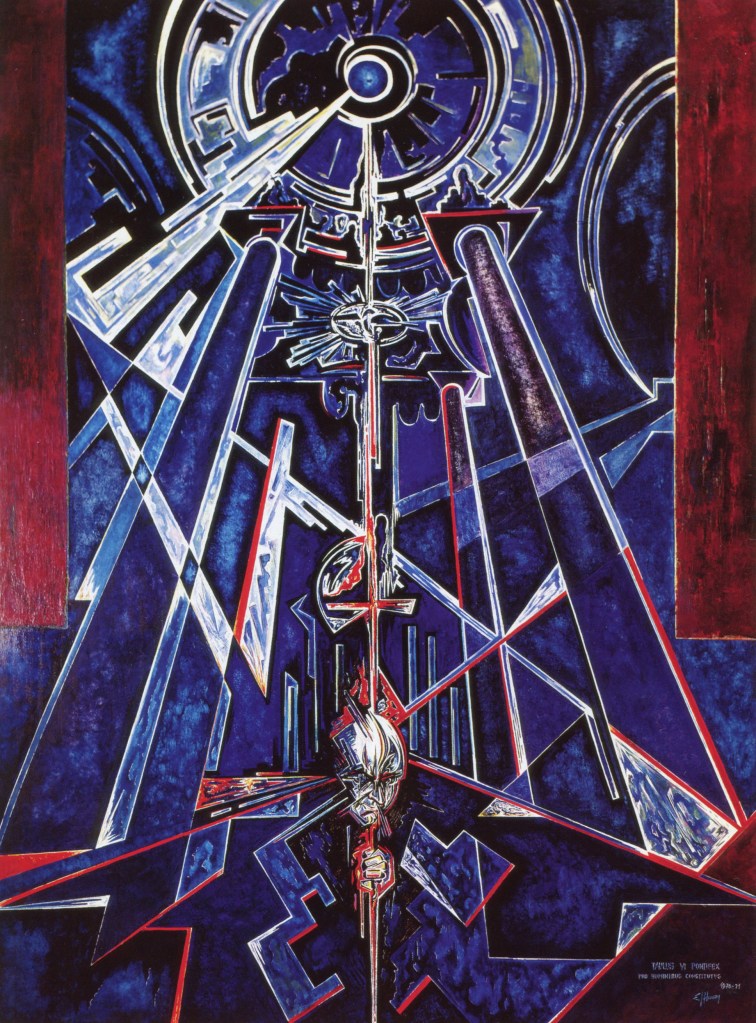
Firstly, there are not one but nine versions of this scene. Each tells, I believe, a part of a story that begins at the Second Vatican Council and culminates in the very public accusations that Paul was a homosexual. Shown below are three versions, created in 1970, 1970/1 and 1975 respectively. The third is part of a series of screen prints, which are based on the second painted version of the portrait.

The artist, Ernst Guenter Hansing, was initially associated with Cardinal Josef Frings, for whom he painted two portraits. Hansing had trained under the abstract artist, Fernand Leger, and had mixed with many avant-garde artists of Europe. This of course, would have appealed to Montini, who was known for his love of the cultural elite. Fring invited Hansing, a Lutheran, to observe the final session of Vatican Two in 1965, in order to “internalise the atmosphere.”

Hansing claims to have been struck by the Pope’s meekness, describing Paul as “humility personified” and as a “pleading” or “begging” person. Hansing at once expressed a desire to paint the Pope, so the story goes, wanting to encapsulate the scene presented by the massive Bernini columns dwarfing the humble Pope, he who alone carried the burden of determining the Church’s future. Hansing also wanted to capture the rays of light which issued from the great dome surmounting the canopy. So the story goes.

Paul apparently did not commission a portrait, but was approached by Hansing who was eventually given a room to work from inside the Vatican from 1969. The artist was then allowed to sit in on 13 papal audiences over the next two and a half years to make his sketches. The Pope’s secretary, then-Fr Pasquale Macchi, acted as go-between for the artist and pontiff.

Strangely, the image of the Pope at the centre of the painting was not based on the sketches Hansing made during those many papal audiences. Rather, it is based on a photograph taken during the Pope’s trip to Jerusalem in 1967. A drawing made from that photograph was then transposed onto the “Papacy” work. The many sessions that saw Hansing scrutinising Paul’s speeches were justified by the artist’s need to ‘internalise” the character of Paul.

Upon seeing a working sketch of himself, Paul is said to have uttered the cryptic comment: “One almost needs a new philosophy to grasp the meaning of this in its context.” [Emphasis added.]

The first version of the painting is made from two separate pieces of canvas: one above and one below. The bottom canvas is horizontal and the top one is vertical – which is like an inverted cross when you come to think of it.

Two vertical white blocks – red in the second painting – on either side of the piece are in fact said to represent an inverted cross – the Petrus cross – according to the artist, ostensibly calling to mind the martyrdom of the first Pontiff.

According to Hansing, his trademark blue colour represented “mystical depth” and was more prominent in the second painting. He referred to the use of red as denoting “blood circulation,” and indeed, much of the red in Hansing’s works resembles blood either dripping or in pools.

In the top of the internal space of the real dome, which was designed by Michelangelo, we can find the image of God the Father. In Hansing’s version, God has been replaced by a mere swirl, which could also be interpreted as an All-Seeing Eye, from which emanates a beam of light.

Hansing replaced God the Father
with this ambiguous symbol

A ray of light proceeding from beneath this All-Seeing Eye, seems to pierce the Holy Spirit in the form of a dove, then continue vertically downwards right through the person of the Pope. Blood appears to drip down this central axis, through Paul and merging with his own grotesque hands that grasp a threatening dagger-like implement.

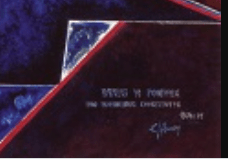
A second painting was begun after Fr Macchi and Hansing’s poet friend, Stefan Andrew, suggested to him that the first work was too small. The second work contains a few changes: more “Hansing Blue” is incorporated and the pillars are emphasised. The Pope’s face is “more humble” and the phrase, Pro hominibus constitutus, meaning ‘appointed for service to the people’ – is written in the lower right hand corner. Surprisingly, this motto is also found on Cardinal Frings’ Coat of Arms.

The finished work was a massive 21.6 m x 3.6m (71ft by 12 ft) and was presented to the Pope in 1972.

Cardinal Fring’s Coat of Arms.
Detail from the painting.
No, I can’t read it either.

In his speech at the time the second painting was presented to the Pope, Bishop Wilhem Cleven referred to John’s Gospel, stating “The time comes when someone else girds you and leads you where you do not want to go.” (John. 21:17).

When he saw the finished second portrait, he remarked that the it was “very useful” to make an “act of reflection’ in studying the painting. The artist then went on to make seven screen prints of the portrait, apparently at the behest of Paul, in order that they may be sources of “acts of reflection.”

Interpretation

The definitive explanation of the Masonic symbols found in the work was written by researcher and author, Craig Heimbichner, who detected, among other symbols, the three pillars of Masonry, inverted crosses, pentagrams, and at least one square and compass. Heimbichner also explains that the initiation rite of the 30th degree Mason, the Kadosh Degree, involves thrusting a dagger into the papal tiara. He believes the pope is represented as holding that dagger.

It is certainly true that Paul VI surrendered the Papal Tiara at the start of his pontificate. Could his devastating reforms and the emptying of papal authority on his watch also be considered as “killing” the papacy?

I am not normally given to making wild speculations on subjects that are outside my competency. However, this case is an exception. While we will never know the true meaning of this mysterious episode, or of the paintings themselves, I proffer the following hypothesis. You may like to think of it as fan-fiction:

Paul is represented as both victim and perpetrator in Hansing’s portrait: this is an image of his character and of his pontificate…..

Prior to the conclave, the blackmailable Montini promised his Progressive/Masonic coalition supporters that he would allow sweeping reforms once he was elected Pope. As Pope Paul VI, he went along with changes to the Mass, leaving details to the Freemason Bugnini, and approved the other innovations introduced during and after the Council.

Although the Council reaffirmed the Church’s teaching on birth control, Cardinal Frings later challenged Paul to review the that stance, leading Paul to establish a commission to look into the matter. The commission returned to Paul with their conclusion: birth control should be allowed.

This was a bridge too far for Paul. Already cracks were appearing as the Council’s love-fest aura began to wear off. The unity and renewal Paul had, far too optimistically, hoped for had not eventuated, and his latitude in doctrinal matters was being exploited by those closest to him.

Paul decided to risk the ire of the Masonic brotherhood, stand his ground and defend the Church’s teaching in Humanae Vitae, which was released it in 1968.

Frings and the Masonic forces he represented were furious. Paul needed to be reigned in but they knew him to be pliable and timid. (“Begging” and “pleading”, as Hansing said.) They decided to send him a warning – of the most severe kind. Hansing was conscripted to deliver the message on behalf of the Lodge.

Hansing is moved onsite although he didn’t really need to sketch Paul: he already had chosen the photograph taken in Jerusalem as a model – an indication, perhaps, that the Ecclesiastical Lodge that commissioned him had powerful Jewish connections. He sat in on thirteen of Paul’s Audiences merely to intimidate him.

The pressure mounted and Paul began to waver. He was shown a working sketch of himself and mused aloud: “One almost needs a new philosophy to grasp the meaning of this in its context.” Perhaps that “new philosophy” was something antithetical to Catholic teaching to which Paul had ambivalently subscribed.

Once the first painting was finished, the seriousness of the threat became even more apparent. The looming threat of violence overwhelmed him and Paul sensed that his life may be in danger. The angles of the painting resembled an axe cleaving his skull in two but also represented to him his double-mindedness.

He knew he was under pressure to fulfil the ancient decrees of Masonry and demolish Catholicism, as represented by the weapon in his bloody hands, and as symbolised in the stabbing of the Papal Tiara.

Paul finally relented and resigned himself to following the Masonic programme for the rest of his pontificate. He then informed the Lodge.

A second painting was commissioned and the Pope was now represented with a “more humble” countenance. The pillars of Masonry were emphasised, representing Paul’s triumph of “reason” over “superstition”. Bishop Cleven was on hand to remind Paul that someone else “girded him and led him where he does not want to go.” (As if he needed the reminder)

A humbled Paul then acknowledged that his “acts of reflection” led him to make the right decision. To prevent a relapse, the Frings-led Lodge commissioned seven prints of the portrait – one for each day of the week.

Paul later had a crisis of conscience (as did Frings). He was forced to confront the implications of his progressive reforms as the Church continued to implode and he grieved that no one anywhere on the Catholic spectrum respected him.

When he tried to impose his papal authority, the Lodge reacted swiftly: a staged attempt was made on his life when he visited the Philippines in 1975. Macchi and Marcinkus “saved his life,” and Paul was again beholden to the Masonic forces that elected him.

Paul wavered again, trying to warn Catholics of the Pandora’s Box that had been unleashed by the Council. His furious minders began to lose their patience. It was time for a showdown.

When Paul again publicly held his ground on the Church’s approach to sexuality morality, it was the last straw for the Ecclesiastical Masons. In 1976, a campaign was orchestrated to suggest that the Pope had a very dark secret: that he was a homosexual. Paul was crushed and defeated; he never issued another encyclical and openly expressed his regret for the direction taken by the Council, never admitting his part, overwhelmed as he was by the pressure that had been brought to bear on him.

No wonder Paul whispered to his biographers, “You will crucify me.”

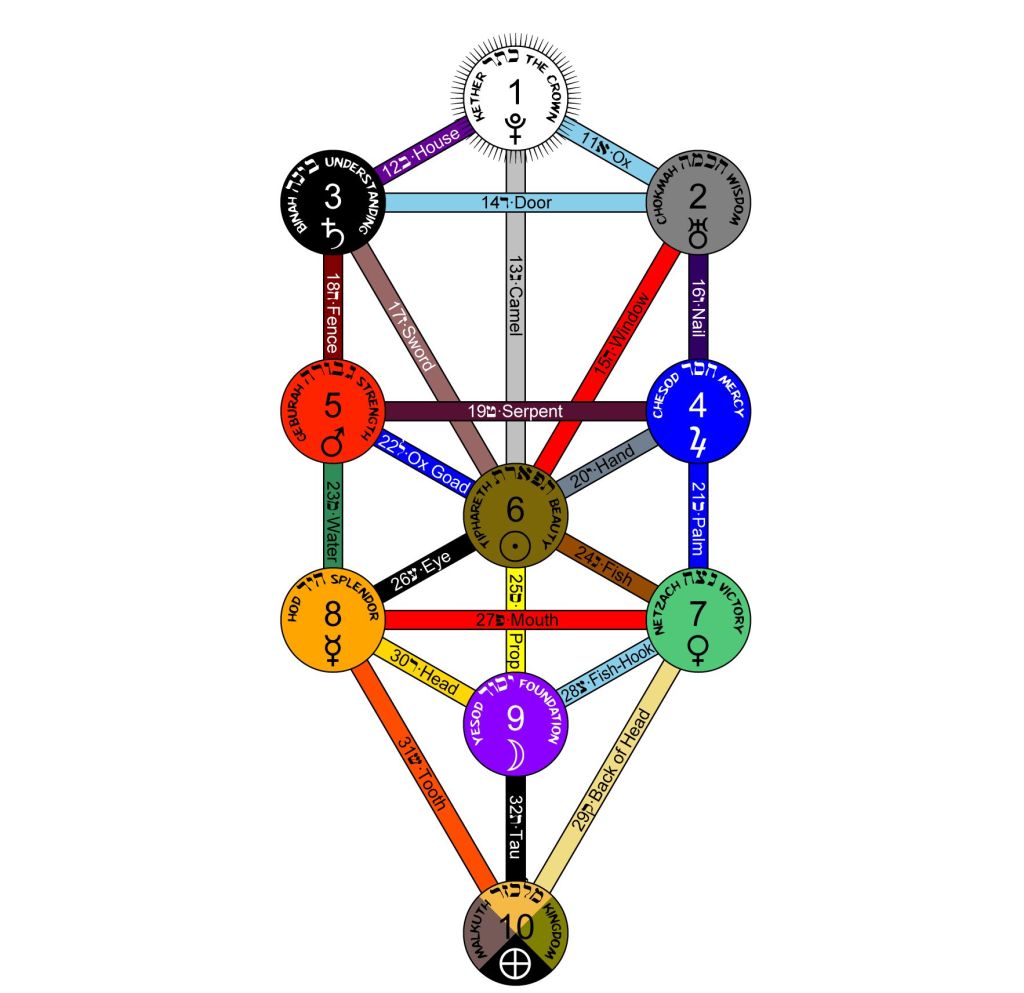
Just to complete the flight of fantasy, on the left is a diagram commonly used in Gnostic Judaism, or Kabbalah.

It is interesting to note how many points line up with Paul’s “portraits.”

SOURCES:

Hieronymopolis.wordpress.com

Novus Ordo Watch

wilfried-hansmann.de

Ernst Guenter Hansing

A Theory about the Desecration of Pell’s Body

Many rumours and half-truths have been flying about in regard to what happened to the body of Cardinal Pell after his death. Actually, there are also a number of rumours about the cause of his death itself, but that is not the theme of this article.

Rather, I’d like to propose a scenario centred around his corpse, one which includes a modest amount of anecdotal evidence.

After it had been reported that Pell’s body was “grossly disrespected” by having its nose broken and being left dirty, without shoes and with clothes just thrown on top of it, a new version of the story has emerged. George Pell’s brother now claims he was perfectly happy with the treatment of the body.

David Pell told The Australian that his brother’s nose “was askew” but that it “could have been broken by the lid of his tight-fitting coffin.” David Pell also thought it reasonable that the Cardinal was without shoes because they just wouldn’t fit into the coffin and clarified that he was clothed but that the vestments were in the wrong order.

I personally find these statements rather troubling. Surely the workers at a reputable funeral parlour would be capable of selecting the correct-sized coffin – one that would account for a large body’s nose and shoes? Is that not simply part of their job? How often do funeral parlours break people’s noses!? Cardinal Pell was a large man, but he wasn’t morbidly obese. There was nothing remarkable about his stature from a coffin-maker’s point of view.

Regarding his vestments: presumably the funeral directors who prepared the body were very familiar with the vestments of Catholic prelates. This was Rome, after all. It seems significant that the Cardinal’s vestments, which played such an integral part in disproving the allegations against him, are again relevant to the mystery surrounding his body’s post-autopsy experiences. [If the reader doesn’t understand what I’m talking about, let him consider the restrictions placed on one’s body by a garment that reaches almost to the floor and which has no front opening. In other words, a Bishop’s vestments would be most inconvenient for someone perpetrating opportunistic s** abuse.]

One online commentator, a Benepapist famous for her histrionic denunciations of all and sundry, has accused the Pell family of being “paid off”. I believe that to be a most uncharitable take on the situation.

It seems far more likely that the family were told that Pell’s nose was broken by the coffin lid and told that his shoes were too big for the coffin. They must have taken it at face value and that would have been the end of it as far as they were concerned.

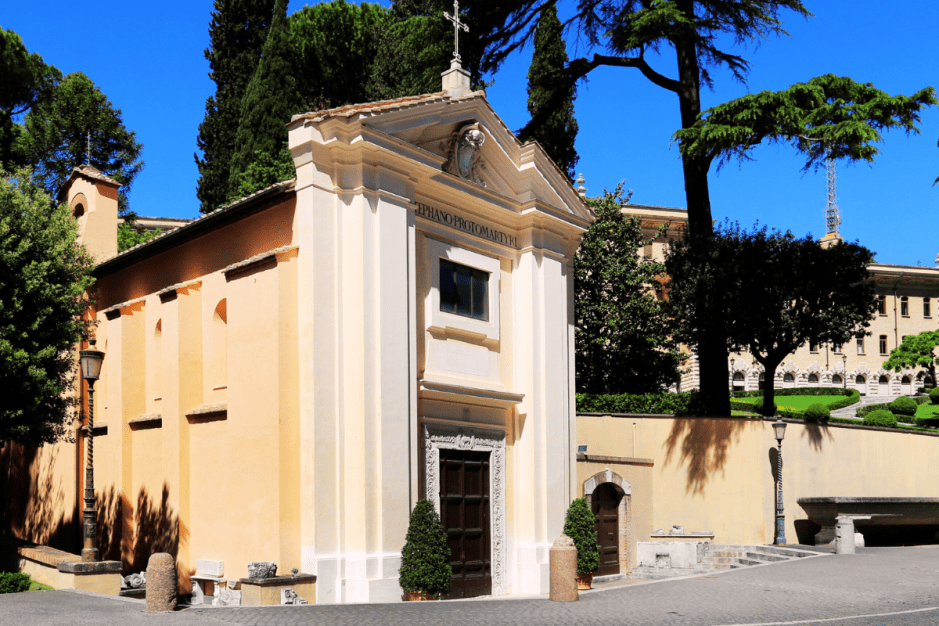
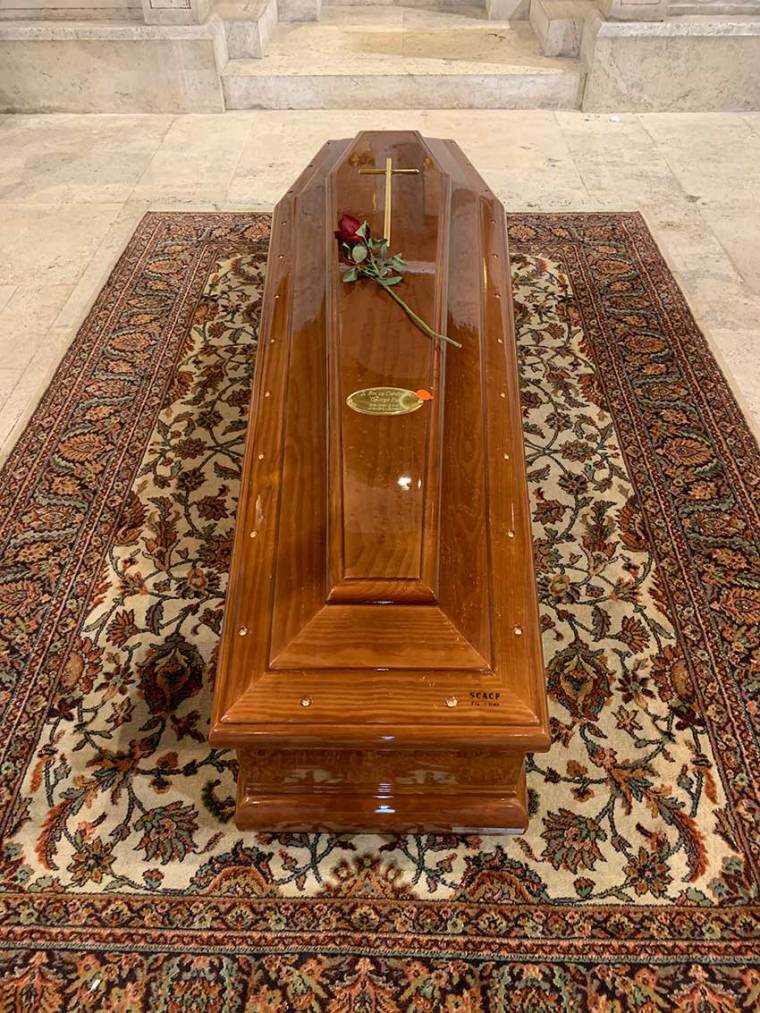
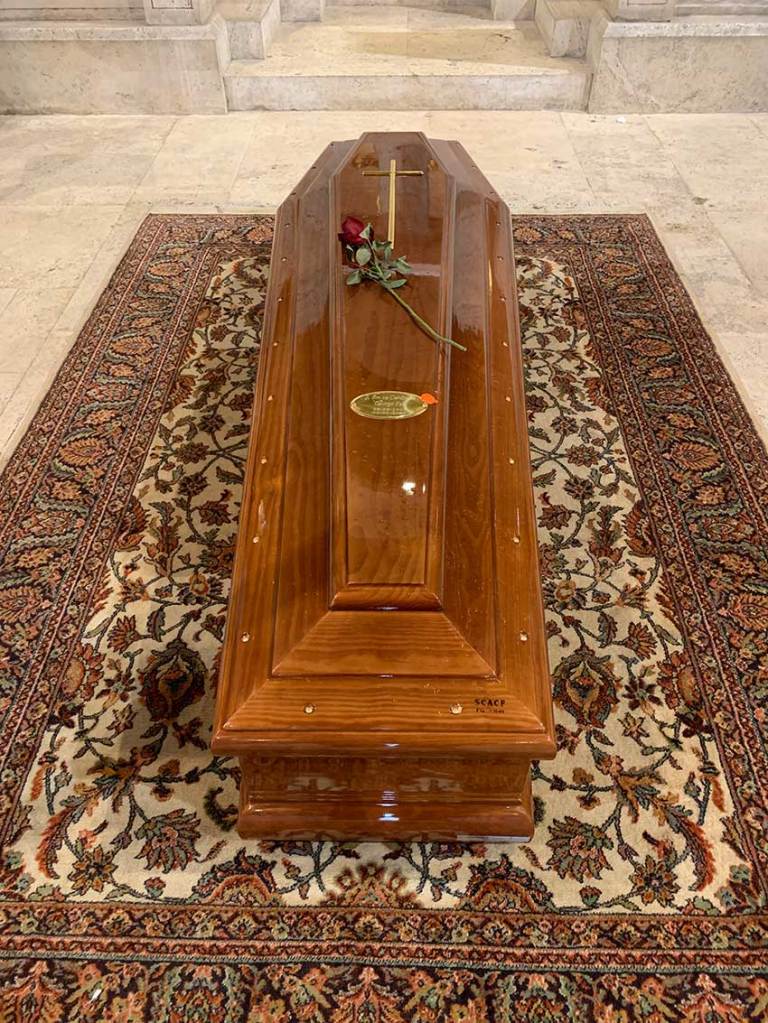
Again, I present the photograph of the coffin as it lay in state in Santo Stefano degli Abissini prior to the Cardinal’s Requiem Mass.

As was pointed out in my previous article, the screw-holes in the coffin’s lid have been filled with a very light- coloured filler, giving it a most unprofessional finish. This is consistent with the coffin being re-opened some time after it left the funeral home.

So I am not suggesting that David Pell was lying. Rather, I am suggesting that he and the family might be just a little naïve – and they were probably in shock, after all. They trusted whomever told them a yarn about the Cardinal’s body – and that someone may well have actually had a hand in the desecration itself, or at least in hiding the fact.

There is precedent for my opinion. Naïveté can run in the family, even among very good and upright people, perhaps especially among good people.

George Pell was known for sometimes making the most disastrous appointments. There is one Australian Bishop, no stranger to the pages of this website, who was a product of the late Cardinal Pell. Pell mentored him, and brought him up through the ranks of the Church to his present high status.

That man is a complete buffoon, without class or culture, an ecumaniac and sycophant to all things LGBT. It is possible that he should never have been a priest, much less a bishop and I actually once heard a priest say that if it hadn’t been for George Pell, that man would “still be sitting on his couch, watching the footy.” Or words to that effect.

In short, George Pell made a huge mistake when he decided that man was bishop material.

Now Pell was definitely not stupid, and was not corrupt, but on occasion was a very poor judge of character. Perhaps his family shares this honest flaw, making them easy prey for the devious Vatican spin doctors.

A Hypothetical Timeline of Events.
  1. Death of Pell in Rome on Tuesday, Jan. 10, 2023.
  2. Family is notified and the usual protocols for dealing with the corpse of a prelate are triggered.
  3. A priority autopsy is performed according to the standards in Rome.
  4. Corpse is sent to funeral home in Rome for priority treatment: cleaning and embalming are performed, coffin is sealed.
  5. Prepared corpse is sent to Santo Stefano degli Abissini for veneration, perhaps as early as Wed. 11 (according to one report.)
  6. Coffin is reopened at the Santo Stefano degli Abissini church (possibly during the night) and the body is desecrated/abused/ritually humiliated. Abuse includes breaking of Pell’s nose and sullying the body which results in the embalming being “buggered up” (in the words of David Pell.)
  7. The abusers re-seal the coffin lid using a new, lighter coloured filler in the screw holes.
  8. Pell’s body is venerated for several days with coffin (unusually for a bishop) closed.
  9. Pell’s body transferred to St. Peter’s Basilica for a Requiem Mass on Saturday Jan. 14th.
  10. Pell’s body is flown to Australia ahead of the burial on Feb 2, 2023.
  11. Desecration is discovered when the coffin is re-opened in Sydney.

A Rosicrucian Calling-Card on Pell’s Coffin?

The very first time I laid eyes on the photograph shown below, which was almost eighteen months ago now, the single rose so carefully placed near the gold cross struck me as being odd. More than odd – it looked like the signature of someone who wanted to publicise his work. A message which might say that, “We were responsible, we had our way with Cardinal Pell.”

Such a signature in the form of a rose and cross could only mean one thing: Rosicrucians, members of that esoteric offshoot of Freemasonry known for its strange mix of Catholicism, magic and secret knowledge.

Cardinal Pell’s mortal remains lying in state at the Santo Stefano degli Abissini, just a stone’s throw from the Pope’s home.

Now of course, that rose might have been placed there by a friend, or a family member, or by some unknown cleaning lady for whom Pell always had a kind word. Which is precisely why I didn’t draw attention to it before now.

However, now that we know that Pell’s body was desecrated ( see video below if this is new to you) and now that the suggestion of murder is being unselfconsciously thrown around, I thought this might be a good time to bring it up.

The coffin seems to have been produced by this company: SCACF, as indicated by the letters in the bottom right hand corner. According to its website, this competent-looking company supplies coffins to more than 2000 funeral homes throughout the world. Presumably the funeral home that prepared the body and ordered the coffin were equally competent.

However, judging by the photograph above, (as found at the Catholic Weekly) whoever filled the screw holes on the coffin’s lid did a fairly poor job. It rather lets down the quality of the thing. Not a very professional look for the funeral home, is it?

This leads us to ponder: is it possible that the coffin left the funeral home with the body prepared to the normal high standards and with the screw-holes filled in an unobtrusive manner, and that the Cardinal’s body was desecrated after that, with the holes refilled by his unholy desecrators?

We know that it happened after the autopsy. Perhaps it took place after the all the preparation procedures had been finished, away from the prying eyes of good and faithful artisans – perhaps in the church itself?

For this church is very close to Casa Santa Marta, the home of Pope Bergoglio and his assortment of highly unsavoury sodomites – some of whom are without doubt, Rosicrucians.

For a further analysis, please see my Theory about the Desecration of Pell’s Body.