Open Letter to Australia’s Catholic Bishops regarding Freemasonry

Is something finally going to be done about this disgraceful state of affairs? Well, we won’t be holding our breath.

From the remnant newspaper

In a document dated 13 November 2023, the Dicastery for the Doctrine of the Faith has reaffirmed the incompatibility between Catholicism and Freemasonry and has reiterated the Church’s centuries-old prohibition on Catholics being members of Freemasonry.

Responding to a request for pastoral direction from the Most Rev. Julito Cortes, Bishop of Dumaguete, (Philippines) who expressed concern about the increasing numbers of his Catholic flock who were enrolled in Freemasonry, Cardinal Víctor Manuel Fernández, Prefect of the Dicastery for the Doctrine of the Faith, issued a “Note for the Audience With the Holy Father Regarding the Best Pastoral Approach to Membership in Freemasonry by the Catholic Faithful”1. The document was countersigned by Pope Francis. In addition to providing practical suggestions and pastoral guidelines, the document states that:

“ … active membership in Freemasonry by a member of the faithful is forbidden because of the irreconcilability between Catholic doctrine and Freemasonry (cf. Congregation for the Doctrine of the Faith, “Declaration on Masonic Associations” [1983], and the guidelines published by the Catholic Bishops Conference of the Philippines in 2003). Therefore, those who are formally and knowingly enrolled in Masonic Lodges and have embraced Masonic principles fall under the provisions in the above-mentioned Declaration. These measures also apply to any clericsenrolled in Freemasonry.”

The 1983 “Declaration on Masonic Associations” states:

“Therefore the Church’s negative judgment in regard to Masonic association remains unchanged since their principles have always been considered irreconcilable with the doctrine of the Church and therefore membership in them remains forbidden. The faithful who enrol in Masonic associations are in a state of grave sin and may not receive Holy Communion.”

Given this recent confirmation by the Apostolic See of the Church’s perennial ban on Catholic membership in Freemasonry, we feel it is an opportune moment to remind Your Excellencies of the ongoing deep concern among many Australian Catholics that was first sparked over six years ago by a letter of 11 July 2017 written by the then General Secretary of the Australian Catholic Bishops’ Conference, the Rev Stephen Hackett [see letter].

Fr. Hackett’s response to the Grand Master, written on behalf of the ACBC, clearly leaves the door open to sacramental reception by Australian Catholic Freemasons in many or most cases, even though that door had been totally and firmly closed – and remains closed – by the Church’s perennial doctrine and discipline.

Fr. Hackett was replying to a letter sent a year earlier to the ACBC by Mr Stephen Michalak, a Catholic who was then Grand Master of Freemasonry for South Australia and the Northern Territory. In this letter, which he said was written with the unanimous support of all Masonic Grand Masters in Australia, Mr. Michalak not only asked the Australian bishops to “outline a pathway for Catholics who are Freemasons to full participation in the sacramental life of the Church,” but appealed to the present Holy Father’s pastoral approach in support of this request. To deny Catholic Masons access to the sacraments, said the Grand Master, “seems totally at variance to my understanding of what Pope Francis is actively trying to promote – a spirit of understanding and reconciliation . . . love and forgiveness”.

Rome’s recent reiteration of the Church’s absolute prohibition of membership in Freemasonry shows how completely Grand Master Michalak misunderstood the Holy Father’s thinking on this matter. But it seems possible that Fr. Hackett, along with the members of the Bishops’ Commissions on Canon Law and Doctrine and Morals whom he says he consulted, and not a few others among Your Excellencies, may have shared that misunderstanding. For Fr. Hackett’s response to the Grand Master, written on behalf of the ACBC, clearly leaves the door open to sacramental reception by Australian Catholic Freemasons in many or most cases, even though that door had been totally and firmly closed – and remains closed – by the Church’s perennial doctrine and discipline. Fr. Hackett’s response is particularly shocking to many of the faithful in this country, given that it claims merely to “reiterate” an Australian episcopal policy dating right back to 1984 that has been “affirmed this year” (i.e., some time between January and July 2017). As if to drive the point home, Fr. Hackett ends his letter to the representative of Australian Freemasonry by stating that this essentially affirmative response to his request is “the preferred approach of the Bishops [sic] Conference”.

So what, precisely, does this “preferred approach” consist in? Fr. Hackett assures Mr. Michalak that “no penalty attaches to Catholic membership in the Masonic order”. This is technically correct, given that in the 1983 Code of Canon Law the previous Code’s canonical penalty of excommunication for Masonic membership was deleted and replaced by a more general penal sanction against those who join any society that “plots against the Church” (cf. c. 1374). But since Fr. Hackett did not insert the word “canonical” before “penalty”, and since most lay Catholic readers would certainly regard their exclusion from the sacraments as a “penalty”, his statement is wide open to creating the false and scandalous impression that the Church no longer excludes Freemasons from the sacraments in any way.

The second point Fr. Hackett ignores in his letter is the CDF’s insistence that local ecclesiastical authorities have no authority to mitigate or derogate from the Church’s total exclusion of Catholic Freemasons from the sacraments in places where (as in Australia, apparently) they may discern a benign, rather than hostile, attitude towards the Church in local Masonic lodges.

It is true that Fr. Hackett nuances this seemingly permissive generalization by acknowledging that “in some other countries, . . . Freemasonry can be antithetical to Catholic faith” (in which case, presumably, membership would fall foul of canon 1374). So because of such regional or local divergences within Freemasonry, says Fr. Hackett, the Australian bishops have “prudently” decided not to issue any general directive on “Catholic involvement in Freemasonry”. Rather, he says, “such involvement is in each instance best addressed personally with the local parish priest”. Nevertheless, Fr. Hackett, claiming to express the official position of the ACBC, makes it abundantly clear that admission to the sacraments is to be the norm for Australian Catholic Freemasons, and exclusion from them the exception. For he tells the Grand Master that “where a local pastoral response is not consistent with this expectation [i.e., the expectation of admission to the sacraments as a general rule following the Church’s elimination of any “penalty” for Masonic membership] and liturgical-sacramental participation is made difficult or refused, that this might be referred to the local vicar-general or to me”.

In all this, however, Fr. Hackett’s letter ignores what seem to us two fundamentally important points. The first is that even when Freemasons do not “plot against the Church”, and so don’t incur the canonical penalty laid down in c. 1374, Masonic membership as such is still affirmed by the Church to be a grave sin that excludes from Holy Communion. Why? Because of “the irreconcilability between Catholic doctrine and Freemasonry”. Masonic communities do indeed allow members to profess and practice the religion of their choice, Christian or non-Christian; but only as one human tradition among others. Freemasonry’s relativistic, deistic and anti-supernatural ideology rejects the Catholic Church’s claim to possess uniquely the fullness of divine revelation. Moreover, Freemasonry has its own syncretistic religious rituals (which it tries to keep a closely guarded secret), and participation in prohibited rites such as these remains penalized in the current Code of Canon Law. In the section “Offences Against Religion and the Unity of the Church”, we read, “One who is guilty of participation in prohibited religious rites is to be punished with a just penalty” (c. 1365).

The second point Fr. Hackett ignores in his letter is the CDF’s insistence that local ecclesiastical authorities have no authority to mitigate or derogate from the Church’s total exclusion of Catholic Freemasons from the sacraments in places where (as in Australia, apparently) they may discern a benign, rather than hostile, attitude towards the Church in local Masonic lodges. Indeed, Fr. Hackett’s message to this country’s Catholic Masons that the ACBC has in general opened the door to their liturgical and sacramental participation, and that exceptional or problematical cases may be referred to “the local parish priest”, the “local vicar general”, or Fr. Hackett himself, stands in open defiance of the 1983 Vatican ruling. For the Declaration ends with the following affirmation:

“It is not within the competence of local ecclesiastical authorities to give a judgment on the nature of Masonic associations which would imply a derogation from what has been decided above, and this in line with the Declaration of this Sacred Congregation issued on 17 February 1981. (cf. AAS 73 1981 pp. 240-241.)”

We present them with a view to mitigating the scandal experienced in this matter by the faithful, as well as by members of Freemasonry, whose immortal souls may have been put in jeopardy by rash assurances that such membership is not sinful and is compatible with the reception of the Eucharist.

In view of the above, we respectfully request a new clarification from Your Excellencies regarding Catholic involvement in Freemasonry that includes a formal repudiation of Fr. Hackett’s erroneous position. More specifically:

1. We ask that the Australian Catholic Bishops Conference formally state its commitment to upholding the 1983 Declaration from the Congregation for the Doctrine of the Faith and the November 2023 Note from the Dicastery for the Doctrine of the Faith. Both of these are in continuity with the Church’s longheld judgment when they affirm, “The principles [of Freemasonry] have always been considered irreconcilable with the doctrine of the Church and therefore membership in them remains forbidden. The faithful who enrol in Masonic associations are in a state of grave sin and may not receive Holy Communion.”

2. We ask that the Bishops’ Commission for Canon Law and the Bishops’ Commission for Faith and Morals, both explicitly mentioned by Fr Hackett as having been consulted prior to the release of his letter, clarify for those unfamiliar with canon law that the statement “no penalty attaches to Catholic membership in the Masonic order” refers only to the absence of an ecclesiastically imposed canonical punishment such as excommunication or interdict, and in no way implies that such membership is morally acceptable.

3. We ask that, in a manner similar to that which has now been recommended to the Filipino Bishops by the DDF, the Australian Bishops “conduct catechesis accessible to the people and in all parishes regarding the reasons for the irreconcilability between the Catholic Faith and Freemasonry”.

4. We ask that the results of any investigation into the preparation and publishing of Fr. Stephen Hackett’s 2017 letter be made public. For that letter, written on behalf of the ACBC, directly contradicts the well-known doctrine and discipline of the Catholic Church towards Freemasonry that had been declared in 1983 by the CDF under Pope St. John Paul II and has now been reaffirmed by the DDF under Pope Francis.

These requests to Your Excellencies are being respectfully made in the spirit of canon 212, sections 2 and 3, which recognize the right of Christ’s faithful to make known to the Pastors of the Church their spiritual needs and their views on matters which concern the good of the Church. We present them with a view to mitigating the scandal experienced in this matter by the faithful, as well as by members of Freemasonry, whose immortal souls may have been put in jeopardy by rash assurances that such membership is not sinful and is compatible with the reception of the Eucharist.

Be assured of our prayers for Your Excellencies as we thank you for your gracious attention to this submission ….
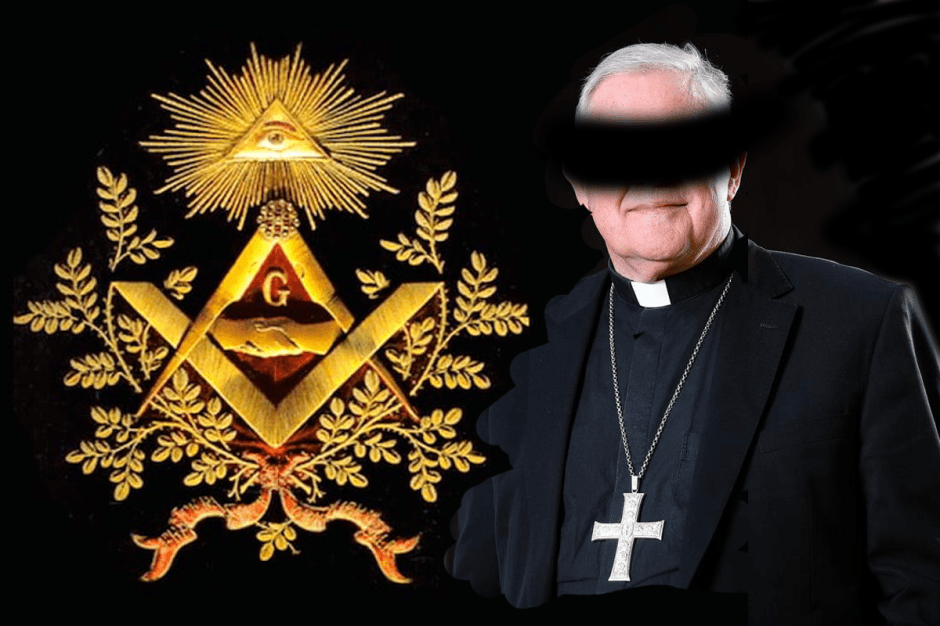
How does a prelate become a Freemason?

From ‘Unholy Craft’by Arnaud de Lassus

In Italy, in 1999, a book was published anonymously entitled Via col vento in Vaticano and, according to the editor the French version, “would have come from a group of high-ranking Vatican dignitaries who chose to break the law of silence.”

It is a collective work describing various disorders affecting the Holy See. The chapters are not all of equal value and some call for serious reservations. Chapter 18, The Smoke of Satan in the Vatican, deals with Freemasonry and, in four very interesting pages, explains the process used to entice prelates to affiliate to the craft.

There is a real novitiate for recruiting ecclesiastics to the Masonic order. Among ecclesiastics, there is a certain category of men in which Masonry seeks possible collaborators; these must combine certain gifts: keen intelligence, a great desire for advancement, ambition, quickness to understand and to pretend to understand nothing, willingness to serve and, if necessary, a good physical presence and a pleasing face.

When a young ecclesiastic meets these criteria … it remains only to engage him by titillating his pride.

The author insists on the secrecy of the operation which is a consideration of its success:

In this first phase it is absolutely necessary that the designated candidate remains in total ignorance of what is being set up around him. The Masonic technique requires to be revealed progressively, so that the associate discovers the secret society’s aims only gradually, as the superiors think fit.

The first contact is made as naturally as possible. An invitation to an accomodating embassy for a national festival, unexpectedly meeting someone who claims to be delighted to have met him, a prelate who asks him for something and shows his gratitude. Then comes the phase of compliments and flattery: What a treasure, such kindness, such keen intelligence … You deserve better – you are wasting your time. Why don’t we address each other less formally? …. Then one enters the phase of future prospects: I know such a prelate, such a cardinal, such an ambassador or such a minister ….I’ll willingly put in a word for you; I’ll say you are someone who deserves higher responsibilities ….

At this stage, the proposer immediately realises whether the interested party has taken the bait.

The process thus described will continue for several years, always in secret.

Gradually, the promises made are fulfilled. The pre-selected candidate notes that these were not in vain and believes it is his duty to be grateful to the friend whom he regards as his benefactor. During this time, his career progresses very smoothly without encountering any difficulties. Brilliant prospects in the service of the Church appear before him and he begins to see a position which would suit him rather well.

Then, when fired with ambition and vanity, the naive prelate has at hand the evidence of his effortless advancement, which he hasn’t yet fully grasped, and when other promotion to higher levels still beckon – it is at this stage that the explanatory phase arrives.

The recruiters explain to the candidate that:

  • If he has attained such wonderful positions, it is thanks to the discrete support of the Masonic order and its friends
  • He is free to continue to collaborate with this order, which will ensure his advancement continues.

In this very delicate phase, it is up to the prelate, in crisis, to decide which choice to make.

The desire to continue to advance, the excitement of knowing one is being introduced into the Masonic group, the fear of unavoidable revelations should he refuse to join, or, on the contrary, the vacuum he can already feel around him, the fraternal exhortation of some dignitary to go ahead, as he himself has done formerly: In a word, all this ends up convincing the prelate to follow the path mapped out for him by others without him being aware of it.

The higher one’s position, the more likely one is likely to be gripped by the fear of losing the high position one has attained. One abyss opens after another. One seeks to justify oneself.

Many prelates, thus compromised, end up by giving in and become members of the Masonic apparatus and under obligation to obey its instructions.

Thus, once infiltrated into his ecclesiastical setting, the brave Masonic novice’s first duty is to maintain his credibility by keeping his promises and, if necessary, to cast, as poseurs and hypocrites, the prelates of the place he has infiltrated.

Skilfully hooked, the new Freemason then becomes a pawn in the secret lodge’s sphere of action and is added to the others already there. His rise can now continue unabated towards the top with the help of other ‘brothers.’

This is a remarkable process, founded on secrecy, which can easily last ten years and which can be implemented by disciplined, well trained …. and patient personnel. It is undoubtedly used not only in the Curia, but just as much in the secular and ecclesiastical worlds.

Two general remarks can be made following the observations which have been made on Masonic infiltration within the Curia and on the process used for that purpose.

The presence of Freemasons in key positions in the Church explains to a great extent the doctrinal and disciplinary deviations of these last forty years. It is particularly clear in the case of liturgical reform.

As for the process that is used to produce Masonic prelates, it is very important to understand it and to make it known, because it obviously loses its effectiveness when it is known.

In conclusion, let us remain alert to the Masonic question. It is one of the keys to the current crisis, political as well as religious and, as Pope Leo XIII said in the encyclical Humanum genus,it is necessary ‘to tear away the mask from Freemasonry and to let it be seen as it really is.

Let us remain alert and keep faith in the Church; we know that the gates of hell will not prevail against Her.

The Church is truly a supernatural society, truly holy. The Mystical Body of Christ, the Bride of Christ, of unblemished fidelity, in the image of the Virgin Mary. Without exception, throughout the centuries, and until the end of the world, ‘She is Jesus Christ, given and communicated. That and nothing else.’

New ACBC head has Modernist form

It is with great regret that I inform you, dear readers, that the new head of the Australian Catholic Bishops Conference will be none other than Archbishop Timothy Costelloe of Perth. Archbishop Costelloe is no stranger to these pages, of course. His dedication to corruption, Modernism and COVID jabs is second to none, and it is fitting that he plans to take advice on his new role from the former president and fellow progressive, Archbishop Coleridge.

The ACBC’s media blog reported Costelloe’s glowing remarks about Coleridge:

“It was Archbishop Coleridge who guided our response beyond the Royal Commission, represented the Church in Australia at the global summit on sexual abuse and steered the bishops through a pandemic and a host of other challenges. Archbishop Coleridge has been a calm and considered leader locally and in the global Church and will be a trusted adviser for me in this new role.”

Sounds like the Australian Church has a bright (illuminated?) future ahead of it.

Costelloe also noted that the Church, of which he is a Prince and for whose members he was ordained in order to “preach, teach and sanctify”, still has a few things going for it – none of which, unfortunately, are spiritual benefits. He said:

“The Church in this country is an immense contributor to our society, through our parishes, our schools, our hospital and aged care, our social services and countless other ministries. As we continue to contemplate how we live out the Gospel in this age, including through the Plenary Council, I look forward to working with my brother bishops and the People of God to carry forward Christ’s mission.”

So, just another CEO of just another NGO, implementing the SDG’s of the UN and WEF. If that isn’t enough TLA’s (Three-Letter-Acronyms) for you, then here’s another:

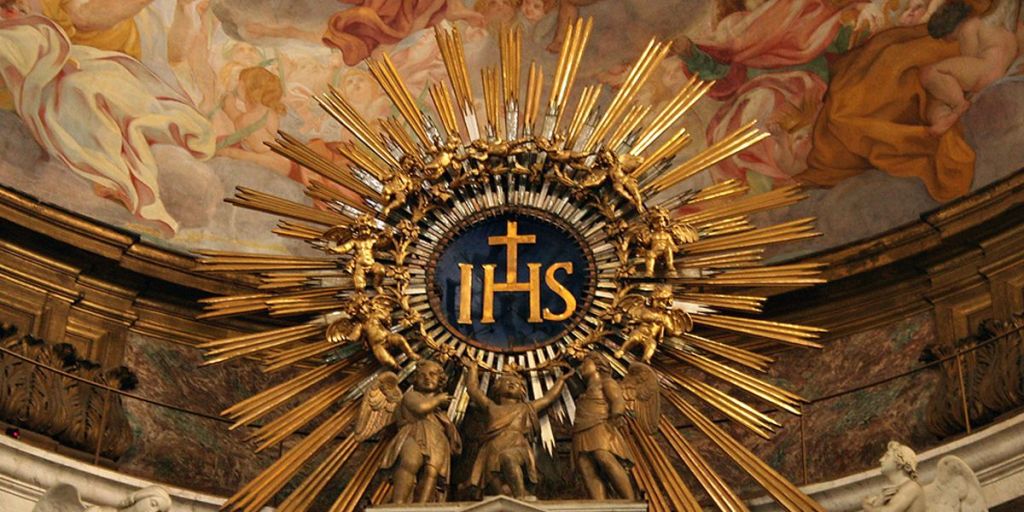
IHS. It represents the Holy Name of Our Lord Jesus Christ, Redeemer of the world, Who was crucified and died for our sins that we may have eternal life.

May the same Lord Jesus Christ restore His Church and replace His Holy Name on the lips of all lost shepherds – those who seem to have forgotten the role for which they are so handsomely paid and for which the price of betrayal is eternal damnation.

Australia’s Bishops want Protestants to teach them how to be Catholic?

Yes, you read that correctly. Since Protestants have been doing “synodality” far longer than we Catholics have, we need to study them to see how it’s done.

Or something like that.

Here’s what the Australian Catholic Bishops Conference put out this week:

To help better understand the place of synodality in the Catholic Church, ecumenical leaders will attend national Uniting and Anglican gatherings this month to see how synodality works in those communities.

The global Synod on Synodality has encouraged engagement with ecumenical and interfaith groups as part of the process leading towards the gathering in Rome in October 2023.

Cardinals Mario Grech, general secretary of the Synod of Bishops, and Kurt Koch, president of the Pontifical Council for Promoting Christian Unity, recently said: “Conscious of our need for the accompaniment and the many gifts of our brothers and sisters in Christ, we call on them to journey with us during these two years and we sincerely pray that Christ will lead us closer to him and so to one another.”

ACBC Media blog May 4th.

So let me get this right: to learn how to be better Catholics, we need to learn from Protestants. Right.

Maybe we should send our teenagers to carjacking school to make them better drivers? Or send our daughters to Marie Stopes to make them better mothers? (Oh, I forgot – Archbishop Comensoli has already tried something like that.)

The article goes onto say that the Australian Synod of Bishops committee is sending “key ecumenical leaders” (Catholics) to the Uniting Church’s Assembly and to the Anglican Synod, which are both being held this month. This is where some of your hard-earned church-offerings are ending up, friends: sending Catholics to take notes from the Protestants.

One of the participants is a Fr Trainor, a priest from Adelaide. He said that “One of the key lessons I’ve learned is that open and friendly dialogue is at the heart of communion in faith …. The core of our communion is Baptism, which leads us to see each other as sisters and brothers in faith.”

So which is it, Father? Is it Baptism or is it “dialogue” that is the basis of our alleged communion with heretical churches? It matters not – neither would pass the Syllabus test, would they?

One good thing could come of this kind of meeting, though. If Catholics hear from their Protestant peers about the numerous difficulties involved in being a married priest, or the practical challenges of being a female priestess, or the lack of acceptance for (God forbid) an openly sodomite bishop, they just might have second thoughts about their own radical plans for the Church.

But until then, be prepared for more of this nonsense as the increasingly irrelevant Plenary movement morphs into the far more fashionable Synodality movement.

At least that’s what the Bishops are trying to convince us of, anyway.

Who needs the Stasi when we have the bishops?

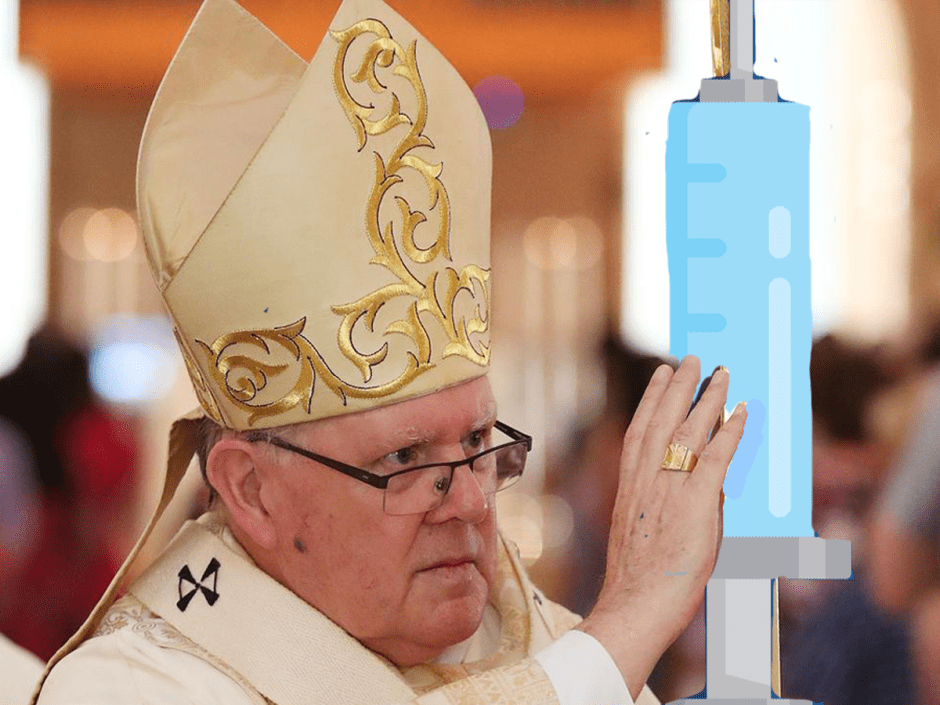
Another Australian bishop has been throwing his pandemic-acquired weight around, this time in sunny Queensland. Mark Coleridge, Archbishop of Brisbane, has decided to collaborate with the tyrannical state government by forcing his priests to get vaxxed or risk losing their faculties.

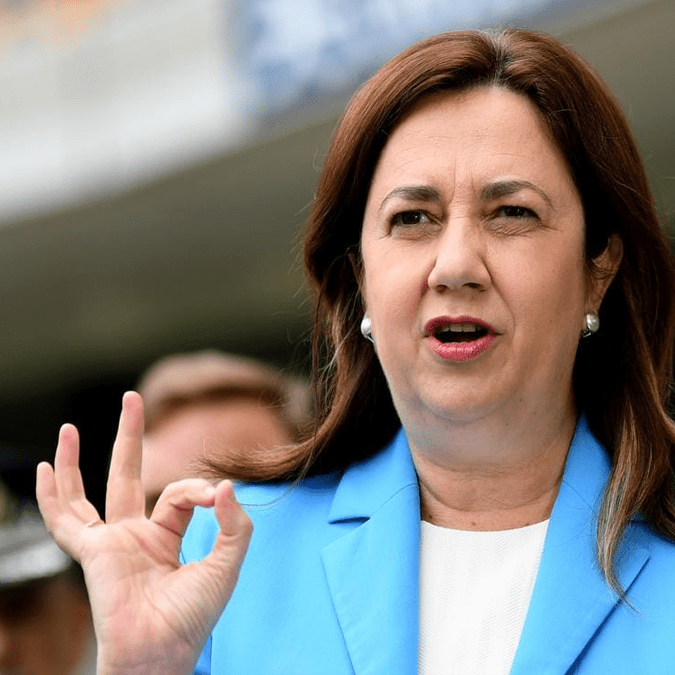
The Catholic Premier of Queensland, Annastacia Palaszczuk, affectionately known as “Stasi,” has found a willing ally in the Archbishop of Brisbane. Like Daniel Andrews and his “good Catholic grandfather”, Palaszczuk has fond memories of her Polish grandparents with their “eight photos of Pope John Paul II in the living room.” Also like Daniel Andrews, Palaszczuk is left-wing, pro-abortion, pro-euthanasia and has been autocratically bullying her subjects into following a raft of COVID mandates, including barely-voluntary vaccination.

While the two State Premiers have much in common, it is remarkable to likewise observe some similarities between Archbishops Coleridge and Comensoli: the latter fancies himself to be the Australian incarnation of John Paul II, while the former was, at one stage, the Polish Pontiff’s speech writer. But unlike JPII, neither Archbishop seems to have the strength nor the will to stand up against their secular leaders’ repressive regimes.

Despite demanding that his priests are double-vaxxed with toxic gene serum by December 15th (“Clergy not doubly vaccinated are failing in their duty to care for the faithful”), the good Archbishop states that he respects his priests’ consciences.

“I too have a conscience”, says he. At least, that’s what he tries to convince them of in his four-page letter, reproduced below.

For the time-poor, the short version is: “You have to listen to me since I am the CEO of the Archdiocesan Corporation.”

The CEO, whose hobbies include holding Zoom meetings with his staff of one.
The Stasi, seen here throwing a totally innocent Illuminati-inspired hand signal.

Yes, that’s right. The Archdiocese of Brisbane is a Corporation, so as well as owing obedience to their Ordinaries, priests must also now submit themselves to medical trials at the behest of their CEOs. From the letter:

I recognise that having a vaccination, including the COVID-19 vaccination, is a matter of personal choice. However, I am the sole member and officer of the Archdiocesan Corporation which in civil law is the employer of Archdiocesan staff, including those working in parishes. I am therefore bound to take seriously compliance with health directions. Further, I have a legal obligation to ensure that the Archdiocesan Corporation meets its workplace health and safety obligations….

Oooohhh. Civil AND legal obligations. But no moral ones?

The Archbishop goes on to make some sophistic claims about his duty to protect his priests, his priests’ duty to protect their parishioners and everyone’s duty to protect unborn babies from medical experimentation – oops, sorry! – he didn’t actually write that last bit because Australian bishops no longer believe in minor obligations like upholding Catholic teaching.

Coleridge did include some extracts from Canon Law which is always guaranteed to make a prelate look more credible. The fact that those Canons are twisted and misapplied is neither here nor there. (He is a CEO with Obligations, remember!)

Just take a look at the penalties Coleridge has prepared for the non-compliant priests, who are, no doubt, some of his most holy and orthodox men: the cessation of their public ministry or worse – suspension of their faculties.

In circumstances where a priest or deacon has not complied with paragraph 1 above by 15 December 2021, I will be asking that he voluntarily stand aside from pastoral duties in his parish and from all pastoral ministry until he has been fully vaccinated. Should a priest or deacon in such circumstances decline to stand aside voluntarily, I will need to consider the temporary suspension of faculties until he fully complies..

Does the Archbishop not realise that unvaccinated Catholics (and probably many vaccinated ones) have no problem at all with being ministered to by an unvaccinated priest? The letter continues with a tirade about medical exemptions, and makes no provision for conscientious objection – or for objecting to His Grace’s conscientiousness!

Now, it really comes as no surprise that Archbishop Coleridge has agreed to do the government’s bidding. As President of the Australian Catholic Bishops Conference – that same Bishops Conference which in 2017 approved Catholics to be Freemasons – he is more than familiar with handshake deals and fraternal cooperation. Coleridge is not even averse to using Brisbane’s churches for sexually-explicit entertainment or from pushing an heretical agenda at his pet project, the Plenary Council.

However, there may be just a little hope for Brisbane’s faithful, unvaccinated priests. It seems Archbishop Coleridge can sometimes be quite lenient when it comes to his pastors breaking the law – at least, it depends on what kind of law is being broken. If it is something on the scale of child sex abuse, he seems to be able to turn a blind eye. He can even enlist help from his pal Cardinal Cupich when the need arises. But something tells me that his unvaxxed priests will not be so fortunate.

In case there’s any doubt left as to what kind of prelate we are dealing with, here’s Archbishop Coleridge’s take on “synodality.” Given that it was St Charles Borromeo who risked contracting the plague to ensure that all Catholics had access to the Sacraments, Archbishop Coleridge unironically uses the patron saint of facing-down pandemics to promote heresy, all the while shirking his own responsibility to safeguard the souls of his flock.

The hermeneutic is strong in this one.

Australian Bishops’ Conference Officially Sanctions Freemasonry

This article appeared on Life Site News back in December of 2019 – there doesn’t seem to have been any action taken by the Australian Bishops to date.
So What does that tell us?

From Life Site News

Back in July, I wrote an article for The Remnant on a Queensland priest who publicly admits to having been a Freemason for more than a decade. While that is shocking enough, the most disturbing part of this story was that the priest claims to have a letter from the Australian Catholic Bishops Conference, giving permission for Catholics to become Masons. This permission was said to be based on the erroneous conclusion that ‘Australian’ Freemasonry is somehow different from any other form of Freemasonry.

As my previous article explained, the communications officer for the ACBC Secretariat  responded to my query with this statement:

“The Australian Catholic Bishops Conference has exchanged private correspondence with officials from the Freemasons in recent years. Fr. Costigan’s writings do not accurately reflect the contents of that private correspondence nor any policy of the Conference.”

As will become clear, that statement might be technically true, but in no way explains the reality of the correspondence’s contents.

Hiding in plain sight

Multiple phone calls and emails to Archdioceses over several months rendered little fruit – only independent Catholic news sites and the Freemasons themselves seemed interested in Fr. Costigan’s conflicting loyalties. However, a careless social media post led to the discovery of the letter online, along with the letter from the Freemasons which originally sparked the ACBC’s response.

That letter was written by the former Grand Master of Northern Territory/South Australia, Stephen Michalak to Fr. Stephen Hackett, the ACBC Secretary, in 2016. In it, Mr. Michalak sought to clarify the Catholic Church’s position on its members becoming Freemasons.

Mr. Michalak is himself a Catholic, as were the Grand Masters of Queensland and Western Australia at that time.  In his letter, Mr. Michalak expounds on the supposed virtues of Masonry, while also admitting that the Church maintains its ban on Catholics being members. He speaks of his ‘long-standing friendship’ with a former Vicar-General of Adelaide, who advised him to contact then Vicar-General, Fr. Philip Marshall.

Fr. Marshall advised him to obtain the agreement of all of the Australian Grand Masters before contacting the Church, and suggested to Michalak that he then write to the ACBC ‘seeking pastoral resolution to the present challenges as well as outlining a pathway for Catholics who are Freemasons to full participation in the sacramental life of the Church.’

Mr Michalak concluded his letter by stating his hope that Roman Catholic Freemasons will eventually be allowed to receive the sacraments without being in a state of sin.

Fr. Hackett’s response

The response from Fr Hackett is dated July 2017, exactly one year after Mr Michalak sent his enquiry. This time was needed, he writes, in order to consult with the Bishops Commission for Canon Law, the Bishops Commission for Doctrine and Morals and the Bishops Conference itself.

Without any explanation other than an acknowledgement of Mr Michalak’s glowing report of Masonry, Fr. Hackett expresses his satisfaction that ‘Australian’ Freemasonry’ is not hostile to Catholicism. However, if this is truly the case, then it is reasonable to ask why this assessment has never been made public or revealed to be the official stance of the ACBC – even though, as Fr. Hackett alleges below, the Bishops Conference came to that conclusion in 1984. Surely, if a thorough investigation involving multiple apparatus of the ACBC and which took a year to complete had actually taken place, then it would behove the Secretary to publicly disclose this fact, and to allow the mysterious 1984 directive to be promulgated.

But there is more.

Fr. Hackett goes on to imagine the Church and the Masons working in a ‘spirit of harmony’ which would be ‘informed by circumstance, need and opportunity.’ He then makes the following alarming and frankly, false, statement:

“Perhaps most importantly for Catholic members of Freemasonry, I can reiterate a directive first made by the Bishops Conference in 1984 and affirmed this year. No penalty attaches to Catholic membership of the Masonic order. The involvement of Catholics in Freemasonry is foremost a moral matter which should normally be dealt with personally and pastorally in the local parish. I suggest that where a local pastoral response is not consistent with this expectation and liturgical-sacramental participation is made difficult or refused, that this might be referred to the local vicar general or to me.

I will raise issue of Catholics and Freemasonry during the annual meeting of Archdiocesan Vicars General, next due to be held in May 2018, to ensure that they are familiar with the preferred approach of the Bishops Conference.”

Fr Hackett’s excuse – that the secrecy is necessary in case there are some Australian lodges which are hostile to the Church – does not hold water, since he provides no criteria by which to judge ‘hostility’ and given that the Church condemns all Masonry in any case.

“No local authority has the competence to derogate from these judgements”

In case there is any doubt as to the Church’s constant teaching on Freemasonry’s incompatibility with the Faith, a summary of the most recent Vatican directive on Masonry is given below. This was the 1983 Directive on Masonic Associations from the Vatican’s Congregation for the Doctrine of the Faith and it was issued after the Code of Canon Law was changed in that same year, omitting the charge that Catholic Freemasons incur ex-communication. That revision had caused confusion amongst Catholics who in some cases assumed that there was no longer any penalty attached to their holding Masonic membership. Then-Cardinal Joseph Ratzinger felt compelled to issue the Directive in order to dispel confusion about Freemasonry. According to the 1983 Directive:

1.    The Church’s negative judgment on Masonry remains unchanged, because the Masonic principles are irreconcilable with the Church’s teaching.

2.    Catholics who join the Masons are in the state of grave sin and may not receive Holy Communion.

3.    No local ecclesiastical authority has the competence to derogate from these judgments of the Sacred Congregation.”

That last point, regarding a prohibition on local authorities to promulgate an alternative teaching on Masonry is very pertinent in this case. For in suggesting that the Australian Bishops Conference can administer a bespoke interpretation of the relationship between Masonry and the Church, Fr. Hackett is in clear violation of the CDF’s directive. Obviously, he has also violated the first point by suggesting that so-called ‘Australian Freemasonry’ can be reconciled with the Church, and the second by failing to advise Catholics who remain Masons that they are not to receive Holy Communion.

Fr. Hackett’s claim that the ACBC directive of 1984 approved Freemasonry after the CDF’s definitive proclamation hints at an arrogance that defies belief.

Freemasonry is an “instrument of Satan”

Fr. Hackett’s assessment of Freemasonry, in addition to violating the 1983 Directive, stands in contrast with that of the many popes, bishops and laymen who have denounced Masonry since its inception four hundred years ago. In fact, there have been more than twenty encyclicals and papal bulls written on this matter by the popes alone.

The most famous of these, Humanum Genus, was written by Pope St. Leo XIII in 1884. In it, Pope Leo wrote,

“We wish it to be your rule first of all to tear away the mask from Freemasonry, and to let it be seen as it really is; and by sermons and pastoral letters to instruct the people as to the artifices used by societies of this kind in seducing men and enticing them into its ranks, and as to the depravity of their opinions and the wickedness of their acts.

As our predecessors have many times repeated, let no man think he may for any reason whatsoever join the Masonic sect, if he values his Catholic name and his eternal salvation as he ought to value them.”

In 1985, American Cardinal Law specifically debunked the idea that Masonry could be acceptable even if ostensibly not hostile to the faith, when he said: “And even though Masonic organizations may not in particular cases plot against the faith, it would still be wrong to join them because their basic principles are irreconcilable with those of the Catholic faith.”

Bishop Athanasius Schneider, in a December 2016 talk, referred to Freemasonry as the ‘Instrument of Satan,’ reminding Catholics that St Maximilian Kolbe founded his Knighthood of the Immaculata in direct response to threats from the Italian Freemasons of his day. As Bishop Schneider pointed out, reiterating the Church’s constant teaching, Freemasonry’’s goal is “to eliminate the entire doctrine of God, especially Catholic doctrine.”

Former 32nd degree Mason, layman John Salza, is just as blunt. He states that “Freemasonry is a religion that is opposed to Jesus Christ and the Catholic Church. That’s the bottom line.”

The Bishops respond

FLI contacted Archbishop Anthony Fisher OP, Vice-President of the ACBC and Archbishop Julian Porteous for a response to our queries:

Archbishop Fisher stated via his private secretary that:

 … he has no recollection of this being discussed at the Bishops Conference. The 1983 Declaration on Masonic Associations from the Congregation for the Doctrine of the Faith makes clear that Catholics who enrol in Masonic activities are in a state of grave sin and may not receive Holy Communion. Furthermore, the Declaration expressly says it is not within the competence of local ecclesiastical authorities to derogate from this.

Further, the Archbishop said that it is his understanding that while penalties have varied, the Church has never been in favour of Catholics joining any secret organisations with quasi-religious doctrines.”

Additionally, Archbishop Fisher’s secretary drew our attention to the 1937 Plenary Council for Australia which passed a decree that prohibited Catholics becoming members of the Freemasons.

Paul Hanrahan spoke to Archbishop Julian Porteous, FLI’s Patron, who would like to withhold any comment until he has had a reply to his letter to Father Stephen Hackett MSC, asking him for clarification, especially where he received the information he has quoted. He does however endorse the comments of Archbishop Anthony Fisher.

“For there is nothing covered, that shall not be revealed”

It’s quite ironic that attempts by Catholic clergy to undermine the Church by embracing Freemasonry were undone by that ‘secret’ society advertising the fact on social media.

One day, as Jesus has promised us, all such secrets will be laid bare. But in the interim before that fearful day, there are sure to be many more betrayals revealed.

In light of the ACBC’s failure to adequately defend the Church’s teaching on a matter as fundamental as Catholicism’s incompatibility with Freemasonry, it should also be asked how any sane Catholic could expect the upcoming Plenary Council to fare any better.

Unless information to the contrary is made known by the bishops, Catholics could well conjecture that there exists in Australia a cabal of the clergy who are involved in Freemasonry, a number that is possibly not insignificant.  Knowing the sad state of the Catholic Education system, the widespread incidence of heterodoxy in Australian parishes, unfettered homo-clericalism and its attendant abuse scandal, as well as the continued failure of anyone in authority to censure Fr Costigan – a spiritual work of mercy that is the obligation of every bishop – those fears would not be unfounded.

The offices of the Bishops Commission for Canon Law, the Bishops Commission for Doctrine and Morals, the Vicars-General and the Bishops Conference itself might be a good place to start looking.