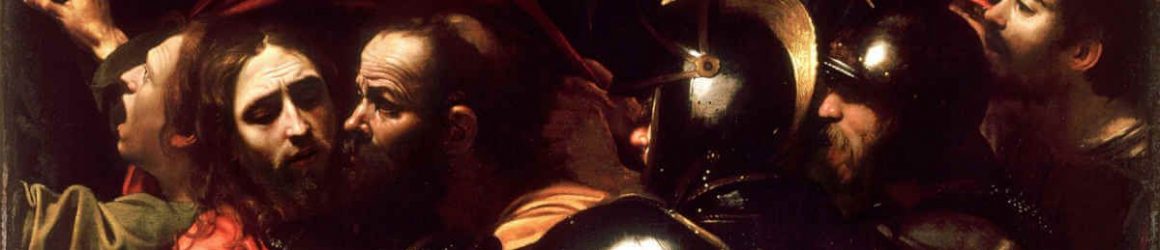
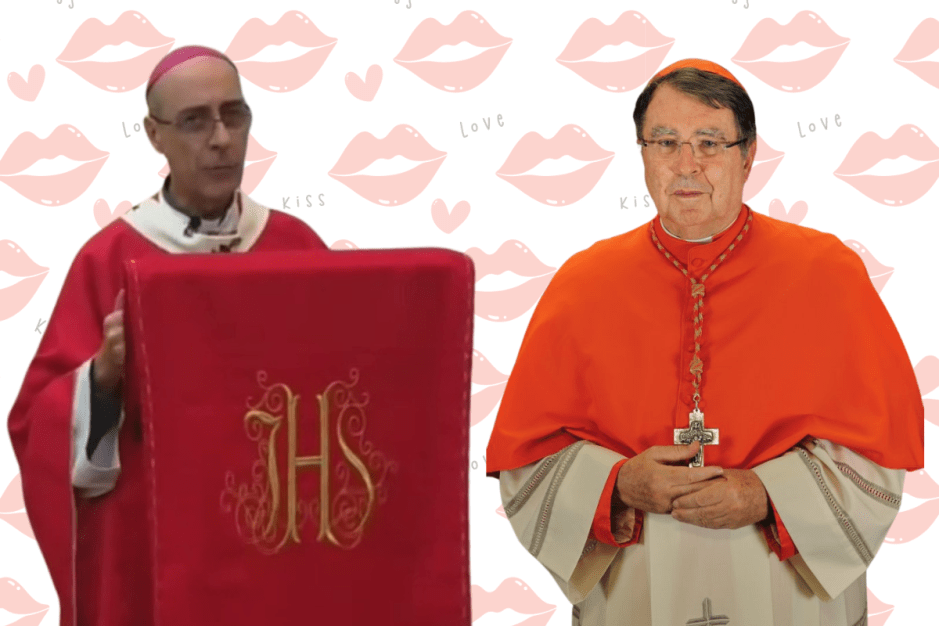
It is a sign of the times when a senior Catholic churchman wastes an ideal opportunity for increasing devotion to the Blessed Sacrament in favour of pushing the idea that the Body, Blood, Soul and Divinity of Christ are just as present in the average sinful human being. It is also a sign sign, albeit a very disturbing one, to hear language reminiscent of Cardinal “Heal me with your Mouth” Fernandez in a discourse on the most sacred reality of the Catholic faith.
In his address to the Eucharistic Congress in Indiana, the Papal Nuncio to the United States, Christophe Cardinal Pierre, began by reminding attendees that to be Catholic is to be united with the Papacy. So far, so good – although one always wonders with these Modernists if they really mean “being united with every word that falls from the mouth of Frances” rather than with the office of the Pope, and all that entails. By beginning his address by quoting the Council and JPII, Pierre suggests the latter.
After that dubious introduction, Pierre next asks the questions, “What is Eucharistic revival?” and “How will we know that we are experiencing Eucharistic revival?” He then goes to to list the initiatives that have been presented by the US bishops to the faithful in recent times:
” … increased opportunities for adoration and benediction. There has been catechesis on the Eucharist and, of course, processions. By displaying the Blessed Sacrament for worship and increasing our acts of devotion, we have drawn attention once more to this great Sacrament in order to “stir up” a renewed faith, both in our fellow Catholics and in ourselves. We have even attracted the curiosity of people of other faiths.”
Again, so far, so good. Then comes the “BUT”. (With the Modernist, there is always a “but.”) Time to draw our attention, not to God, but to “the other.”
“Not only is He present in our family, friends, and communities; but He is also present in our encounters with people from whom we would otherwise consider ourselves “divided”. This might include people from a different economic class or race, people who challenge our way of thinking, and people whose perspective is informed by experiences that differ greatly from our own. ….. If we are experiencing true “Eucharistic revival”, then one of the signs will be a greater movement on our part to build bridges of unity.”
The term, “building bridges” always calls to mind the arch-heresiarch, James Martin. But there’s more:
And so, to believe in the real presence of Christ is not only to say: In these forms of bread and wine are His body, blood, soul, and divinity.
Wait! Did he mean that during Consecration the bread and wine are changed into the Body, Blood, Soul and Divinity of Christ, or did he say something else? It sounds more like Luther’s Consubstantiation (the idea that the Real Presence presence exists alongside the bread and wine) than Catholic Transubstantiation. It’s a bit ambiguous. Finally comes the humanist clincher: the Real Presence is just not that big of a deal. Christ’s Presence is all over the place – most especially when we are dealing with “the other.”
“But Christ is also present in the assembly of His believing people. Not only that, but he is present to people who struggle to connect with Him because of wounds, fear, and sin. We need to be there with Him, accompanying such people, and helping them to experience the real presence of Christ’s love.”
Now to the act of Eucharistic Adoration itself. Of course it is good, ….. “but”……
Adoration, is essential to our relationship with Christ — but it is important that we treat it as that: a relationship. If, in the act of Eucharistic adoration, we were to look at the Sacrament merely as an “object” to be admired, then we would be remaining, as it were, “on the outside….”
Does any Catholic actually do that? Simply admire the Blessed Sacrament? In any case, here comes the really strange part. The “heal me with your mouth” part. But even stranger is the fact that this reference to “mouth to mouth contact” came not from Tucho Fernandez but from Pope Benedict!
“…. Pope Benedict explained: “The Latin word for adoration is ad-oratio — mouth to mouth contact, a kiss, an embrace, and hence, ultimately love….”
The reference does check out: Pope Benedict did in fact use these words at World Youth Day in Cologne in 2005. To young people. But here is the really strange bit: the Latin word adoratio does NOT have anything to do with kissing, embracing or “mouth to mouth contact” – at least not in any of my three Latin dictionaries or that I could find anywhere online. The noun, adoratio (from the verb adorare, to speak or entreaty or worship), only means an act or worship or prayer. That’s it.
So where does the kissing come in? Benedict was meant to be a great Latinist! The mind boggles.
Getting back to Cardinal Pierre and his address, it finishes by emphasising that the purpose of Adoration is not to give perfect worship to God but merely to solve the problems of this world. This is pure naturalism; it lines up perfectly with the Masonic ideology of a horizontal, humanist church.
There’s a bit more about the being open to the surprises of the Spirit and Synodality, and that listening “to one another and to the Spirit in the person we listen to” will be the “fruit of the Eucharistic revival.”
So there we have it: the main fruit of this Eucharistic Revival will be a Synodal, listening Church. And they wonder why the majority of mainstream Catholics do not believe in the Real Presence!
IMAGES SOURCE: Romanuspontifex, CC BY-SA 3.0 <https://creativecommons.org/licenses/by-sa/3.0>, via Wikimedia Commons; http://nuntiususa.org/nuncio
 Ecclesiastical Freemasonry