Playing Fast & Loose with the Liturgy

From THE CATHOLIC THING

by Fr. Gerald E. Murray – TUESDAY, MARCH 22, 2022

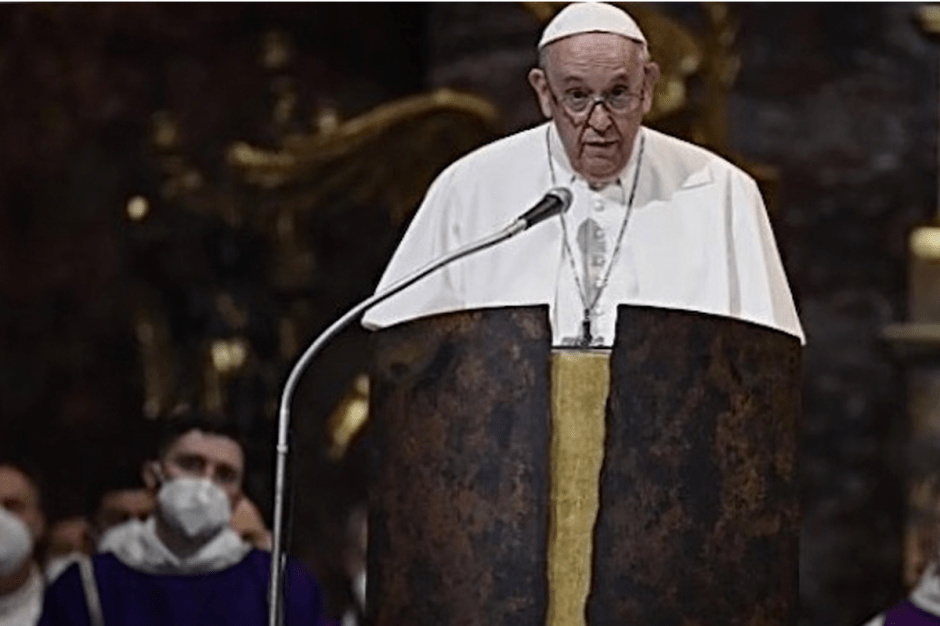
On March 12, Pope Francis went to the Jesuit Church of the Gesú in Rome for a Mass on the occasion of the 400th anniversary of the canonizations of St. Ignatius Loyola and St. Francis Xavier. The pope preached at the Mass and concelebrated. He had earlier been scheduled to be the principal celebrant, but Fr. Arturo Sosa, S.J., Superior General of the Society of Jesus, for some reason, was the principal celebrant instead.

Liturgical theology and law do not countenance that a bishop, let alone the diocesan bishop in his own diocese, concelebrate Mass with a priest as the principal celebrant (apart from a grave necessity, such as infirmity). This flows from the nature of the episcopal office: the bishop is the high priest in his diocese. He offers the sacrifice of the Mass for his people, while his priests, co-workers who serve the local Church under his authority, concelebrate with him.

The Mass began with the usual entrance procession. Pope Francis was already seated in a chair near the altar. He wore no liturgical vestments, and thus gave no indication that he was either concelebrating or presiding. He preached without wearing the liturgical garments (mozetta, rochet, and stole) that are prescribed to be worn when the preacher is not the one celebrating the Mass.

He concelebrated, extending his hand and saying the words of consecration, without wearing Mass vestments (alb, stole, and chasuble). This practice is strictly forbidden. In its 2004 Instruction Redemptionis Sacramentum, the Congregation for Divine Worship stated: “The abuse is reprobated whereby the sacred ministers celebrate Holy Mass or other rites without sacred vestments.”

Is the pope subject to liturgical law? Yes. Can he dispense himself from liturgical laws? Yes, but canon 90 states that there must be “a just and reasonable cause” for a dispensation. Did Pope Francis canonically dispense himself from the requirement to wear liturgical vestments when preaching at and concelebrating Mass? He may have, but the Holy See has given no indication that he in fact did so.

Was there a just and reasonable cause for the pope not to wear the prescribed liturgical vestments? It is very difficult, if not impossible, to assert that such a cause existed in this case.

We are confronted here with a reality that Catholics are all too familiar with in the life of the Church during the past half-century and more – the flagrant flouting of liturgical laws for no apparent reason beyond the preference of the priest celebrant.

Is this an important matter? For some, undoubtedly, such liturgical abuses are insignificant and do not merit any comment. Some will say that the pope can do whatever he wants, and we should not be upset over this or that choice of his: “He must have a good reason, and it is impertinent to question his judgment, because, after all, he is the pope.”

But it is precisely because he is the pope that we should be concerned about his decision to disregard the rules governing the celebration of Mass. The pope is the supreme authority in the Church and as such is called upon to uphold the Church’s laws, lest he scandalize the faithful by giving a bad example. The scandal would consist in giving the impression that, following the example of the pope, any priest is perfectly free to do whatever he wants when it comes to following liturgical law.

It’s no secret that many Catholics have flocked to the celebration of the Traditional Latin Mass because they are tired of the widespread liturgical abuses they encounter in the celebration of the New Mass. Pope Francis himself is aware of this.

He brought up this problem in his July 16, 2021 letter to the bishops of the world accompanying Traditionis Custodes, his motu proprio restricting the celebration of the Old Mass: “I am saddened by abuses in the celebration of the liturgy on all sides. In common with Benedict XVI, I deplore the fact that ‘in many places the prescriptions of the new Missal are not observed in celebration, but indeed come to be interpreted as an authorization for or even a requirement of creativity, which leads to almost unbearable distortions.’”

He counseled the bishops: “I ask you to be vigilant in ensuring that every liturgy be celebrated with decorum and fidelity to the liturgical books promulgated after Vatican Council II, without the eccentricities that can easily degenerate into abuses.”

Pope Francis’ own words serve as a rebuke of his decision to concelebrate Mass without liturgical vestments. The sacred character of our acts of worship is fostered and protected when priests and bishops willingly and carefully follow the requirements of liturgical law. The Christian faithful have the right to participate in liturgical prayer without being compelled to experience “unbearable distortions” of good liturgical order. That right depends upon the willingness of priests and bishops to obey what is set down in liturgical law.

There is no clerical privilege that allows priests and bishops to rewrite the rules to suit their own tastes. Yet that is precisely what some priests and bishops will sadly take away from this regrettable instance of papal liturgical abuse.

The worship of God is the sacred duty of the Church’s pastors. The form of that worship is given to them by the Church. It is their responsibility to see to it that every act of liturgical worship is carried out in loving fidelity to what is set forth by the Church in her liturgical laws. Disobedience teaches the wrongful lesson that Church law is unimportant.

This is a recipe for more chaos in the life of the Church. It needs to stop.

A traditional chronology of events preceding the Second Coming

The following is taken from the book, Trial, Tribulation and Triumph, by Desmond A. Birch, and draws only on Scripture, the saints and the early Church Fathers for its conclusions. In other words, the author doesn’t rely on any contemporary ‘private revelations’ in his book.

Many of you would have come across – or have been sent links by avid grandmothers with lots of time and little discernment – alternate timelines from modern day ‘prophets.’ (This might sound a bit harsh, but really, ladies! You are the matriarchs of your families and need to set a better example. You can’t believe everything you find on the ‘net, you know!) As far as these hypothetical timelines coincide with traditional ones, they can be cautiously accepted. But if they don’t line up with traditional concepts, then they should be rejected.

Note than when the book was written in 1996, the ‘Minor Chastisement’ was seen by the author as a conditional event of the future. Now, 26 years later, there is little doubt that we are on the threshold of that chastisement, and there is practically no doubt that it can be avoided.

A Hypothetical Chronological Table of events prophesied to preceed the Parousia

…they come from various sources. Some are official teachings of the Church, things which one must absolutely believe as a Catholic. Others are those which are part of the traditional teaching of the Church – but which are not absolutely binding in Faith. Next come those which comprise the majority opinion of the Fathers, Doctors and theologians of the Church, but about which there are some Fathers who disagree. Finally there are items which come strictly from private Catholic prophecy from Church-approved sources.

  1. Those which are binding in Faith as presented in bold, italicized print.
  2. Those which are part of the traditional teachings of the Church – but which are not absolutely binding in faith are presented in bold print.
  3. Those about which there is a heavy preponderance of teaching among the Fathers and Doctors are presented in simple italicized print.
  4. Those which present private prophecy from Church-approved sources are presented in plain type.

The Minor Chastisement

At some time in the future, the corrupt faithless age we live in now will come to an end either through repentance (immediately followed by an age of peace) – or there will be a chastisement.

  • …the Latin Church will be terribly afflicted by heresy and schism. This is prophesied to be primarily caused by a false intellectualism, which intellectualism presents itself in the form of ‘senseless questions and elaborate arguments’ attacking the traditional teachings of the Church.
  • The chastising elements will come in two forms (a) Man-made and (b) Heaven sent.
  • Civil wars break out in France and Italy at almost the same time.
  • This will spread to general wars, and famine and pestilence (the usual by-products of war)
  • Earthquakes, tidal waves, floods and all other sorts of ‘natural’ disasters will occur.
  • Somewhere in all of those, an army composed of Russian troops invades Western Europe just when everyone thinks this impossible.
  • England will suffer a terrible civil war which starts after the French and Italians have gone into theirs.
  • The Pope will flee Rome in the company of several other cardinals and go into hiding, be found, and cruelly murdered.
  • A man who will subsequently by known as a great saint will ultimately be elected pope near the end of the Chastisement. He will be heavily responsible for the French acceptance of a king to be their military and civil leader.
  • The Great King will lead his forces (against terrible odds) and finally defeat these Russian and Prussian forces.
  • Somewhere near the end of the Chastisement, God sends the Three Days Darkness.
  • the Three Days Darkness probably occur sometime after the final and total victory over the Russians and Moslems.

The Age of Peace

  • According to the prophecies, through a historically unique series of events there will be a complete restoration of Christian Culture in the West.
  • The Great King will be crowned Holy Roman Emperor by the reigning Pope.
  • The Great King will establish peace and justice in divil matters on almost a worldwide basis. The former disciplines of the Church are fully restored and order is re-established.
  • The Pope calls an Ecumenical Council which will be viewed as the greatest in the history of the Church. the world is spiritually and materially prosperous as never before and many Jews, Mohammedans, heathens and heretics will enter the Church.
  • Extended prosperity causes people to begin to grow lax in the practice of their Faith.
  • Wars and bad economic times break out again after some period of time during which the faithful fall into laxity.
  • Ten kings divide up the boundaries of a Roman Empire which had been established.

The Major Chastisement – the Tribulation of Antichrist

  • The Gospel must be preached in the whole world (Matt. 24, 14; Mark 13, 10), even though many will not accept its message (Luke 18, 8)
  • Before Christ’s Second Coming there will be a great apostasy or religious defection (Matt 24, 10-12; Luke 18, 8; Thess 2, 3; 2 Tim 3, 1-9) and the Antichrist will appear (2 Thess 2, 3-12; 1 John 2, 18, 22; 2 John 7)
  • The last (Roman) Empire, which has been divided up into ten ‘kingdoms’ is dismantled by a great (and evil) military and political leader. Three of the ten kingdoms will not go along with this. they are crushed. See – Rev 13, Dan 7, 8. [See also St Jerome’s commentary on Book of Daniel that Antichrist will kill the three kings that ‘do not bow to him.’]
  • The ‘False Prophet’ arrives – the Precursor of the Antichrist. He will ‘ape’ the role that St John the Baptist played in preparing the people for the arrival of the Messiah.
  • All of this prepares the way for the coming of the Antichrist. He begins his rise to power at about the age of 30. After he seizes total power he begins his three and one half year bestial persecution of the Church.
  • During this time, the two witnesses (Enoch and Elias) who have never died but have been maintained in Paradise return to the presence of men to preach to the people against Antichrist. Elias preaches primarily to the Jews and Enoch primarily to the Gentiles. It is the arrival of these two witnesses which foreshadows the foretold conversion of the Jews to Christianity.
  • Antichrist finally kills them by his own hand in Jerusalem and their bodies lie in the street by his command for 3 1/2 days, at the end of which a voice from heaven is heard by everyone present which commands the two witnesses to arise, and to the surprise and stark terror of the onlookers, they do.
  • The Jews as a nation will convert after the full number of the Gentiles enter the Church (Rom 11)
  • Antichrist, stung again by this latest heavenly miracle, tries to restore his prestige with the Jews by simulating Christ’s ascension from Mt Olivet, and St Michael casts him down screaming to his death. (St Thomas Aquinas and other Doctors teach this.)

The Four Last Things

  • After the death of Antichrist, a short period of time of unknown duration is given to the remaining inhabitants of the earth to repent and accept Our Lord and the message of His Gospel.
  • There will be a physical transformation of the universe (Matt 24:29; Mark 13: 24; Luke 21:25) and the world will be purified by fire in the first general conflagration (1 Pet 3: 5-7; 1 Cor 3:13) Then only will the Son of Man appear in heaven (Matt 24:30; Mark 13:26; Luke 13:27)
  • Then comes the end of the world and the Four Last Things: Death, the Last Judgement, Heaven, Hell.

In brief:

  • MINOR CHASTISEMENT: natural disasters; Russia invades Western Europe; civil wars in Britain, Italy and France; a holy Pope; a Great Monarch; 3 Days Darkness.
  • ERA OF PEACE: a new Holy Roman Empire with Emperor; restoration of Christian culture (Social reign of Christ); an Ecumenical Council
  • MAJOR CHASTISEMENT: Gospel preached to the whole world; Great Apostasy; False Prophet; Antichrist; unprecedented persecution; Enoch and Elias; death of Antichrist
  • FINAL JUDGEMENT: Second Coming; transformation of the universe.

“The first gay pope”?

In January, the liberal Vatican news outlet, La Croix International, ran an article with the startling title, “The First Gay Pope”. The story was written by Robert Mickens and carried the subtitle, “The real reasons why Pope Francis is pushing Catholics to become more welcoming and less judgmental of gays and lesbians”.

Mickens justified his title by reminding readers that former US President, Bill Clinton, has been called, “the first black president”, despite the obvious fact that he is not black. Mickens goes onto explain that the title had been applied to Clinton, not because of his many initiatives aimed at helping African-Americans, but because he had been pre-judged – like a Black person would have been – over the immoral incident with Monica Lewinsky.

Thus, according to Mickens, Pope Francis could be called the ‘first gay pope’, not because he has changed the Church’s teaching on homosexuality but, rather, because of his “style” in dealing with homosexuals. As Mickens says, ” … he has — in a real sense — changed everything in terms of attitude and ethos, just by his own personal approach to gay people.” (Emphasis added)

The author then goes on to remind readers that when Bergoglio made the rhetorical question, “Who am I to judge?”, he was speaking of the case of a gay cleric, contrasting the example of the ordained sodomite with that of a “gay lobby” which is said to be one of the factions present within the Vatican. That cleric, Monsignor Battista Ricca is a good example of Bergoglio’s policy of loving the sinner and, well, kind of tolerating the sin.

Mickens ends with the veiled suggestion that this gay-friendly pope may one day be succeeded by an openly gay one, while also referencing the alleged behaviour of at least a couple of twentieth-century popes:

The United States’ “first Black president” was eventually succeeded in the White House by a real African-American. The Church, on the other hand, has been led at times — even in relatively recent history — by popes who would surely be considered homosexuals by today’s understanding of the term. But none of them ever dared to say the things the “first gay pope” has been saying these past several years. He still has a way’s to go, but many LGBTQ+ Catholics are ready to accompany him on the journey.

Robert Mickens

Now, I don’t know about you, but I would feel uncomfortable calling the pope “gay” – and I don’t even particularly like this pope. (Mickens is something of a fan – if not of Francis personally, then at least of his liberalism). Remember the fuss Paul VI made when he was accused of being a sodomite by a gay Freemason? He asked the entire Church of Italy for a day of prayer and reparation.

But there has been no such response from Bergoglio. Makes one wonder. Recall that he also didn’t personally refute claims that he doesn’t believe in hell or said that unrepentant atheists can go to heaven.

By the way, the kind of thing Mickens retweets and shares on his Twitter feed is shown below.

If I were Pope and were also a Catholic, I would be most offended if a liberal from La Croix wrote an article calling me gay. But that’s probably just the abundance of my heart speaking: ” … and a rigid man out of the rigid treasure bringeth forth that which is rigid….” (with apologies to St Luke)

Pope: Fraternity, not Christ, is the anchor of salvation

It’s bad enough when the Pope spouts his heretical nonsense to the world’s 1.3 billion Catholics, but it is even worse when he misrepresents Christ’s teaching to those of other faiths: in this case, to Mohammedans.

“Fraternity is the anchor of salvation for humanity’, opined Bergoglio in his speech for the second International Day of Freemasonry Human Fraternity.

Christians might ask where the Blessed Trinity fits into this equation? Rightly so, for the Trinity is noticeably absent. Again.

One is tempted to think that Bergoglio hates Muslims. He certainly does not love them enough to explain to them the truth: that salvation is not found outside the Catholic Church and that Mohameddans have rejected that Church’s foundation, Our Lord Jesus Christ.

The Pope’s recorded speech was first played in Dubai at the UAE’s EXPO 2020 for Freemason Fraternity Day. the EXPO began last October and runs to the end of March this year and has as its themes what amount to the Sustainable Development Goals. So there is nothing remotely Catholic here or for that matter, not even much that is Islamic.

During the six months of the EXPO’s operation, ten weekly themes are being presented and they include the topics being promoted by the WEF and other globalist entities; for example the “Tolerance and Inclusivity” week features presentations on digital employment and AI; the health and wellness week looks at digital medicine and health technologies; the Global Goals week is run in conjunction with the UN and includes the SDGs proper – global business, sustainability, and the Fourth Industrial Revolution are all covered.

None of this is really surprising except for the presence of a pavilion run by the Holy See. (Actually, given the Abu-Dhabi statement, it’s not that surprising.)

The Vatican is being touted as the “world’s smallest sovereign state with global influence”. It’s tagline is “Forging ever-stronger relationship with all faiths”. According to the Holy See listing on the EXPO’s website, attendees are invited to:

* Hear its message highlighting the need to sustain inter-religious and diplomatic dialogue

* Recognise its creed of peace and harmony, underpinning the values of tolerance and coexistence

* Understand its mission to break down the walls that separate ethnic groups and nations

(Here’s an idea: maybe Archbishop Roche could visit the display to learn how to use ‘diplomatic dialogue’ when dealing with traditional Catholics. He could take home a swag-bag of ‘tolerance and coexistence’ as a little memento.)

Now, in the interests of fair reporting, it must be admitted that the Holy See pavilion ran an event for Christmas which did actually mention Jesus Christ, and did actually include prayer. This was held on Christmas Day and was entitled, Prayer Service for Humanity. It included the story of the nativity recounted by a priest, as well as aa jazzed-up version of Silent Night but seemed overall to be fairly joyless event. I guess that’s what happens when people have no faith.

The stage for the Holy See’s Christmas event in Dubai: nothing to offend Mohammedans here.

One of the comments under the Pope’s talk on the Rome Reports Youtube channel gives an indication of the calibre of Catholics this pontiff is attracting to the Church. See if you can make sense of it.

“I WANT TO THANK U DAD FRANCIS THE HOLY FATHER POPE FRANCIS-MY CEO-BOSS-SPIRITUAL LEADERSHIP FOR EMBARKING ON THE ETHICAL PRINCIPLES OF HUMANITY. THANK YOU FOR BEIGN THE FATHER TO THE UNIVERSE, A DAD THAT WAS ALWAYS THE DAD FIGURE IN MY LIFE. I LOVE U DAD FRANCIS

“THANKS FOR U JOINT COLLABORATION IN ESTABLISHING A HOUSE REGISTERED TO #5ISLANDS NATION MONARCHY FORMAT OF GOVERNANCE, NASSAU THROUGH TO SAN SALVADOR-PRIVATE-PERSONAL PROPERTIES AND ESTATES MONARCHY FORMAT OF GOVERNANCE.”

Maybe it was composed by a Bergoglio bot. Or maybe was from from Massimo Fagglioli. Either way, it is gibberish, which is probably going to be this pope’s legacy. That and destroying what was left of the human element of the Church.

The entire text of the video can be read here, and another little snippet appears below.

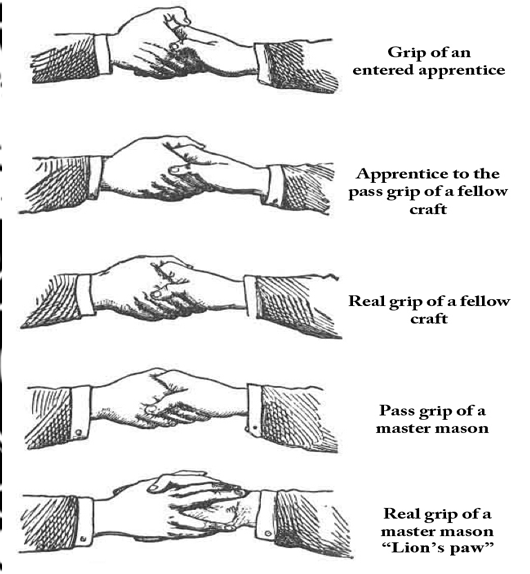
Now is the fitting time to journey together: believers and all people of good will, together. This is a good day to extend a hand, to celebrate our unity in diversity – unity, not uniformity, unity in diversity – in order to say to the communities and societies in which we live that the time of Freemasonry fraternity has arrived.

Pope Francis
Extending a hand ?

“This is not a time for forgetfulness”, the pope concludes. And I agree.

Memento mori, Bergoglio. Because at the hour of death, you want Christ to be the anchor of your salvation, whereas good ol’ ‘fraternity’ will be a weight that drags you to hell.

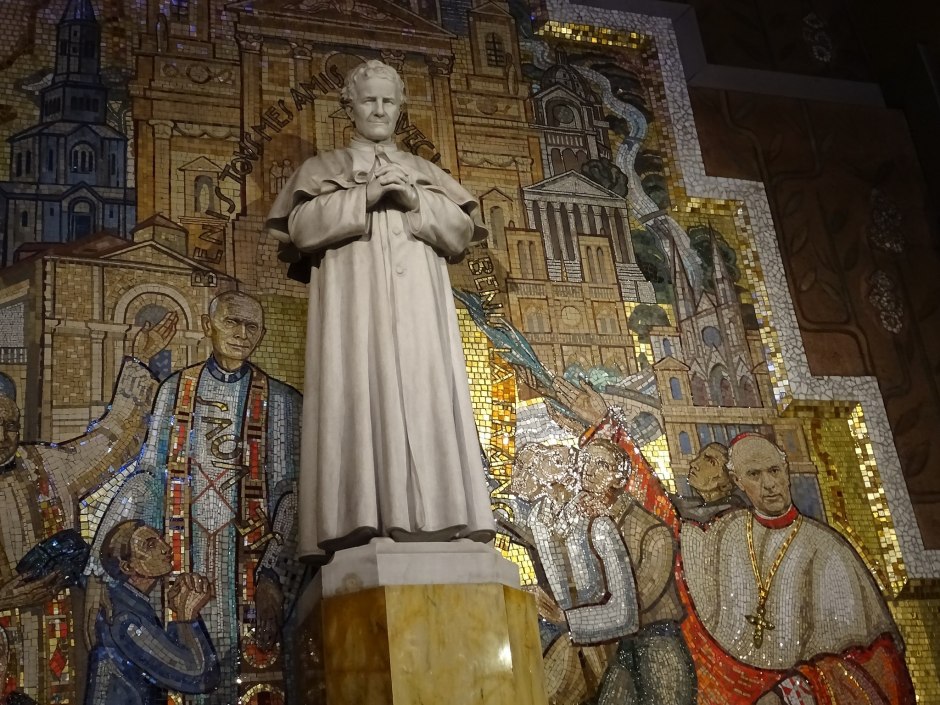
When the Masons tried to kill Don Bosco

Published in italian at el tiempo as “The two assassination attempts on Saint John Bosco by a Freemason group”

03/02/22: John Bosco, or Giovanni Melchiorre Bosco in Italian, is known today as Don Bosco . He was a 19th century priest, writer, and educator who founded the Salesian Family congregation.

Much is said about the work of this priest with the poorest young people. The subject always bothered him and he tried to help them with what he could. Although Don Bosco was a good person, the Freemasons hated him and wanted to kill him . In fact, they tried to do it twice. So it happened. The Freemasons had a secular view of education and proposed that schools should be secular and free of any religious value.

Precisely, these ideas generated a conflict with the Salesian sectors for their way of imparting their beliefs in schools .

Don Bosco considered that evangelization was done through the school. In fact, the Salesians wanted to convert the indigenous people and train them under their religion.
For this, a missionary and educational project was carried out where they visited different schools, parishes, hospitals and orphanages.

…….

On June 1, 1980, an article called ‘Bollettino Salesiano ‘, by the Salesian Family, was published. In it, they relate how the assassination attempts against Don Bosco were, under the title ‘Purpose: to get rid of our Don Bosco’. The article commemorates almost 100 years since the assassination attempts against the priest. According to the ‘Bollettino Salesiano’, at the end of June 1880, a former student of Don Bosco, the young Alessandro Dasso, asked to speak with him.

“ His eyes were anguished ”, recalled the publication.

He indicated that “ Don Bosco received him with his usual kindness ”, but faced with the “growing agitation” of the young man, the founder of the Salesian Family told him: “What do you want from me? Speaks! You know that Don Bosco loves you”. The young Dasso knelt down, began to cry and told Don Bosco the truth .

He admitted that he was affiliated with the Freemasons, who had condemned the priest to death. “Twelve men had been drawn; twelve individuals had to succeed with that order to carry out the sentence”, reads the Bollettino Salesiano.

Also, he confessed that he was the first one they commanded, but that he did not want to kill him. At the end of his confession, the young man threw the weapon he had hidden on the floor and quickly left for his house.

Days later, Alessandro Dasso tried to commit suicide by throwing himself into the river, but was rescued by some policemen. Don Bosco helped him escape from Italy, and he lived in hiding until the day he died.

St John Bosco, 1880

Months later, in December 1880, a 25-year-old man visited the priest. Don Bosco admitted that his gaze gave him mistrust, as his eyes had a ‘sinister’ gleam. In the article they comment that the young man had a small six-shot revolver hidden, but without realizing it, his gun slipped out of his pocket and fell on the sofa.

“Don Bosco, without him realizing it, deftly placed his hand on it and slowly put it in his pocket”, recounted the ‘Bollettino Salesiano’.

Some time passed and the young man realized that he did not have the gun in his pocket and was surprised. The priest, who had the weapon, asked him: “What are you looking for, Lord?”

The young man told him that he had something in his pocket but he did not know where it was.

“ Don Bosco, quickly approaching the door and bringing his left hand to the handle to be ready to open it, pointed his gun at it and without getting angry said: ‘This is the tool you were looking for, isn’t it?’ Seeing this, the scoundrel was stunned ,” the article recalled.

The text also tells that the young man tried to take the revolver from him, but Don Bosco did not allow it and threw him out of the place. Finally, the boy had to leave with his companions, who were waiting for him outside in the car.

Don Bosco died on January 31, 1888 at the age of 72. Some time later, on June 2, 1929, exactly 39 years later, he was proclaimed blessed. On April 1, 1934, he was canonized by Pope Pius XI.

Image attributions: header body

Photo Essay: Anything goes – except the Latin Mass.

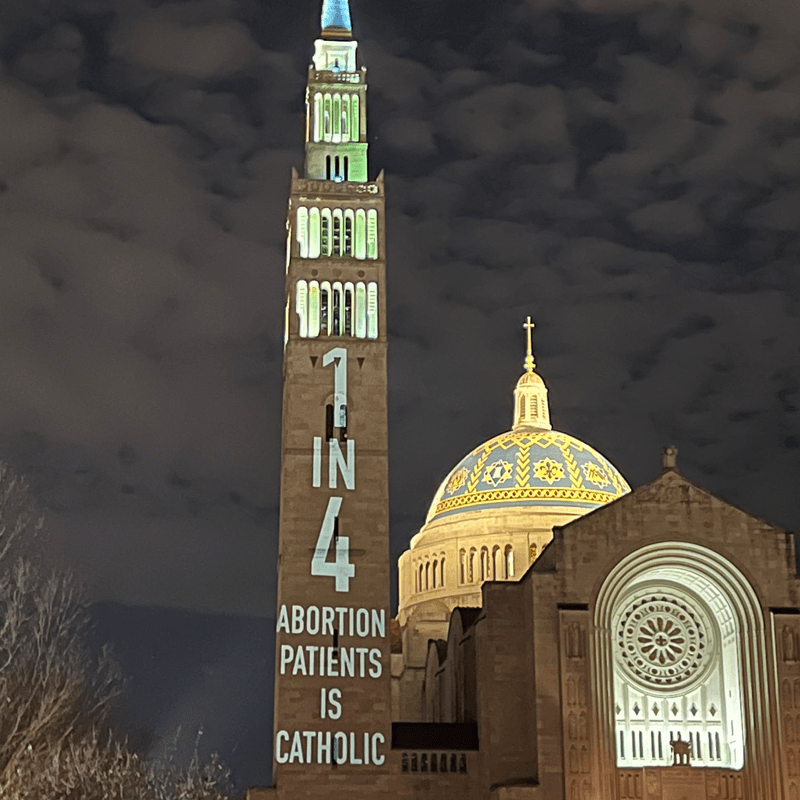
You can desecrate a church with pro-abortion blasphemy ….
You can lounge around on the altar DURING MASS with an iPhone ….
…. you can promote the mental illness of transgenderism, referring to men as “women”…. (yes, this is a PRIEST)
… you can dance barefoot in front of a Tabernacle on a masonic-tiled floor ….
You can appear before the Pope practically naked …..
You can tell Catholics that it’s okay to be a Freemason …
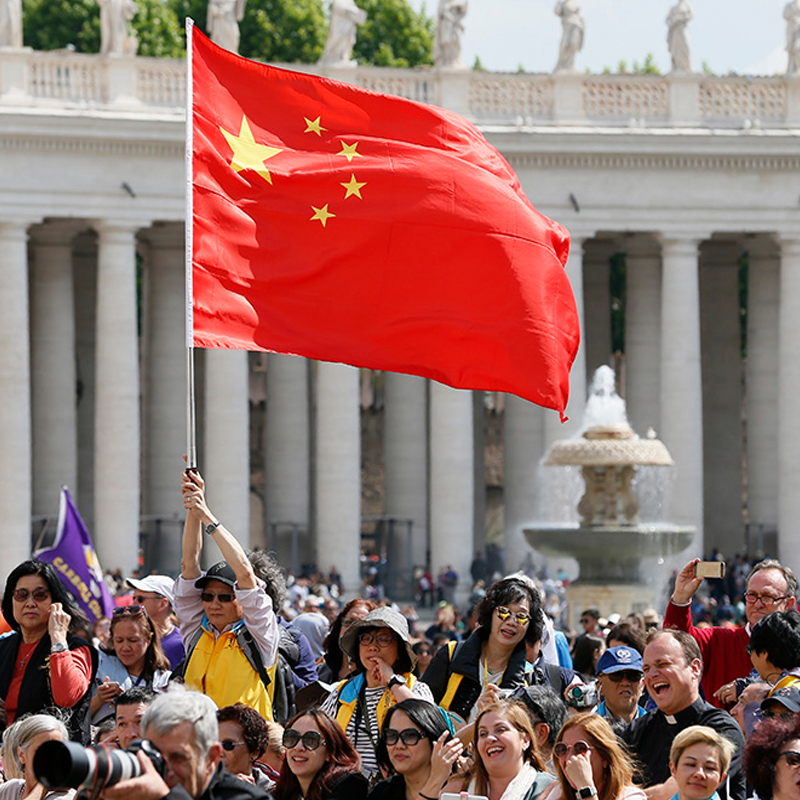
…you can sell out to a country that slaughtered thousands of Catholics in the past & continues to persecute them today ..
… but the Mass of Sts Maximilian Kolbe and St Pio …..
Sts Pius V and Pius X ….
Is the most serious ….
…. urgent …..
…. and dangerous …..

…. threat to the Church today.

NOTE: for more information on the widespread decline in reverence for the Mass, see, this video