Esoteric Sacrilege in a Viennese Church

Update – readers from Austria have assured me that Villach is a small town south-west of vienna, rather than a suburb, as I previously thought. Apologies for the error!

A new art exhibition displayed in an Austrian Catholic church is not only sacrilegious, but also shows indications of an occult influence.

The exhibition was launched during Mass on March 9 with the enthusiastic blessing of the parish priest. Entitled CROSS: WAY: STATION (“Kreutz: Weg: Station” in the native tongue) the installation will be displayed in St. Jakob Church in Villach, Austria until April 4.

Artist Michael Kos has taken classic images of Christ and subjected them to abuse in the name of his spiritualised ‘art’. Kos claims that his three pieces, a crucifix, a tabernacle and a bizarre architectural structure in front of the altar are meant to represent the Son of God being subjected to a ‘real ordeal’ – something he undoubtedly managed to achieve by his disrespectful display.

According to Gloria TV, the diocese is run by the heterodox bishop who gave the world an “Episcopal Vicaress.”

Body Cube

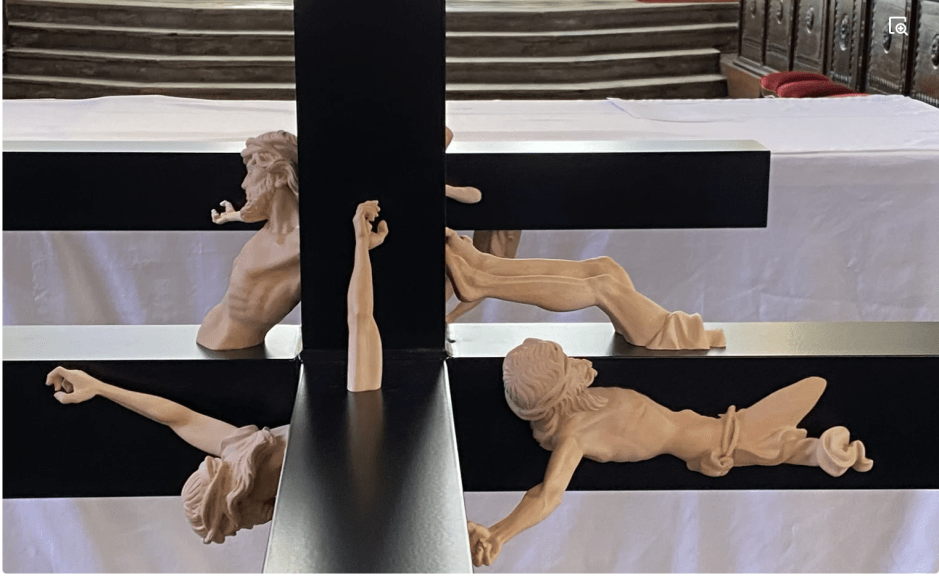
The so-called ‘Body Cube’ is set in front of the altar and is large enough to stand in. It is quite disturbing, containing 49 dismembered body parts of Jesus Christ.

Kos explains the structure as a three-dimensional cross and says “the open axis structure of the cube creates a variable play of cross shapes. From every other point of view, different forms arise, from the simple cross to the half cross, the cross of the room to the swastika.”

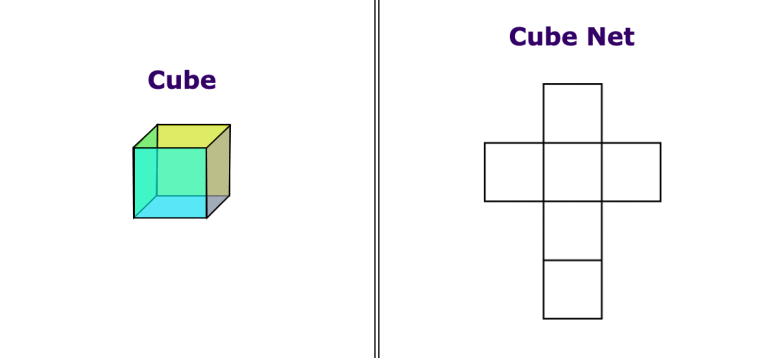
The use of cubes is the first clue to the display’s occult meaning as adepts appreciate the cube’s secret: when unfolded, it becomes a cross. As explained here in an article about liturgical design, cubes are ‘inherently Masonic.

Kos’ reference to the swastika, is another red flag since the swastika is a well-known New Age symbol. The composition of the structure, black-painted aluminium is a further clue since in the occult, the use of a base-metal for construction of a cross symbolises humiliation.

‘Body Cube’ shown in its entirety
The cube bears a resemblance to the ‘triple-tau’ cross, revered by Freemasons.

Balance Act

A second piece of artwork in the installation is a wooden figure of Christ, covered with white chalk and appearing to balance on a tightrope. The artist believes that this represents “a kind of resurrection happening through a rapture” and that it also refers to the concept of ‘balance.’

As mentioned many times in these pages, the principle of balance is very significant in the occult world. In choosing this theme, the artist underscored the balancing of chaos with order, sin with grace.

Although black-and-white tiled floors are not unusual in Catholic churches, it is perhaps no coincidence that one is found in this particular church. The contrast between black and white is yet another reference to finding ‘balance’ between opposites.

Here is what article Michael Kos says about “Balance Act”:

“Art is very often a balancing act because it can support values but also overthrow them.”

The installation balance.AKT is an unusual, sacred representation that not only shows the change in religion and culture, but also the wafer-thin dividing line between play and existential fall.

No god can be safe in the long run. Every individual and a son of heaven can experience the loss of balance. Man has become one who knows about the light-footed play and the bottomless abyss. [Emphasis added.]

Kos makes no attempt to hide his disdain for the Son of God.

Christpower

The final and most blasphemous of all the artworks is entitled, “Christpower.”

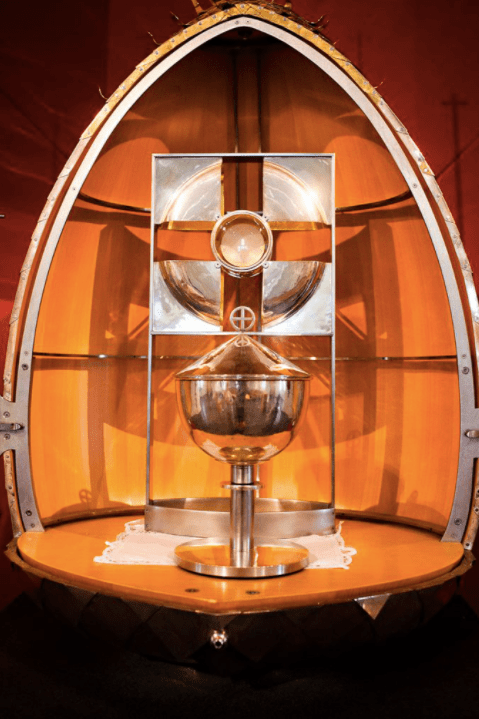
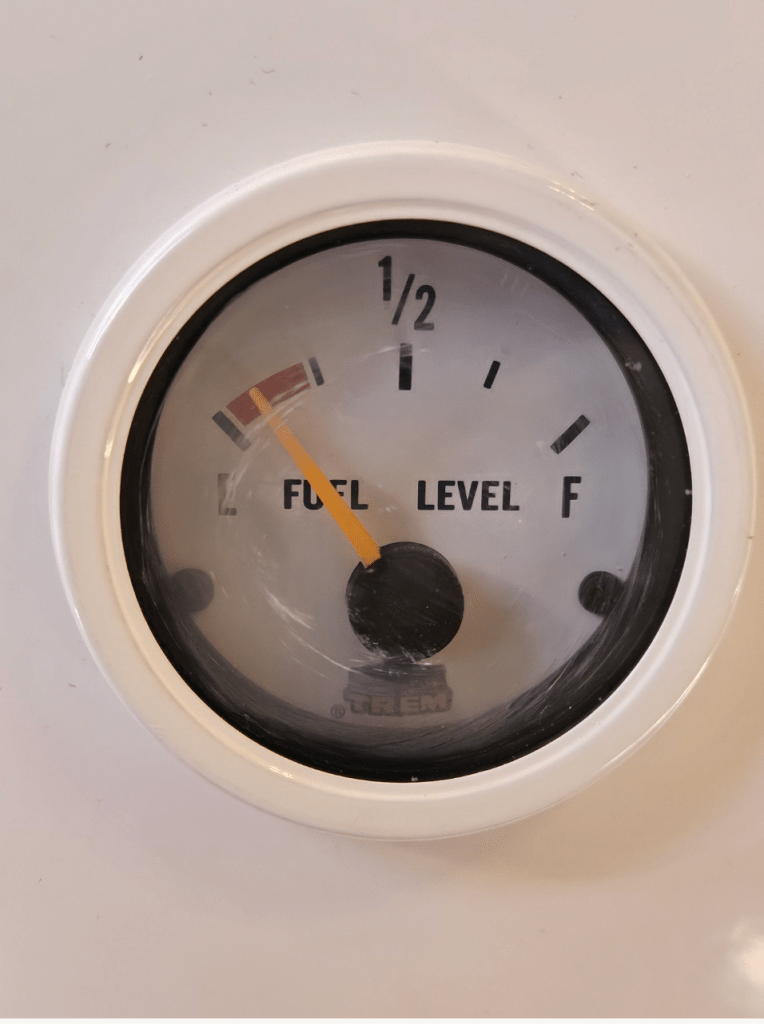
Believe it or not, this is a tabernacle (or at least represents a tabernacle – it isn’t clear whether or not the Blessed Sacrament is actually housed in this monstrosity.)

“Christ Power” is a white lacquered steel tank with a fill indicator which the artist says was inspired by the idea of “a critical tabernacle – or rather a tabernacle in crisis.”

Again, references to the occult are peppered in the artist’s explanation: he says that “shrine”, “transformation” and “secrecy” are all aspects of the tabernacle. ‘Transformation’ is of course, the ultimate ‘balancing’ act.

In his explanation of the work, Kos again shows his disregard for the Catholic faith, calling its veneration for the Blessed Sacrament ‘exaggerated.’ He goes on to suggest that divinity is found within the individual. This is the immanentism of esoteric philosophy and may be contrasted with the Christian idea of transcendence – that God is found beyond the individual.

“The question arises as to the relevance of a unique object today, which was characterized for centuries by cult dramaturgy and symbolic exaggeration.

This work of art oscillates between affirmation and negation of the religious level. The fill indicator is just before the vacancy rate and refers to a vacuum where there could also be spiritual abundance. But what is this abundance? Who fills up at all?

… Isn’t CHRISTPOWER also a psychoanalytic transmission that the believer unconsciously performs himself? So less an external force than an active internal force. A intrinsic force that fades away.
SOURCES: Carinthia Diocese website and Gloria TV.

A Church Dedicated to the Four Elements

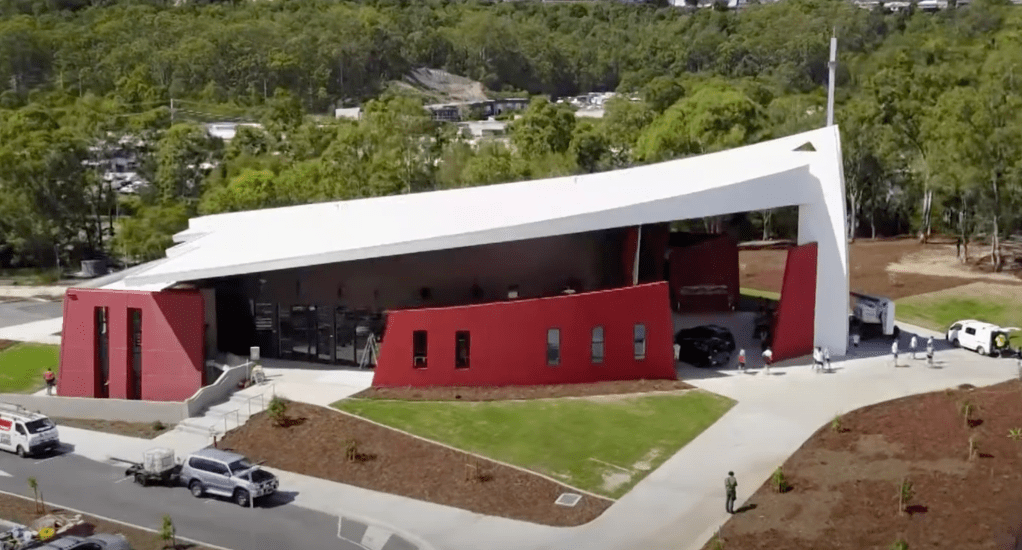
A church built in 2017 at the largest parish in Australia exemplifies the fusion of humanism and paganism which is unfortunately almost ubiquitous in contemporary Australian parishes. The church is one of five in the Burleigh Heads parish, and is part of the Archdiocese of Brisbane.

Named ‘Mary, Mother of Mercy’, the building includes anti-Christian features, including Masonic symbols and indigenous mythology. Pagan and occult features were built into the church’s design and the opening ceremony exemplified the parish’s focus on paganism with a smoking ceremony and allusions to the four principal elements of alchemy.

Problems begin with the logo used for all churches in the parish. It shows five crosses which no doubt represent the total number of churches, but these replace the traditional three-cross arrangement which represents Christ’s saving Crucifixion.

The usual arrangement representing the crosses of Our Lord and the two thieves.
The Burleigh Heads logo attributes to the crosses the merely human aspect of the number of member-churches.

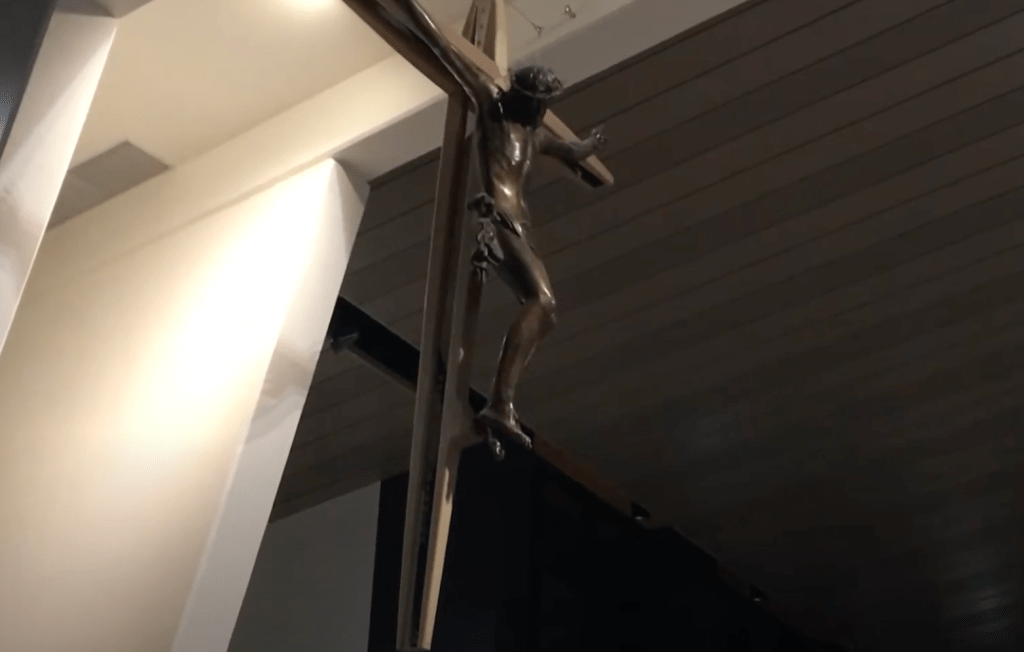
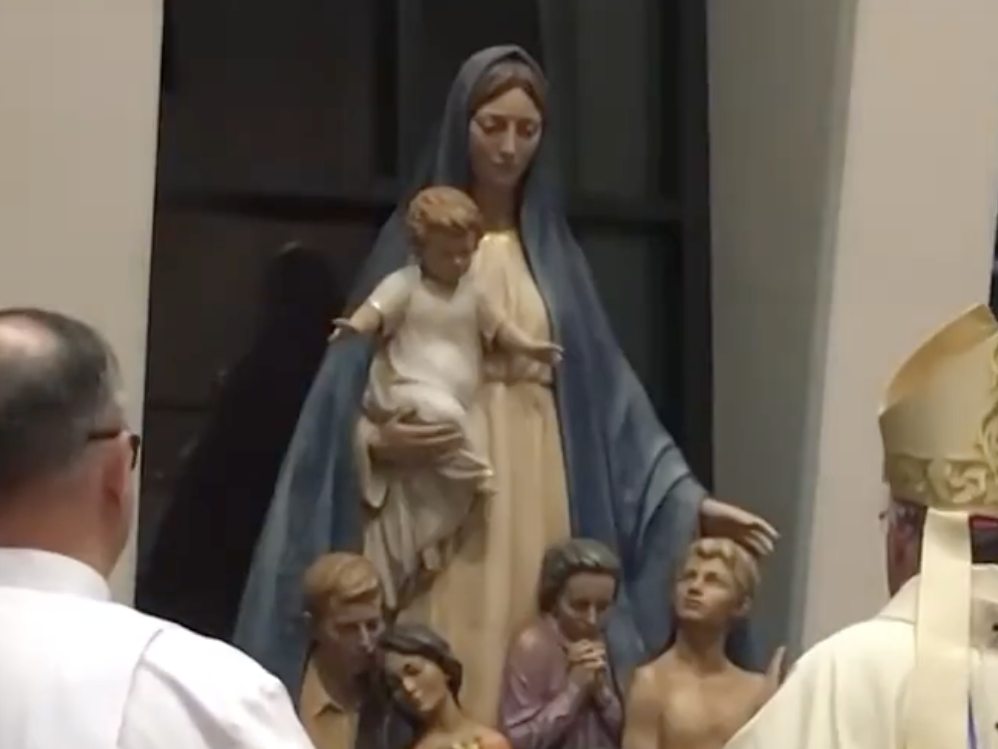
Built in a style typical of modern Australian churches, it features exposed steel beams and is almost devoid of sacred images. One exception is the enormous wooden statue of a very plain-faced Mother of God, surrounded by a group representing the diversity of Australian citizens, including a semi-naked boy with his surfboard.

The exterior of the church
Massive beams and pillars dominate the interior

A plain-faced Mother of God
A topless boy

The sanctuary is typical of many churches here, with the tabernacle hidden from view. The church features a pair of strikingly Masonic design elements: two sets of twin pillars, one at the church’s entrance and one set inside the body of the church. A news report describes the latter set as ‘concrete portals;’ significant because in esotericism, a portal is a gateway to secret knowledge, and is usually achieved via occult rituals.

Interior of a Masonic lodge from Ohio.
The two pillars at the entrance to the church, flanked by structures appearing to represent a modern nod to the traditional flying buttress.
The nave holds the tabernacle; rather than the Blessed Sacrament being the focal point, this area is dominated by the massive pillars which span the entire building. The rows of chairs facing each other is another Masonic motif.

Twin pillars are especially significant in Freemasonry, where are said to represent the truth being found between two opposites, or poles. Duality is a common theme in the occult and was actually part of the design brief given to the designers for the church: they were asked that it embody ‘light and darkness, the masculine and the feminine, the sky and the earth’.

The heretical Archbishop of Brisbane, Mark Coleridge, (who possibly requested the design elements) gave a clue to the occult meaning of the ungodly building in his sermon at the opening Mass. He mentioned wind and fire, two of the four elements associated with alchemy and the occult.

This is the Church that has given birth to us and will continue to give birth to this community of faith in Burleigh Heads. It’s a place of the Spirit. It’s a place therefore of wind and fire, a place that can turn the human womb into a temple of God himself.

Archbishop Mark Coleridge

The third element, earth, is referenced by the twin pillars both inside and outside the church, which the designers explain “visually tie it to the ground.” The fourth element, water, is referenced in the name of the suburb housing the church – Burleigh Waters – as well as in the waters within the womb. Mention of the womb and rebirth also suggests the theme of transformation, so common among occultists.

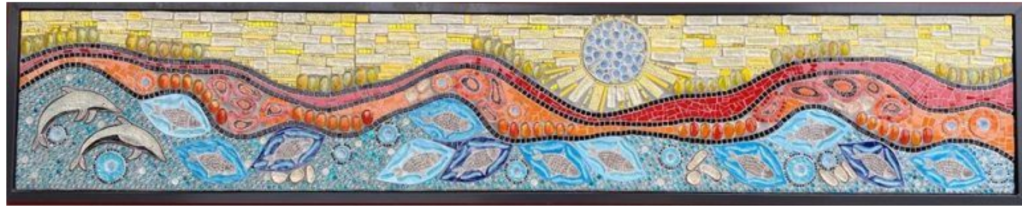
Outside the church is a mosaic, shown below, which was produced by a local indigenous artist. It represents a pagan myth about a hero who was reincarnated as a dolphin.

Indigenous artwork based on a pagan myth

During the church’s opening ceremony, an unknown type of smoking ritual took place. It involved a layman raising a ‘smoking’ bowl over congregants. This appeared similar to indigenous smoking ceremonies in which smoking leaves or herbs are burned in the belief that this cleanses the space of ‘evil spirits’.

A smoking ritual during the opening ceremony

Perhaps unsurprisingly, the parish is home to at least one esoteric prayer group: the ‘Contemplative Women’s Group’ which purports to examine Scripture and which features an activity reminiscent of Wicca: “sinking into the feminine divine.”

Prior to the construction of the building, the former parish priest, Fr Ken Howell, was given a ‘virtual tour’ using cutting edge technology from a company named Oculus. Oculus is, of course, Latin for eye – a very important symbol for occultists.

Fr. Howell, wearing the ‘Oculus’ virtual reality goggles.

Masonic Symbolism in Liturgical Design

“Masonry, like all the Religions, all the Mysteries, Hermeticism, and Alchemy, conceals its secrets from all except the Adepts and Sages, or the Elect, and uses false explanations and misinterpretations of its symbols to mislead those who deserve only to be misled, to conceal the Truth, which it calls Light, from them, and to draw them away from it.”

Albert Pike, former Sovereign Grand Commander

The Masonic infiltration which has penetrated very deeply into the heart of the Church is often reflected in the layout of modern churches. The designs which reveal Masonic influence track closely with the liturgical changes that took place after the Council, and which were first exposed by Cardinals Ottaviani and Bacci in their historic Intervention. Their letter to Pope Paul VI, and its attached document compiled by a group of theologians, became known as the Ottaviani Intervention.That document lists the main problems detected in Pope Paul’s New Order of the Mass:

  • definition of the Mass (supper, memorial, assembly instead of Sacrifice)
  • purpose of the Mass (community/fraternal charity instead of Sacrifice and worship)
  • essence of the Mass (thanksgiving – actually a fruit instead of the Mystery of Calvary continued)

With regard to liturgical design, these changes were achieved by

  • reducing the main altar to a table
  • eliminating the sanctuary and placing the altar in the midst of the people
  • omitting specifically Catholic elements
  • inverting the roles of priest and laity
  • eliminating hierarchical structure
  • implicitly denying the Real Presence
  • having the priest face the people to support the idea of narrative rather than sacrifice
  • providing limitless options to undermine unity
  • using ambiguous designs and art
  • focussing on ‘paschalism’ to the exclusion of other communications of grace
  • promoting “archaeologism”, condemned by Pope Pius XII, to suggest that the Church has somehow lost Her way in more recent times.

It is easy to see how these novel elements in design are closely aligned with Masonic principles of liberty, equality and fraternity.

Traditionally, the design of a church symbolises the exclusive and hierarchical nature of Catholicism. The Sacrifice of the Mass takes place in a dedicated area, the Sanctuary, which is only entered by males. Only an ordained priest may offer the Mass, and steps surrounding the altar denote his ascent on behalf of the people towards the Triune God.

By contrast, the egalitarianism of Masonry sees the altar moved to the midst of the people, with the priest mingling among them. Steps no longer appear, and on some churches, the altar is even placed at a lower level than the congregation.

Specifically Catholic elements such as statuary, side altars, traditional motifs in stained glass windows, artwork and textiles point to a Church which believes Herself to be the One True Faith. These must be jettisoned in favour of the more universal “spiritualism” found in Masonry.

In line with the Masonic need for secrecy and misdirection, ambiguous patterns and symbols create confusion, replacing clear catechesis with mystical suggestions. In accordance with the Masonic principle of liberty, these creative details invite the designer or congregation to express their individuality, rather than being subservient to traditional themes and motifs.

The principle of fraternity is expressed when a church’s design emphasises a merely human charity – an assembly of people gathered to pray for the poor or to build up the their community. Any reference to the Mass as a Sacrifice, or focus on the Real Presence of the Lord in the tabernacle is eliminated. Similarly, artwork reminding parishioners of their eternal destination is replaced by representations of the corporal works of mercy.

Some specific examples of these principles are found in the churches shown below.

Saints Peter and Paul, in Bulimba, Brisbane. [Queensland, Australia.]

Saints Peter and Paul, in Bulimba, Queensland, Australia

As explained in notes about the church’s interior found on the parish website, this layout represents the theology wherein the assembly, that is the congregation, is the celebrant of the liturgy. Thus the priest loses his preeminent place and merges with the people. This was one of the concerns raised in The Ottaviani Intervention and represents the Masonic principle of egalitarianism.

Focus on the priest , as a man, actually increases in this layout and the people are forced to stare at each other.

According to the notes, both the altar and the ambo are cubes, each carved from a single block of marble and decorated with arches. Notably, the Le Guide du Paris Maçonnique, explains that the perfect cube, the cut stone and the arches are all “inherently Masonic.” [As related in Unholy Craft: Freemasonry and the Roots of Christophobia.]

As an aside, the priest in question held, as a fundraiser for the Church’s renovations, a Black and White Ball. It is a small point but interesting in the context of this discussion.

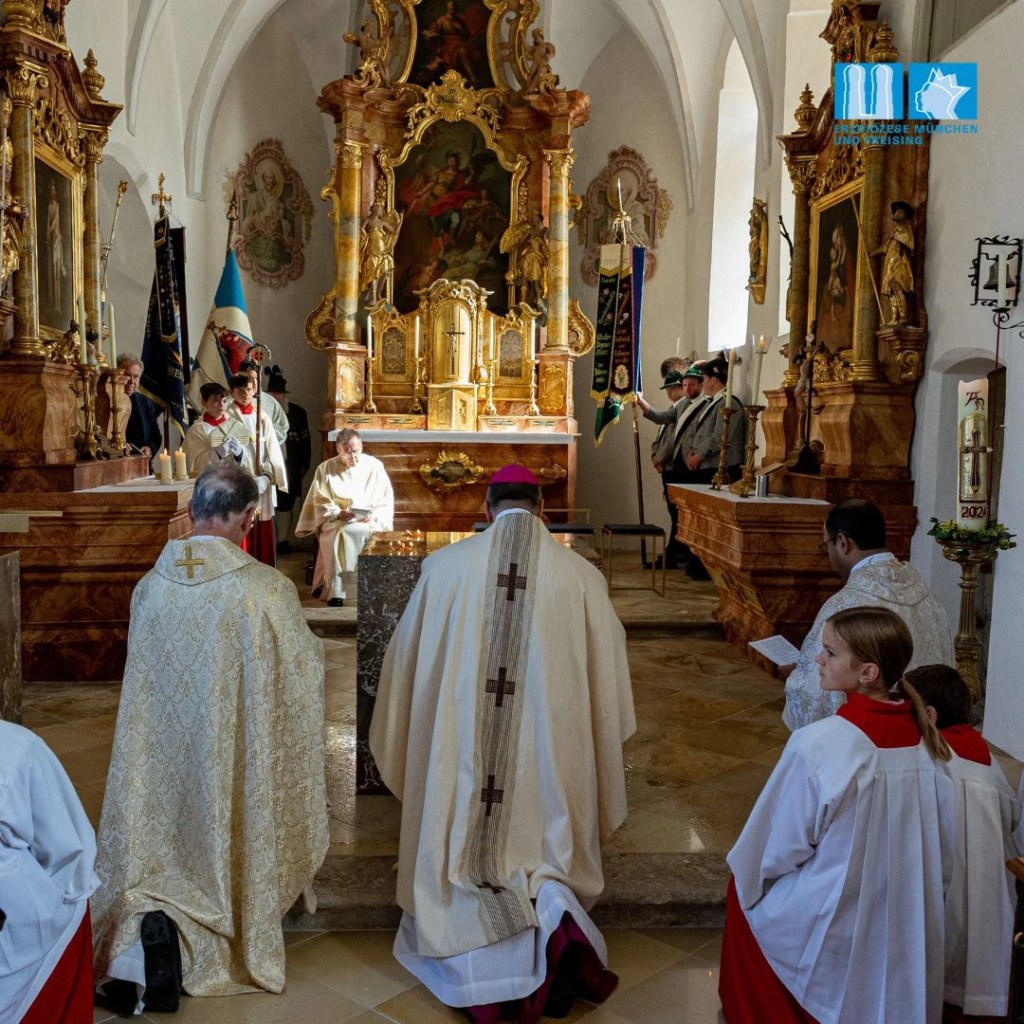
Another example of a cube-shaped altar can be found in this German church. Made of red marble, the altar was consecrated by Auxiliary Bishop of Munich, Rupert Graf zu Stolberg, at the St. Michael Church in Niederaudorf.

St. Patrick’s at Parramatta, Sydney. [New South Wales, Australia.]

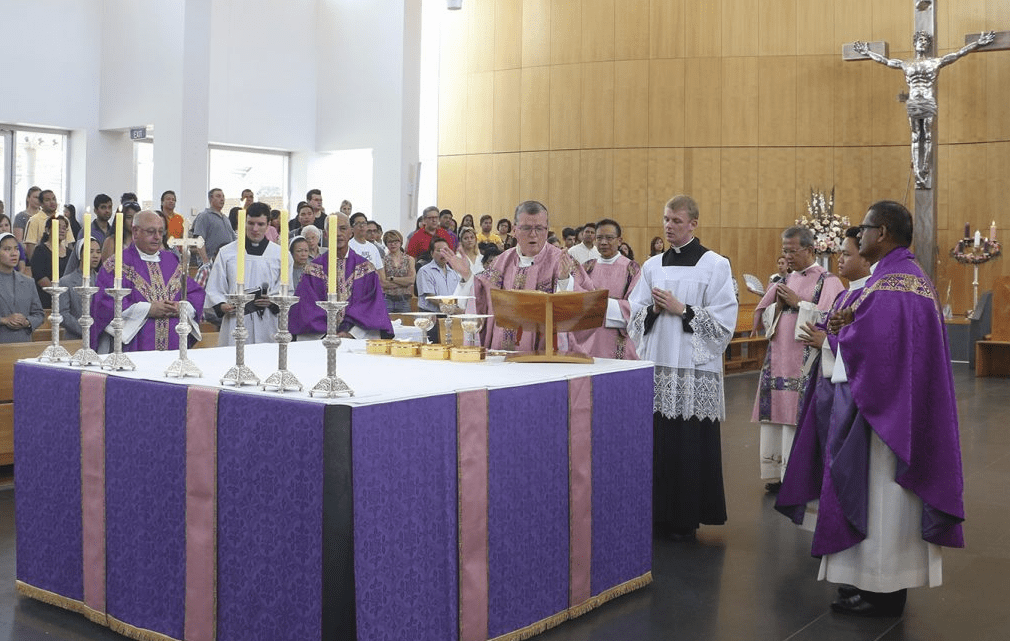
St. Patrick’s Cathedral, Parramatta, Australia

This rather sparsely-decorated cathedral has been described by visitors as a ‘barn’ or a ‘basketball court’. The shift from Catholic, theocentric liturgical design to a Masonic, anthropocentric one is very clear here: there is no tabernacle in the main body of the church, and the lectern faces over the altar to the crucifix on the back wall. What looks like a floating storm cloud, is said by the designer to embody “a sublime narrative of spiritual life.”

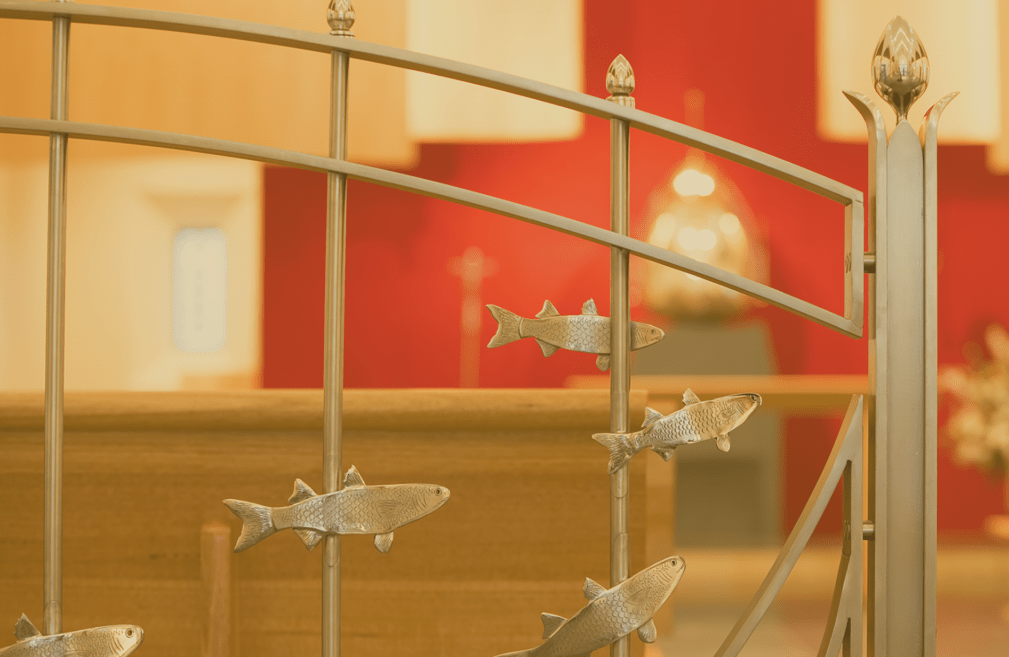
The altar is a very egalitarian square. While not ugly, the fish and decoration shown at the entrance to the Adoration chapel, are ambiguous: they in no way point to the reality of the Real Presence only a few feet away.
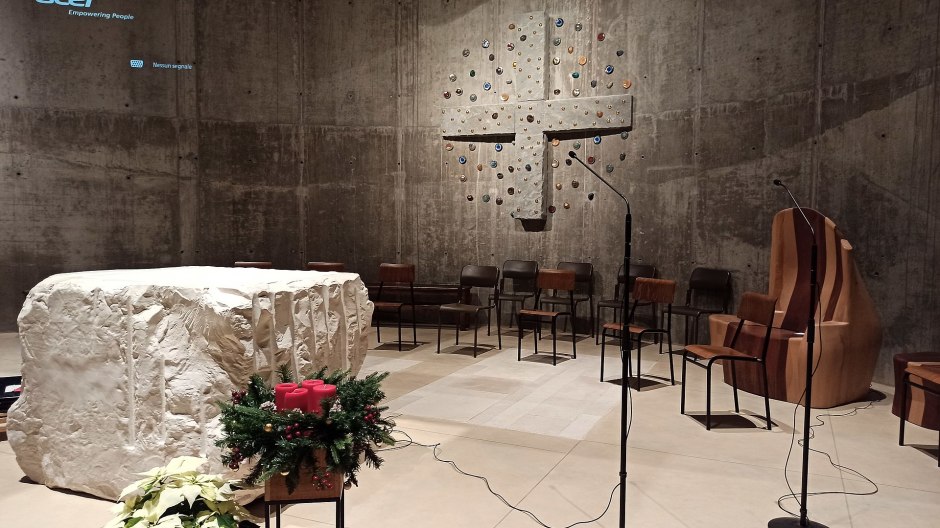
The ‘presider’s chair’ is brutalist and situated near a rather grotesque crucifix. Notably, the arms of the cross are incomplete.

The tabernacle, like its decorations, is quite ambiguous: it is difficult to discern what we are looking at. The arms on the cross surrounding the Sacred Host are of the same length – a common occult representation of a cross which is commonly found in Rosicrucianism.

Banyo Seminary Chapel, Brisbane. [Queensland, Australia.]

Banyo Seminary, Queensland, Australia

Another example is this chapel in a dioscesan seminary in Australia. Again we see the altar and ambo have been brought into the midst of the congregants. No sanctuary, as such, exists. Congregants are left with little choice but to look at each other, instead of being able to gaze unimpeded at the Holy Sacrifice unfolding before them.

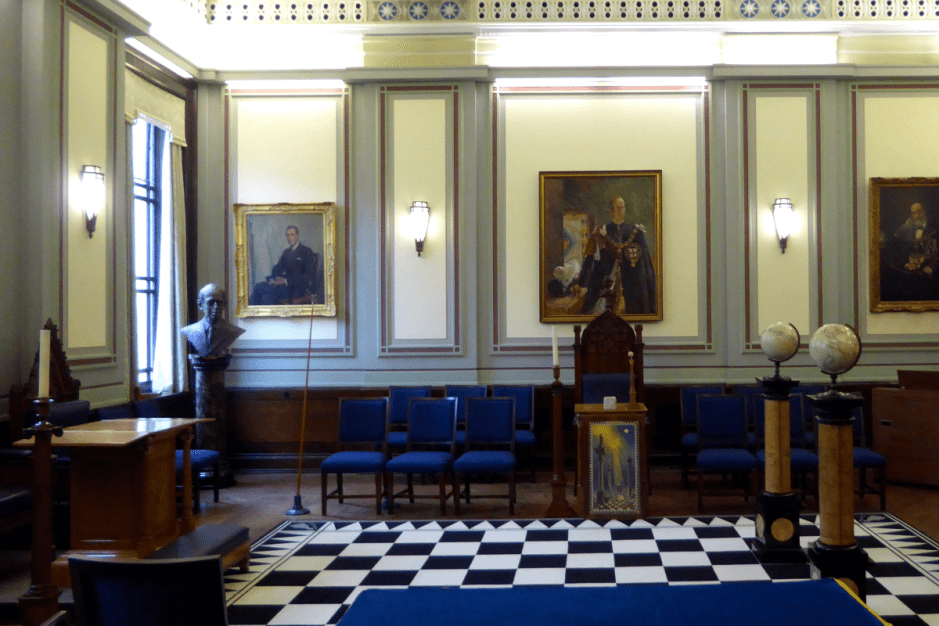
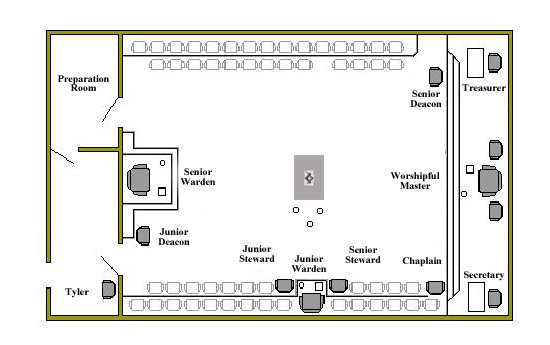
A typical Masonic lodge layout

If we compare the three new churches above to the typical layout of a Masonic temple, we are at once struck by some obvious similarities. In the lodge, chairs are arranged in rows with the people facing each other. A table, known as the Table of the Book, is situated between the rows of chairs. In this layout, the focus is on man, which is a fundamental problem in new church designs as well.

Where once the focus of the Mass was clearly on God – as the faithful, along with the priest, faced the high altar with tabernacle and a prominent crucifix – these modern designs place the emphasis firmly on man. This novelty takes on a more sinister aspect with the introduction of occult-inspired details, such as the cube-shaped altar. In that case, what could be put down to mere ideological influence is clearly exposed as an attempt to replace the object of worship: Christ for Antichrist.

Sex-Abuser Rupnik’s Occult Art

It recently became known that the Vatican covered up for sex-abuser and Jesuit priest, Marko Rupnik. Apparently he was excommunicated in 2019 for serious abuse of the sacrament of Confession – absolving a woman with whom he had fornicated. This unfortunate woman was only one of at least nine with whom he undertook such relations, but it was all swept under the rug by the Jesuit-controlled CDF.

Our interest in this man is not so much for his despicable violations of his vow of chastity, but for his disturbing artwork. Rupnik is the man behind a couple of the Vatican’s very strange logos and also had a hand in the disturbing basilica at San Giovanni Rotondo – the newer version of St Pio’s pilgrimage site.

The logo for the Jubilee Year of Mercy:  “Christ sees with the eyes of Adam, and Adam with the eyes of Christ.”

Could be.

Or maybe this is a tribute to the Gnostic “third-eye” opening after ritual sodomy.
Rupnik’s logo for the 2022 World Meeting of Families, “This mystery is great”, says he. Well, it certainly is a mystery how an excommunicated priest came to design the official logo.
Interesting to see the third-eye symbolism recurring here; this time it is Our Lady and Jesus who share the third eye.

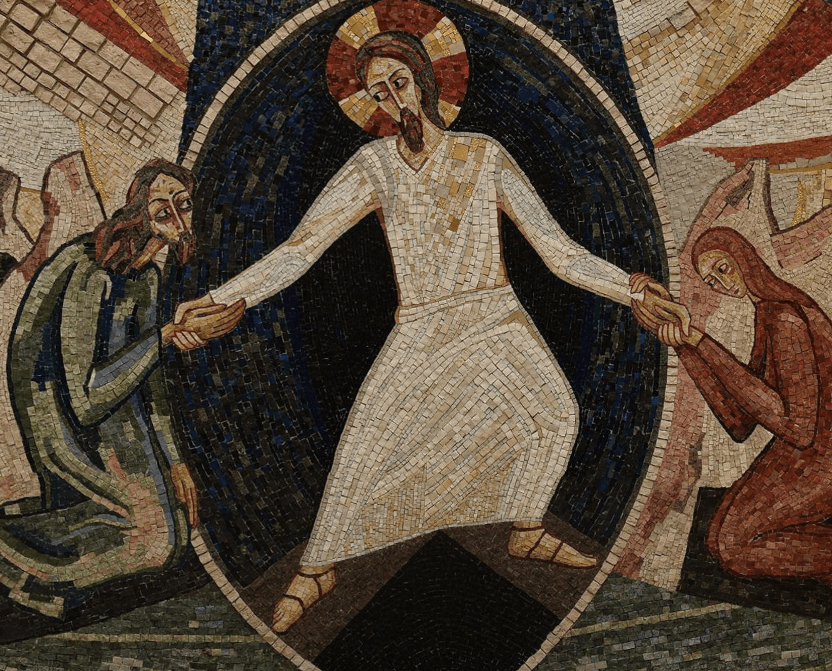
Some more of Rupnik’s talent can be seen in the Redemptoris Mater chapel in the Vatican. John Paul II had the chapel renamed in 1987 then refurbished in 1996. It was meant to be a tribute to his ecumaniacal obsession of uniting the Eastern and Western churches, but the artwork, mosaics completed in the style of Eastern iconography, appears to have an underlying anti-Christ theme to it.

One of the four walls was worked by Alexander Kornoukhov, a Russian Orthodox artist – this seems to be the wall directly behind the (rather bizarre) altar. Rupnik completed the other three walls, which show predominantly scenes from Scripture.

The Knights of Columbus loved the end result so much that in 2005, they paid for this panoramic online version to be set up so that interested parties could make a virtual pilgrimage. The images below are screenshots taken from that site. For a psychedelic taste of Rupnik’s work, you may wish to visit (or to avoid) the Aletti centre website.

It’s hard to know exactly what this depiction of the Annunciation is meant to represent. The scroll probably means that Our Lady was prophesied in the Old Testament, but by placing Her figure in such a way that She appears to be on the scroll itself reduces Her to a mere myth.

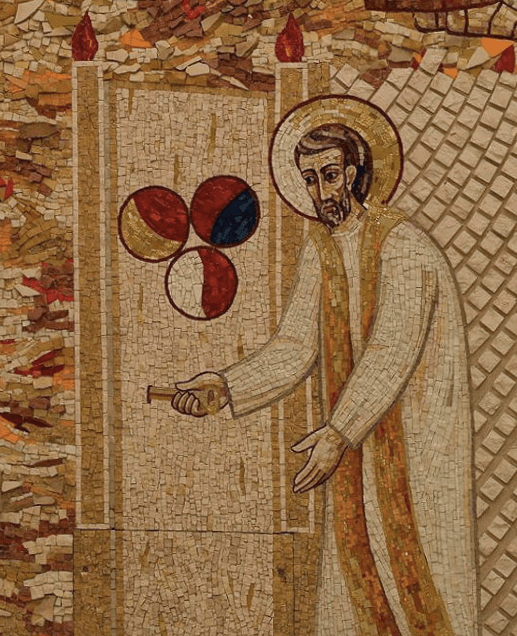
St Peter unlocks the door to his pawn-shop? Note the yin-yang style decoration of the circles.

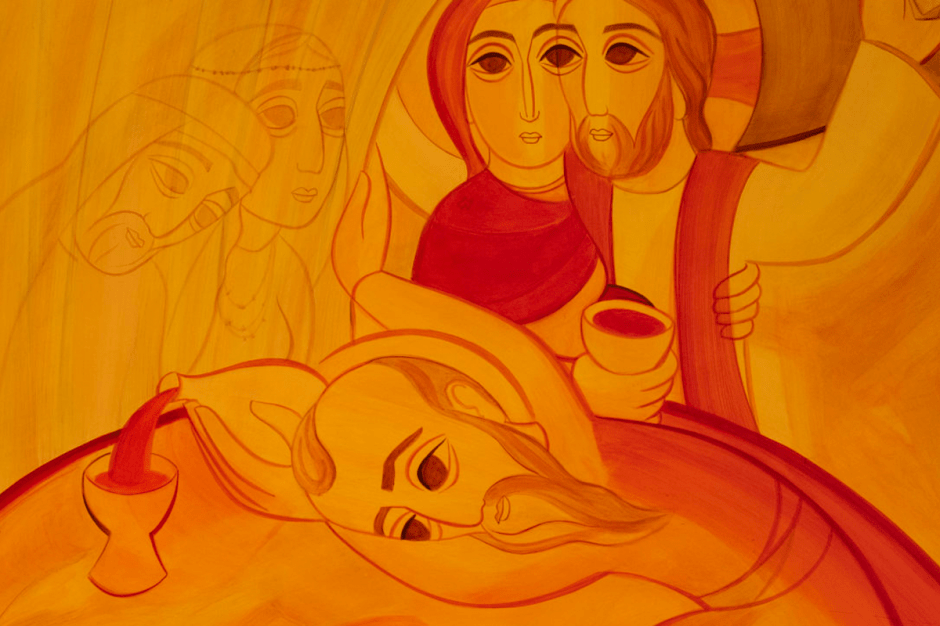
Perhaps the strangest of the images is this one of Christ with his “as above, so below” gesture. Behind him, JPII looks on approvingly.

Interesting Masonic-style grip between Christ and the male figure to our left.

Masonic Elements in a Californian Cathedral

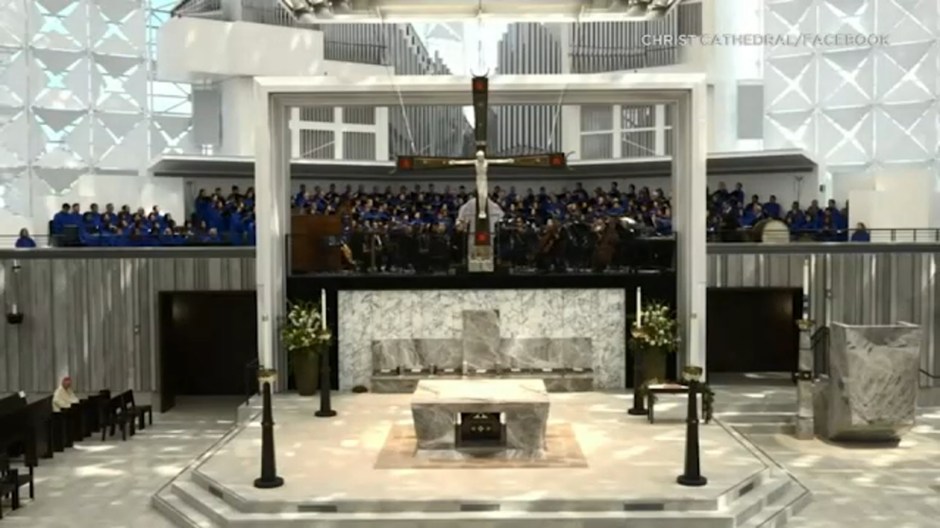
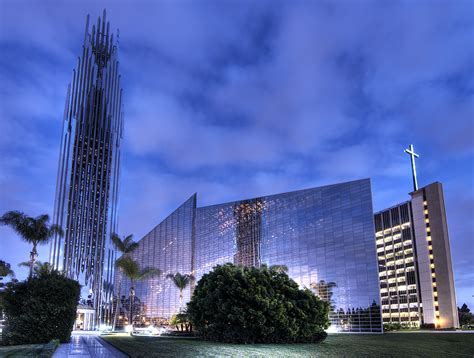
Christ Cathedral in Orange County, California, is another example of a modern church with Masonic overtones. The anti-Catholic theme begins outside with this contemporary take on a Masonic obelisk ….

Exterior of Christ Cathedral, California

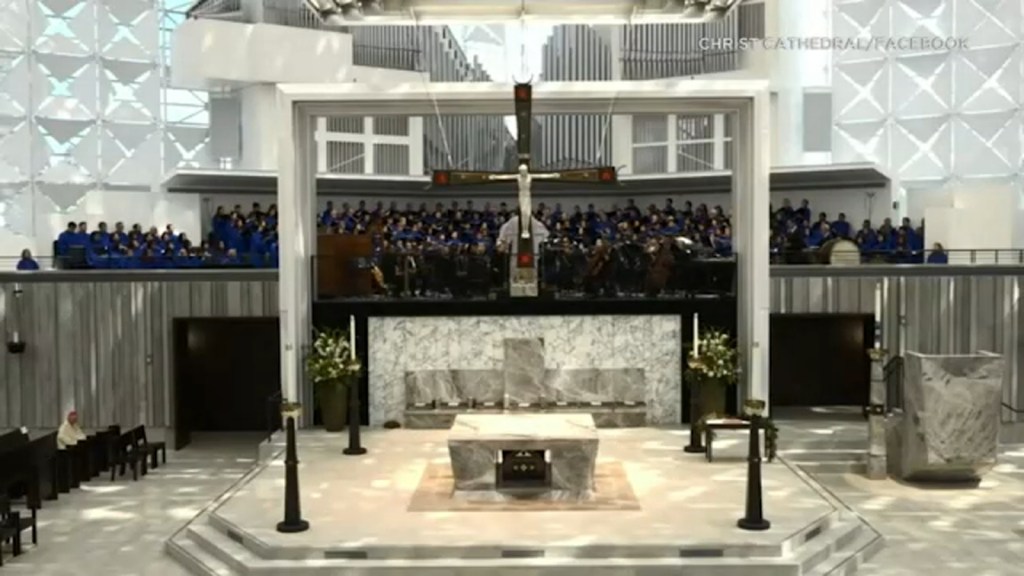
… and continues all the way to the sanctuary and altar. The altar itself is square, unlike the rectangular design of traditional Catholic altars. It is topped by a strange crucifix with crescent-moon shapes attached to the four ends of the cross. Crescent moons are a common symbol in witchcraft and the occult.

Theologian and philosopher, Peter Kwasniewski, gives this description of the sanctuary and offers an example of Freemasonic architecture for comparison:

“The location of the altar in the center of the room, the placement and type of presiders’ chairs, the dark torches on the ground punctuating the corners, the square mensa, and the all-seeing eye below the altar table at once bring us to a blood-curdling full stop. Can it be by accident that the altar at Christ Cathedral is a carbon copy of the altar of Freemasonry? Do we have a “reasonable hope” for denial? Even a cursory look at a Masonic altar makes the visual and symbolic link inescapable.

If one ignores the superior craftsmanship and style of the following Masonic temple, one can see the exact parallel in the disposition of the chairs — the tall chair in the center flanked by lower seating on either side — and then the square altar with the freestanding candles. (There is of course a fourth candle in the church, for it would have looked too strange to retain the asymmetry of three.)

https://onepeterfive.com/dark-symbolism-christ-cathedral/
Dr Kwasniewski gave this example of a Masonic Lodge layout

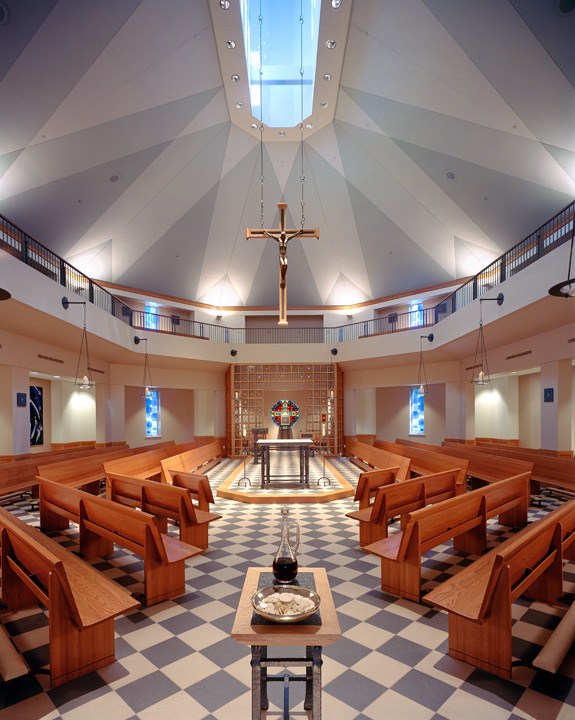
One liturgical ‘expert’ who contributed to the Christ Cathedral was Brother William Woeger. Brother Woeger designed the “Crux Gemmata” – the crucifix – as well as the candlesticks, reliquary and other features. Jesus’ crown of thorns and the altar’s reliquary are studded with strange crystals, reminiscent of those used by New Agers. Below is another design by Brother Woeger, which again shows Masonic influence. Note the checked floor, another square altar, surrounded by large candlesticks and the rows of pews which face each other.

I might return to Brother Woeger in a future article.

Occult specialist brought in for Italian church design

NOTE: This article was updated on Feb 21, 2022, to include the link to this video from Rome Reports. In the video, you can see the architect explaining that the rough stone altar represents ‘giving oneself to the earth.”

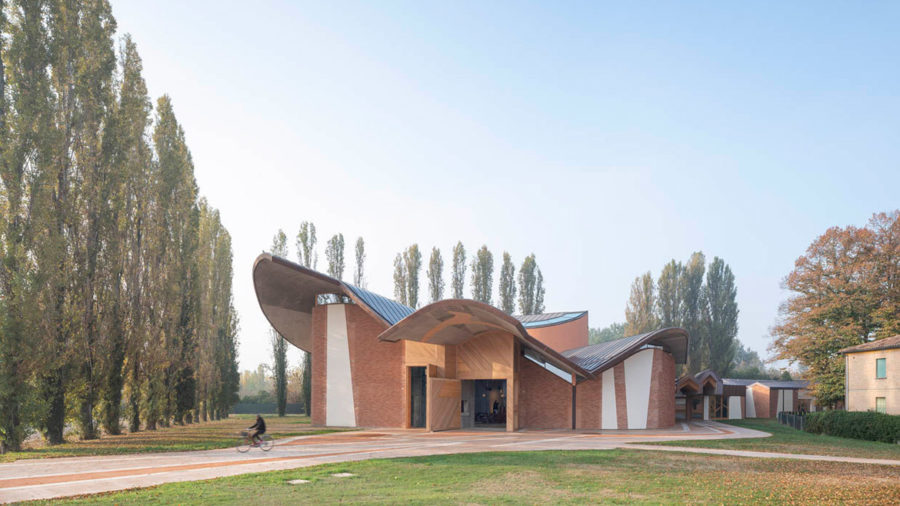
When we see a church like the newly-completed San Giacomo Apostolo in Ferrara, Italy, our second question is usually, “Why?” (Our first question might be along the lines of, “Is this for real??”)

Designed by a secular architectural firm who tried to create something that “didn’t look like a church”, the building does have most of the essentials of a church – even though they are rather dark, distorted versions. There is an altar, baptistry, Blessed Sacrament chapel, nave, spartan Stations of the Cross, and multiple crosses, although none appear to hold a corpus.

The design is the result of a competition run by the Italian Bishops Conference, who needed a new church for the city of Ferrara. The exterior is meant to echo the finale of the local hot-air-balloon festival, in which the balloons slowly deflate. I suspect that this does not represent the hopes and dreams of the Fathers fading away after the Council, but it would make an apt metaphor.

In the words of the architect, one enters the church through a grove which seems innocent enough until one realises that groves are often associated with paganism and with the occult. They are even mentioned in the Bible in connection with the worship of false gods. Of course, this may be simply a turn of phrase, as the poplars surrounding the site were obviously planted long before this church was built. But it is an odd choice of words, seeing as the trees are lining the perimeter, rather than being grouped together, as the word “grove” suggests.

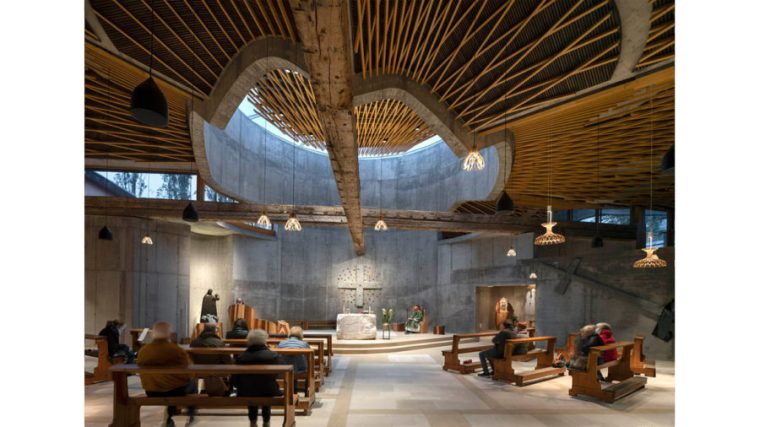
Above the altar is an oculus, (Latin for eye; in architectural terms this refers to any eye-shaped feature, such as a hole at the centre of a dome); these are quite often found in churches. This particular one is decidedly creepy, though, surrounded by cold concrete and interwoven timbers, punctuated by the immense, rough cross, and crowning the almost windowless church. The overall effect is less than inviting, and the lack of windows is, well ….. somewhat Masonic.

View of the sanctuary, topped by the oculus, with the cross suspended over it – all the charm of a Goth nightclub.
Another view of the enormous cross, which looks ready to crush the occupants, and gives little assurance that Our Lord will help us to carry ours.

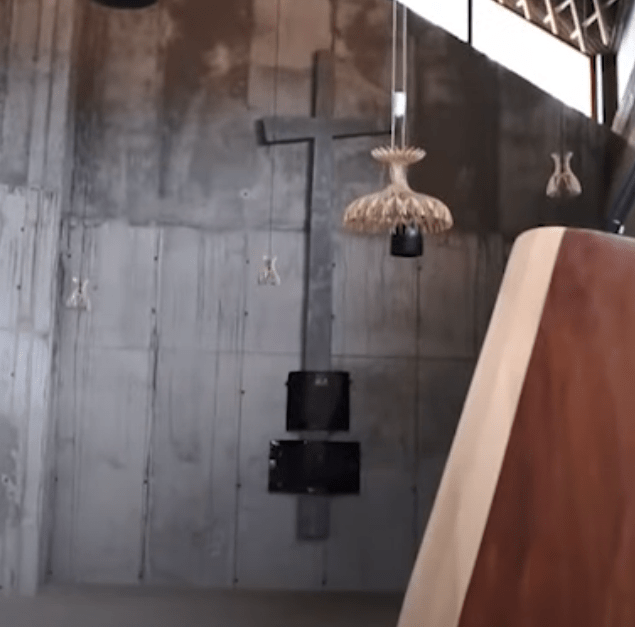
To the left, you can see the way both crosses almost intersect, with another cross mounted at an angle on the far wall; the clashing, intersecting crosses found in Paul VI’s Masonic-inspired portrait come to mind – more on that here.

The cross that adorns the wall behind the sanctuary is not a Christian one: the radiating arms of the cross are of the same length, suggesting a Rosicrucian cross. Rosicrucianism is an occult movement, linked

with Freemasonry and which contains elements of Kaballah, Alchemy, Christian Mysticism and Hermeticism. Jewels surround this cross: these have no apparent Christian reference, but the architect thought they might remind the faithful of angels. At least that’s what she told the media.

The jewels, stone crosses and bizarre black statuary are the work of the occult-artist, Enzo Cucchi, who was invited by the architects to collaborate with them. The designers describe Cucchi’s black statues, which represent scenes from the Old and New Testaments, as resembling “oozing basalt.”

One of the many cement crosses, all sans corpus, represented as being ‘taped’ to the wall.
“Oozing basalt” statues and …. fireflies???

Enzo Cucci is part of an art movement known as transversalism, and was included in an art exhibition entitled S*** and Die. (Caution – there’s some mild nudity if you click on the link.) The whole thing gets even worse: a documentary film made about that exhibit was called “Seance.”

The baptismal font (right) in this unappealing chamber sits atop what looks like a bidet. Decorum prevents me from drawing a parallel with the art show mentioned above.

The stone font is actually an authentic liturgical antique: it came from an abandoned church in Bergamo. Bergamo, for the historically-minded, is the birthplace of John XXIII and was once the bishopric of the (rather evil) Cardinal Radini-Tadeschi.

Back to the occultist, Cucchi: here’s what one biographer had to say about him:

“Cucchi is the painter as seer, demon and saint, possessor and possessed, he is at once the creator and subject of his tale. He is the painter as mad visionary, participant in and witness to the nether world from which one can emerge after a ritual of fire and purification, to the realm of the sublime.”

Description of Cucchi by a devoted fan and art critic.

The painter as demon? Hardly the kind of man one would want working on a church. Unless, of course, one wanted a church reminiscent of an occult-themed safe-room.

The Archbishop of Ferrara, Gian Carlo Perega, is an interesting character. He is by no means a traditionalist, as you would expect after seeing this strange building, but he recently – and post Traditiones Custodes – set up TLM personal parish. Perhaps this was to appease, if not to protect, the rather large traditionalist base in his Archdiocese. Perego is, however, better known as a progressive who promotes the plight of migrants.

I know the sedevacantists like to have fun with churches like this one: I suppose they see it as a vindication of their position. To me, it is just sad. Sad for the people who worship there and don’t know any better. Sad for the priest who doesn’t understand his vocation. Sad for the bishop who thinks being edgy will make him popular. And very sad for the liturgical designer who thinks there are no eternal consequences for making occult motifs an integral part of a Catholic church.