The Synodal Pope

Many traditionalists and conservative Catholics have been asking themselves how it could be possible that Cardinals as diverse as the arch-heretics Hollerich, the ultra-orthodox Burke and the so-called ‘centrist’ Timothy Dolan, could all come away from a decisive conclave in complete agreement over the outcome. They all seem both satisfied and confident.

Even the unholy gay priestesses featured in another article on this site like the new guy and they picked up something about the Pope Leo which others, including me, had missed.
Indeed, an outcome which pleases the likes of Bishops Strickland and Fr. James Martin is quite remarkable. Until recent years, the possibility of such an outcome was almost non-existent – barring a mass conversion of dissidents to true Catholicism. This was due to the inherent unity of Catholic doctrine which ensures that a papal candidate who deviates from that doctrine – or upholds it – should be upsetting someone. “For there shall be from henceforth five in one house divided: three against two, and two against three (Lk 12: 52),” said Our Lord. This is division, not for its own sake but as a consequence of the inability of truth and error to coexist.

Thanks to the acceleration of revolutionary error under Pope Francis, however, the possibility of a consensus among polarised Catholic groups has presented itself and has seemingly materialised with the election of Pope Leo XIV. The mechanism for the change is one of the long-held goals of Vatican II: what is now known as ‘Synodality’.
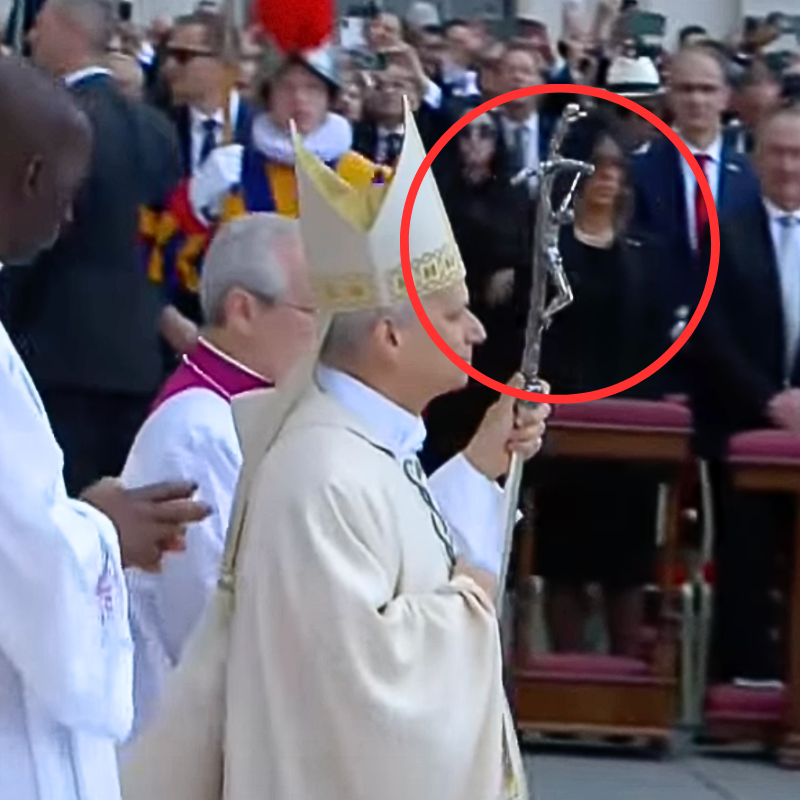
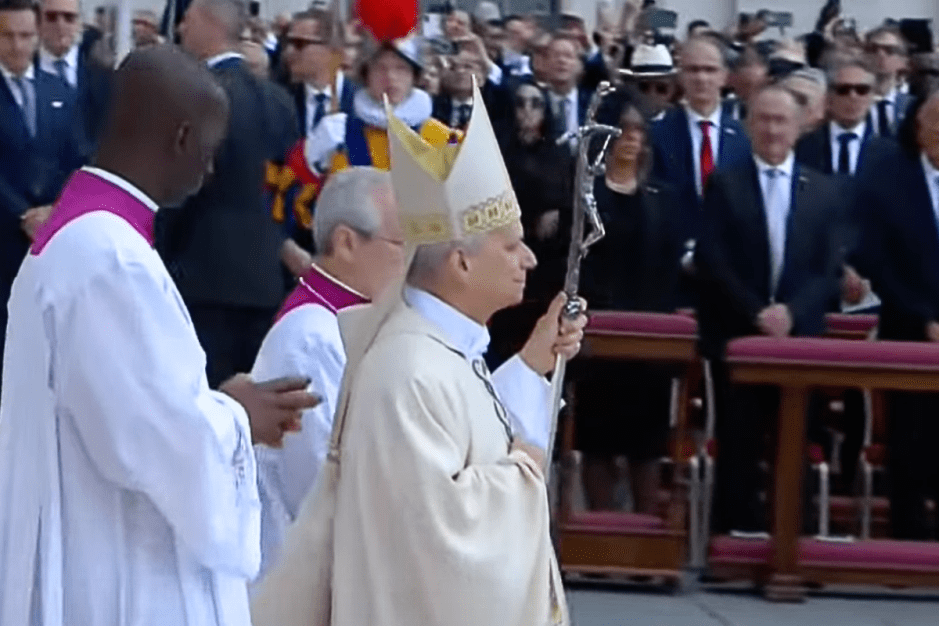
Pope Leo at his installation, carrying the hideous ferula topped by the Scorzelli cross, used by his predecessors. See more here.

Synodality

Prevost spoke about Synodality on a number of occasions prior to his election as Pope. For instance, in 2024 he said:

“One of the risks of that is that we miss the presence of the Holy Spirit. That breeze that may go by that says, ‘Yeah you always did it that way, and maybe for six centuries it was wonderful, but maybe it’s time to change. Maybe it’s time to look at things differently.’”

The dissident Cardinal Hollerich explained Prevost’s point of view in his interview with Avenire:

“Pope Leo spoke of a “Synodal Church ” in his first message. Having participated in the work of the Synod, we have a Pontiff who knows synodality, who understands synodality, who dares synodality. There will be no revolution that nobody wants in the Church, but instead an evolution. And that’s the best way to change.”

There we have it: an evolution and not a revolution, according to Hollerich.

He goes on to outline the Hegelian paradigm that is at play here, describing Leo XIV as a synthesis of Bergoglio and Ratzinger before him; a man who has something to offer traditionalists yet something also for radicals and revolutionaries. He adds that “Synodality is inherent in the Church”, confirming the prediction of anti-Catholic extremists prior to the election of Francis who said that “after four years of Francis, nothing will be the same.”

Cardinal Tagle repeated the same prediction about Prevost almost verbatim at a press conference after the conclave. “Now, will the programs be clones or photocopies? The programs may evolve, and they may take different expressions. But there’s no turning back from that.”

Fiducia Supplicans

Speaking specifically on the encyclical, Fiducia Supplicans, which allows blessings for same-sex couples, Hollerich opines that Leo may reinterpret it but that he won’t abolish it. Prevost’s comments from October 2024 see to confirm this.

Cultural differences may be one of the reasons why “each episcopal conference needs to have a certain authority, in terms of saying, ‘how are we going to understand this in the concrete reality in which we’re living,?’” he told a press briefing at the sidelines of the synod.

“The bishops in the episcopal conferences of Africa were basically saying, that here in Africa, our whole cultural reality is very different … it wasn’t rejecting the teaching authority of Rome, it was saying that our cultural situation is such that the application of this document is just not going to work.

“You have to remember there are still places in Africa that apply the death penalty, for example, for people who are living in a homosexual relationship … So, we’re in very different worlds.”

Prevost is not known ever to have rejected or criticised Fiducia Supplicans himself which indicates that he is personally in favour of blessings for same-sex couples. According to the principle of Sunodlaity (which, remember, is not a Catholic principle), bishops are free to apply or not apply FS as they see fit.

Under the new Pope, we should expect to see FS being implemented where a bishop is liberal and being denounced where a bishop is orthodox in the name of ‘Synodality.’

Traditional Latin Mass

Similarly, we should expect the TLM to be widely available in some diocese yet severely limited in others. It doesn’t appear that Prevost is willing to tarnish the image of his predecessor, Francis, in any way. This means that it’s unlikely that Traditiones Custodes will be rescinded – unless this was part of a deal carved out with traditional Cardinals during the conclave in exchange for votes.

Pope Leo’s first Mass was a Novus Ordo in Latin, which is perhaps a metaphor for what is to come: a dressing-up of error in the trappings of tradition. This indicates Prevost has no intention of getting to the heart of the problem, which is the Modernism that has infected the Church thanks to the Council.

An unholy Spirit

If the spirit of Synodality is alive and well in the Vatican, then so, apparently is the spirit of Francis. This may be the most unsettling thing that has come from the new Pope yet:

Pagan Idol Diocese allows Mass with Lesbian Priestess

Last week in the country town of Myrtleford, two Anglican women, one of whom is a gay Anglican ‘priestess’ joined the Catholic priest in the sanctuary during a public Novus Ordo Mass.

The Mass, part of the town’s annual Italian Festival, was offered in the grounds of St. Mary’s Church on a temporary stage and was dedicated to St. Anthony of Padua. When asked by a stunned attendee why the priestesses were near the altar during Mass, a local (who happened to be an ex-nun) stated that “we do everything together here in Myrtleford”!

Taken from the Festival website.

The eye-witness, a faithful Catholic, was shocked to see the two women consuming the Sacred Host, despite belonging to the Anglican faith. Although neither woman played an active role in the Mass, the ‘priestess’ was given a chalice to hold while Holy Communion was being distributed. She also addressed the crowd after Mass was finished.

According to the eye-witness, “One of them was trying to touch everything and finally got her hands on the incense. The priest cursed before reading the Gospel. He said “mannaggia miseria!” (This means ‘damn it’ in Italian).

Anglican priestesses in the make-shift sanctuary as the priest goes to distribute Holy Communion.
Close-up of the Anglican priestess with the chalice.

The ‘priestess’ is Moira Evers, a known lesbian and LGBTQ activist. In an article posted when she was appointed parish priestess in Myrtleford, Evers said she wanted people to ‘see the church as a place of safety.’

Moira Evers on being made parish priestess at Myrtelford’s Anglican church.
The priestesses in ‘cappae nigrae’ before the Mass
Evers after celebrating an Anglican ‘Fabulous Pride Mass’ in 2016. SOURCE

Evers is controversial even within the Anglican church because of her involvement with a same-sex advocacy group who expressed support for a Satanic Mass. There are also reports of members of her former congregation at Buderim leaving the parish because of her pro-LGBTQ stance.

The parish priest of St. Mary’s Catholic Church is Fr. Tony Shallue. There seems little hope of him being disciplined over the liturgical abuse as St. Mary’s is located in the Diocese of Sandhurst, which is overseen by Bishop Shane Mackinley. This is the same bishop who is notoriously allowing a three-month exhibition of a pagan idol related to witchcraft to remain in Bendigo’s Sacred Heart Cathedral, despite massive pushback from Catholic clergy and the faithful.

A Modernist in Trad Clothing

Beware of false prophets, who come to you in the clothing of sheep, but inwardly they are ravening wolves – Matthew 7:15.

Some may think that the election of yet another unworthy Cardinal to the Papacy causes perverse delight for writers who routinely expose wrongdoing in the Church. Nothing could be further from the truth! It is actually a source of pain to be counted among the minority who disregards popular opinion in order to defend the rights of God.

It was Christ Himself who warned us to be on the watch for dangerous men who like to appear as one thing, while having intentions that are altogether different. Our Lord even specifically warned that such men will dress the part in order to lead His unsuspecting sheep astray.

This profile of a ravenous wolf perfectly fits the latest Pontiff, Leo XIV, who has chosen to adopt the outward persona of a traditionalist, all the way from his heavily embroidered pallium down to his relic-embedded pectoral cross.

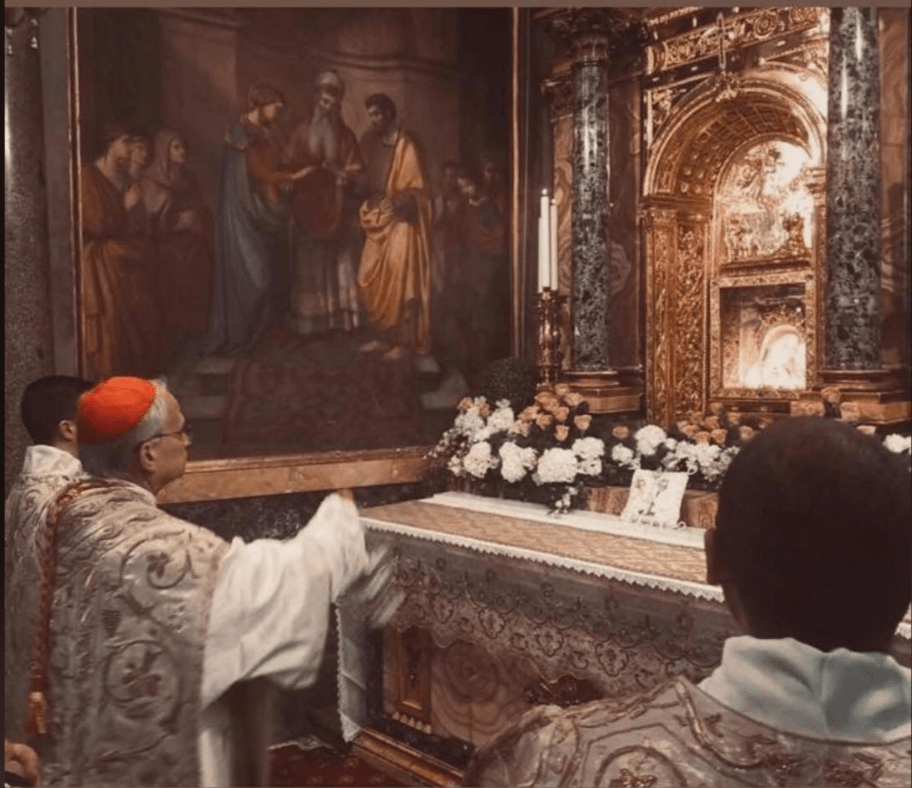
He is gaining favour with Trads, as stories of him offering private Latin Masses are doing the rounds of social media. Those posts are often accompanied by a photograph, shown below, of then-Cardinal Prevost wearing traditional vestments. However, the liturgical event was not a traditional Mass; rather Prevost was simply incensing an image of Our Lady, possibly the miraculous icon at Gennazzo.  [We know it wasn’t a Mass because the altar is covered, and there are no altar cards, vessels or missal.]

Prevost NOT offering a TLM.

So what is underneath the lovely vestments and fluent Latin that should have us so concerned? It is that Prevost is a Modernist, through and through, and that he a stated goal of picking up where Francis left off, steering the Barque of Peter firmly along a course of Synodality.

The Catholic Esquire has done a great job of explaining succinctly the programme of this papacy and how it is in perfect continuity with that of Francis – and of the entire Revolution. [His short (17min) video can be found here.]

In short, Synodality is the name of the game: decentralising the Church in an attempt to obliterate the foundation of Her unchanging doctrinal authority. Now, obviously, this plan can never ultimately succeed, as Christ is that foundation, but the Synodalists have and will continue to inflict great damage on the Church in their attempt.

We should expect to see national bishops’ conferences implementing their own local brand of Catholicism whilst tolerating all manner of error. We can also expect some tinkering with the Novus Ordo liturgy, as Synodalists move along in their efforts to further delegitimise, and one day completely invalidate that form.

The persecution of Traditional Catholics could perhaps appear to soften, but in no way should a return to the widespread traditional practice of the Faith be expected. Should Traditiones Custodes be revoked, then Traditional Catholics must not let down their guard. If a convincing wolf is in charge, then we must not stand near him saying “what big teeth you have!”

As explained in my last article, we also should not expect to see a cleansing of sodomites from the ranks of the hierarchy under this pontificate. The moral chaos and errors are very likely to increase, rather than diminish. And that means an increase of moral chaos in the wider society as well.

What about Ecclesiastical Freemasonry? Will Pope Leo denounce Masonry in the strongest terms, like his namesake, Leo XIII? That is most unlikely. The best that can be hoped for is the reiteration – on paper, at least – of the Church’s longstanding condemnation as was produced by Tucho Fernandez under Bergoglio in November 2023. That ostensible condemnation was more likely aimed at disempowering the Masonic Old Guard in the Curia, led by then-papabile Cardinal Parolin, than at actually dissuading Catholics from becoming Masons. Francis’ Masonic credentials certainly suggest that this was the case.

Speaking of Masons, an intriguing image was posted on a Masonic Instagram account a few days after the death of Bergoglio. There’s no way of knowing what it meant, but the timing was most interesting. It was accompanied by a snippet of Masonic poetry, without any additional commentary. Note the red cuff on the figure of the Pope, as well as the (Rosicrucian-inspired?) equilateral crosses on his vestments.

From a Masonic Instagram account, posted April 26th, 2025. Pope Francis died April 21st and Leo XIV was elected on May 8th.

As with the election of other Popes since the Council, Freemasons have expressed their congratulations to the newest Pontiff. This was the only example that was easily found, but it is early days yet.

Pope Leo XIV welcomed by the Freemasons of Tanzania

The surest confirmation of Pope Leo’s agenda will be his selection of a new Curia, which won’t happen until after his official installation on May 18th. Some more Masonic well-wishing around that time is to also be expected.

So is there reason for us to be disoriented? Or disillusioned …. depressed? Well, no. All of this has to play out before the time of Our Lady’s Triumph.

Since the majority of Catholics, including a series of Popes, has refused to honour the requests of Our Lady at Fatima and elsewhere, another destructive papacy is simply part of the package.

However, we are not powerless in the face of adversity. In fact, there is much we can do to mitigate the effects of another ‘worm-ridden’ papacy. The following Rules of Engagement with the revolutionary forces – both natural and supernatural – may be of assistance:

  • A renewed commitment to daily prayer, especially the Holy Rosary
  • A commitment to a small form of daily penance for Pope Leo XIV, that God will work much good through his pontificate (and even a conversion can’t be ruled out)
  • A commitment to limiting online criticism to the actions of the new pope, while being careful not to demean his office
  • Similarly, great care should be taken always to distinguish between the human element of the Church and Her Divine origin. {For example, as clearly stated by Pope Gregory XVI in Mirari Vos: “To use the words of the fathers of Trent, it is certain that the Church “was instructed by Jesus Christ and His Apostles and that all truth was daily taught it by the inspiration of the Holy Spirit.” Therefore, it is obviously absurd and injurious to propose a certain “restoration and regeneration” for her as though necessary for her safety and growth, as if she could be considered subject to defect or obscuration or other misfortune.“]
  • Asking heaven for the grace to remain on the Ark; to stay within His Church, no matter how bad things get.

PS. It is well-known that Hollywood and the celeb-world are in cahoots with the revolution everywhere – including within the Church.

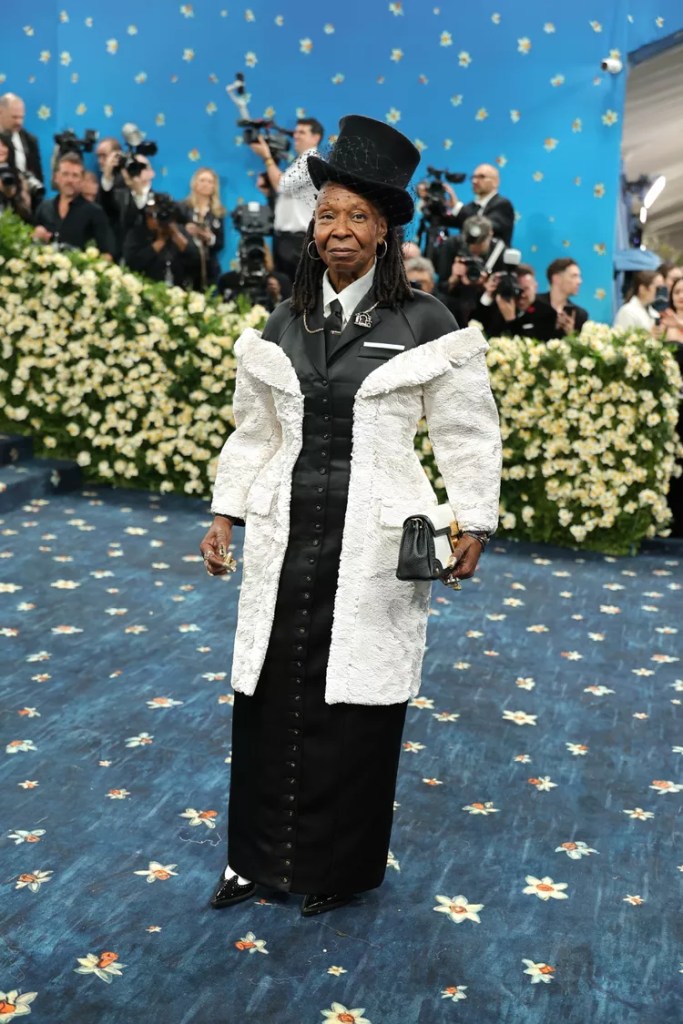
Does anyone else think this costume worn by Whoopi Goldberg at the recent Met Gala refers to an ecclesiastical wolf in sheep”s clothing? The furry-looking overcoat seems to peel away, revealing a sombre, even militaristic suit beneath. The bottom of the suit is even more surprising, as it is buttoned all the way down, just like a cassock.

To top it off, the brooch on her lapel is in the shape of a key-hole. Food for thought….

Yet Another Pope Beloved by the Masons

It is being widely reported that the Italian Grand Lodge has released a very positive farewell statement after the passing of Pope Francis, entitled, “Francis, the Pope of the Least”. (Reproduced below)

This is, of course, no great surprise considering how closely Bergoglio followed the pattern set down by the Masons in the Alta Vendita almost two hundred years ago: “…a Pope according to our needs…” During his life, Masons regularly thanked Bergoglio for his contribution to their aims. In fact, most of his programme, from Synodality to his new-fangled mortal sins, were completely in line with Masonic principles.

What is a surprise is how few realise that this appreciation is just standard fare for the Masons in regard to the conciliar popes. For example,

  • In June 1963, Mexican Freemasons glowingly farewelled Pope John XXIII 1
  • After the death of Paul VI, French and Italian Masons spoke of him favourably 2
    • “To us, it is the death of him who made the condemnation of Clement XII and of his successors fall. That is, it is the first time – in the history of modern Freemasonry – that the Head of the greatest Western religion dies not in a state of hostility with the Freemasons.”
  • During his life, John Paul II was granted an award for his dedication to promoting human fraternity by Portuguese Masons – he declined it, however.3
  • Australian Freemasons also honoured John Paul II for his leadership qualities4:
    • “John Paul II’s most outstanding leadership quality was his ability to create real presence in those who looked to him. The capacity for a leader to make those who follow them believe that the person to whom they aspire can understand, listen and comfort them in a manner that is enriching; is a quality not to be underestimated.” (Note the reference to the Real Presence – remember Masons prize mocking God above all!)
  • Sometimes the praise went in the other direction, for example when John Paul I praised a Mason, who was also known to be a satanist! (Read the article here.)

Now for the latest praise of a post-conciliar Pope by the Masons: a statement on the death of Francis from the Grand Lodge of Italy. The Mason’s mention of Bergoglio’s “path free from dogmas” is perhaps ironic given how dogmatic he was in regard to eliminating tradition.

Francis the Pope of the least

The Grand Lodge of Italy of the ALAM joins the universal condolences for the disappearance of Pope Francis, a pastor who, with his magisterium and his life, has embodied the values of brotherhood, humility and the search for planetary humanism .

The Grand Lodge of Italy of the Ancients, Free, Accepted Masons joins the universal condolences for the passing of Pope Francis, a shepherd who, with his magisterium and his life, embodied the values of brotherhood, of humility and of the search for a planetary humanism. Coming from the “end of the world”, Jorge Mario Bergoglio has been able to change the Church, reporting the revolutionary teaching of St. Francis of Assisi to the topicality of history.

In this moment of mourning, our Communion intends to pay homage to the vision of Pope Francis, whose work is characterized by a profound resonance with the principles of Freemasonry: the centrality of the person, respect for the dignity of each individual, the construction of a community of solidarity, the pursuit of the common good. His encyclical Brothers all represents a manifesto. Freedom, Equality and Brotherhood it is the triple value asset of Freemasonry. Overcome divisions, ideologies, unique thinking to recognize the richness of differences and build a humanity united in diversity, this was ardently wanted by Francis, the same design pursued by the Grand Lodge of Italy.

Pope Francis has been able to combine faith and reason, complementary dimensions of human experience, renewing the Anselmian principle of credo ut intelligam (I believe so that I may understand). A faith capable of questioning itself, of welcoming doubt and of dialoguing, which we also find in the Masonic initiatory method, founded on a path free from dogmas, substantiated by incessant search for truth.

Francis’ pontificate placed in the center the last, together with the planet care and a an ethics of development based on human dignity. This too is found in the Masonic construction of the “Inner temple”, based on tolerance, solidarity and resistance against hatred and ignorance, and finds a profound correspondence in the pastoral care of Bergoglio, which with his “sweet revolution”, showed that humility and dialogue are instruments of authentic strength. In the wake of the “Francesco Economy ” and the vision of one “common home ”, there Masonry supports the commitment to a sustainable, fair and supportive future.

In this time crossed by serious critical issues, the Grand Lodge of Italy finds itself in Pope Francis’ appeal for a “planetary consciousness”, which recognizes humanity as one community of destiny. We honor his memory by continuing to work for an ethics of the limited, for respect for the other and for the construction of a temple based on solidarity, freedom of thought and universal brotherhood.

Luciano Romoli
Grand Master of the Grand Lodge of Italy of the A.L.A.M.
Rome, April 22, 2025

  1. https://www.traditioninaction.org/ProgressivistDoc/A_145_J23-Masons.html ↩︎
  2. https://www.fisheaters.com/srpdf/xxPaul_VI.._beatified_english.pdf ↩︎
  3. https://www.traditioninaction.org/ProgressivistDoc/A_072_JPII_Masonry.htm ↩︎
  4. https://www.freemasonsvic.net.au/wp-content/uploads/2020/05/SummerJv5_FINAL.pdf ↩︎

Fernandez Approves Gender Mutilation

From the New Daily Compass & translated from Italian by AI.

During a conference organised in mid-February by the Catholic Theological Faculty of the University of Cologne in Germany, the Prefect of the Congregation for the Doctrine of the Faith (CDF), Cardinal Victor Manuel Fernández, made a video contribution. This report was then incorporated into a document entitled The Ontological Dignity of the Person in Dignitas infinita Some clarifications. This document aims to explain some of the conceptual points contained in the Declaration Dignitas infinita published by the same Dicastery in March 2024.

Fernández’s document was drafted to respond to some criticisms, but raises several critical issues of its own. One of these is undoubtedly the question of medical treatments aimed at so-called ‘gender reassignment’. The document, which denounces gender ideology, recalls the condemnation of such interventions already present in Dignitas infinita, but if in Dignitas infinita the condemnation was absolute, that is, it allowed no exceptions, in the recent document signed by Fernández there appears one that is decisive. Fernández writes: “We don’t want to be cruel and say that we don’t understand the conditioning of people and the deep suffering that exists in some cases of “dysphoria”, which manifests itself even in childhood. When the document [Dignitas infinita] uses the expression “as a rule”, it does not exclude the possibility that there are cases outside the norm, such as severe dysphoria, which can lead to an unbearable existence or even suicide. These exceptional situations must be assessed with great care”.

Let’s focus our attention on the part where the Prefect refers to the Dignitas infinita and quotes the the words ‘as a rule’. Let’s look at the relevant passage in Dignitas infinita: “Any operation to change the sex of a human being normally risks jeopardising the unique dignity which the person possesses from the moment of conception. This does not exclude the possibility that a person with genital anomalies, whether present at birth or developed later, may choose to undergo medical treatment to correct these anomalies. Such intervention would not constitute gender reassignment as we use the term here (60).

In essence, Dignitas infinita is right to say: no to interventions on the reproductive system when the aim is to try unsuccessfully to change sexual identity. Yes to the same interventions when they are aimed at confirming sexual identity, that is, when they are therapeutic, modifying the reproductive system in order to bring it into line with genetic data, which is the primary reference for understanding which sex a person belongs to. In fact, in certain pathologies, the reproductive organs may not correspond morphologically and to varying degrees to the person’s XY or XX chromosomes. This explains why Dignitas infinita uses the phrase “as a rule”: it wants to affirm that in the majority of cases (as a rule) such interventions are to be condemned, except for those that are therapeutic in nature.

As already mentioned, Fernández refers in his document to the expression “as a rule”, which is present in Dignitas infinita. We have seen that this expression is used by Dignitas infinita in relation to genital surgery. It is therefore reasonable to assume that Fernández also uses it in relation to these. So, if we re-read Fernández’s text, we discover that he considers these interventions to be illegal, except in cases of severe dysphoria and, implicitly, in cases of therapeutic treatment. Therefore, the Prefect considers such interventions legal even in the case condemned by Dignitas infinita, that is, when they are used to contradict sexual identity, provided that the dysphoria is severe and involves serious risks for the person. Therefore, the prohibition does not concern, as in the case of Dignitas infinita, the moral nature of the act – treatments to “change” sex – but only the condition that motivates the intervention: no to those interventions where the dysphoria is mild. In short, for the Prefect, the “change” of sex is morally acceptable when the dysphoria is severe. But surgical interventions that contradict the genetic sex are intrinsically evil acts and remain so regardless of the conditions that motivate them. This is why Cardinal Fernández has accepted the principle of “yes to sex reassignment”. Once the principle has been accepted, logical consistency will take us from borderline cases to common cases, from the exceptional to the normal.

This is why Fernández refers inappropriately to the “normal” contained in Dignitas infinita: in fact, he refers to it in order to legitimise sexual “change” in a sense that is the opposite of that indicated by the Dignitas infinita document itself. The latter declares that genital surgery is generally reprehensible, except when it is performed for therapeutic purposes; Fernández declares that genital surgery is generally reprehensible, except when it accentuates dysphoria (and when the purpose is therapeutic).

Conclusion: the Prefect of the Congregation for the Doctrine of the Faith qualifies the transsexual condition as morally acceptable.

Esoteric Sacrilege in a Viennese Church

Update – readers from Austria have assured me that Villach is a small town south-west of vienna, rather than a suburb, as I previously thought. Apologies for the error!

A new art exhibition displayed in an Austrian Catholic church is not only sacrilegious, but also shows indications of an occult influence.

The exhibition was launched during Mass on March 9 with the enthusiastic blessing of the parish priest. Entitled CROSS: WAY: STATION (“Kreutz: Weg: Station” in the native tongue) the installation will be displayed in St. Jakob Church in Villach, Austria until April 4.

Artist Michael Kos has taken classic images of Christ and subjected them to abuse in the name of his spiritualised ‘art’. Kos claims that his three pieces, a crucifix, a tabernacle and a bizarre architectural structure in front of the altar are meant to represent the Son of God being subjected to a ‘real ordeal’ – something he undoubtedly managed to achieve by his disrespectful display.

According to Gloria TV, the diocese is run by the heterodox bishop who gave the world an “Episcopal Vicaress.”

Body Cube

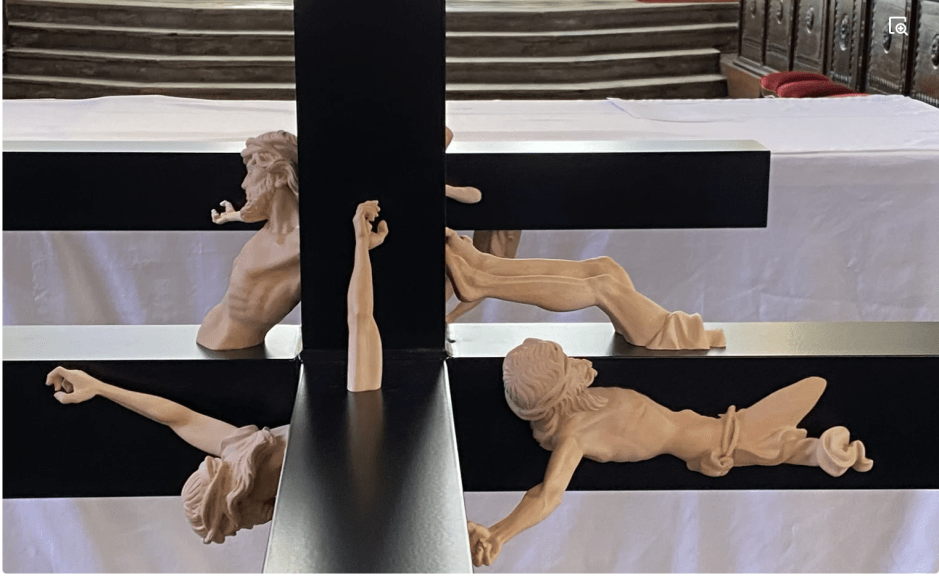
The so-called ‘Body Cube’ is set in front of the altar and is large enough to stand in. It is quite disturbing, containing 49 dismembered body parts of Jesus Christ.

Kos explains the structure as a three-dimensional cross and says “the open axis structure of the cube creates a variable play of cross shapes. From every other point of view, different forms arise, from the simple cross to the half cross, the cross of the room to the swastika.”

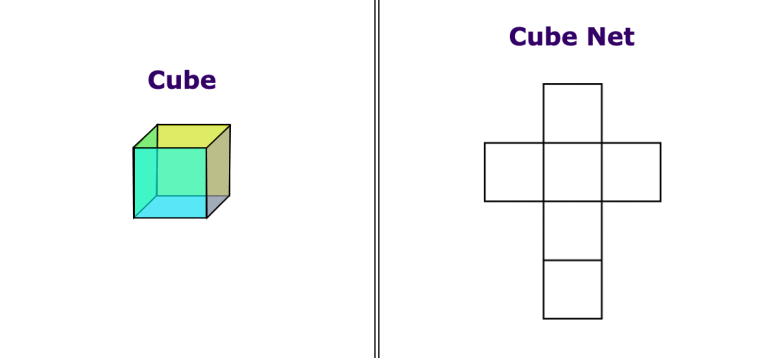
The use of cubes is the first clue to the display’s occult meaning as adepts appreciate the cube’s secret: when unfolded, it becomes a cross. As explained here in an article about liturgical design, cubes are ‘inherently Masonic.

Kos’ reference to the swastika, is another red flag since the swastika is a well-known New Age symbol. The composition of the structure, black-painted aluminium is a further clue since in the occult, the use of a base-metal for construction of a cross symbolises humiliation.

‘Body Cube’ shown in its entirety
The cube bears a resemblance to the ‘triple-tau’ cross, revered by Freemasons.

Balance Act

A second piece of artwork in the installation is a wooden figure of Christ, covered with white chalk and appearing to balance on a tightrope. The artist believes that this represents “a kind of resurrection happening through a rapture” and that it also refers to the concept of ‘balance.’

As mentioned many times in these pages, the principle of balance is very significant in the occult world. In choosing this theme, the artist underscored the balancing of chaos with order, sin with grace.

Although black-and-white tiled floors are not unusual in Catholic churches, it is perhaps no coincidence that one is found in this particular church. The contrast between black and white is yet another reference to finding ‘balance’ between opposites.

Here is what article Michael Kos says about “Balance Act”:

“Art is very often a balancing act because it can support values but also overthrow them.”

The installation balance.AKT is an unusual, sacred representation that not only shows the change in religion and culture, but also the wafer-thin dividing line between play and existential fall.

No god can be safe in the long run. Every individual and a son of heaven can experience the loss of balance. Man has become one who knows about the light-footed play and the bottomless abyss. [Emphasis added.]

Kos makes no attempt to hide his disdain for the Son of God.

Christpower

The final and most blasphemous of all the artworks is entitled, “Christpower.”

Believe it or not, this is a tabernacle (or at least represents a tabernacle – it isn’t clear whether or not the Blessed Sacrament is actually housed in this monstrosity.)

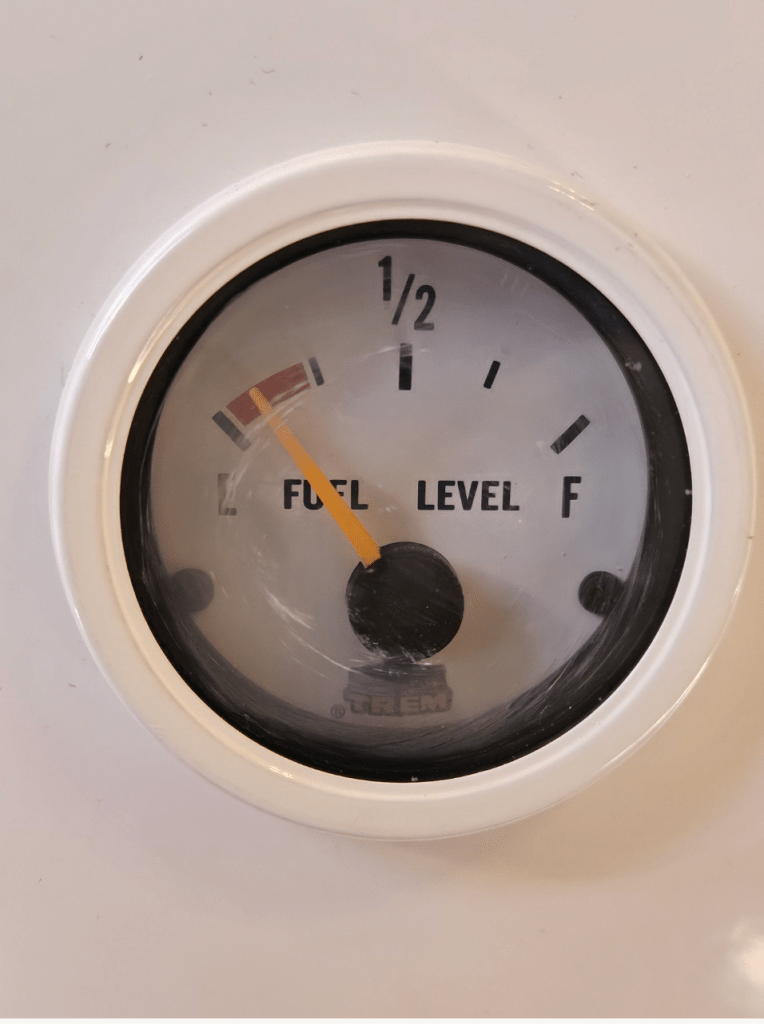
“Christ Power” is a white lacquered steel tank with a fill indicator which the artist says was inspired by the idea of “a critical tabernacle – or rather a tabernacle in crisis.”

Again, references to the occult are peppered in the artist’s explanation: he says that “shrine”, “transformation” and “secrecy” are all aspects of the tabernacle. ‘Transformation’ is of course, the ultimate ‘balancing’ act.

In his explanation of the work, Kos again shows his disregard for the Catholic faith, calling its veneration for the Blessed Sacrament ‘exaggerated.’ He goes on to suggest that divinity is found within the individual. This is the immanentism of esoteric philosophy and may be contrasted with the Christian idea of transcendence – that God is found beyond the individual.

“The question arises as to the relevance of a unique object today, which was characterized for centuries by cult dramaturgy and symbolic exaggeration.

This work of art oscillates between affirmation and negation of the religious level. The fill indicator is just before the vacancy rate and refers to a vacuum where there could also be spiritual abundance. But what is this abundance? Who fills up at all?

… Isn’t CHRISTPOWER also a psychoanalytic transmission that the believer unconsciously performs himself? So less an external force than an active internal force. A intrinsic force that fades away.

SOURCES: Carinthia Diocese website and Gloria TV.