Lefebvre thought Silvestrini was a Mason?

In an old interview, Archbishop Marcel Lefebvre, founder of the SSPX, said he thought then-Archbishop (and later Cardinal), Achille Silvestrini was a Freemason. The 1986 article can be found in the archives of the Society’s United States website. The pertinent question and answer are given below – the entire interview is quite enlightening.

Q. I have read that many of the high-ranking members of the Roman hierarchy are secret Masons. Is that true? If so, how deeply have they penetrated the Church?

A. It’s very difficult to say, “This man is a Freemason,” “This man is a Freemason,” or “This man is a Freemason.” We don’t know. It’s very difficult. It is certain that there are some cardinals, some bishops, cardinals in the Curia, or monsignors or secretaries of congregations in Rome that are Freemasons. That is certain because the Freemasons themselves have said that. They have said that they have in their lodge some priests and bishops. It is certain that there are some cardinals and many monsignors in Rome who do the same work as the Freemasons; they have the same thinking, the same mind. Willebrandt is Prefect of the Secretariat for the Unity of Christians, and Archbishop Silvestrini is the first secretary of Cardinal Casaroli who is Secretary of State – and his right hand is Silvestrini. He is a great power in the Curia. He nominates all the nuncios in the world. He has a very great influence and he is probably a Freemason.

According to Malachi Martin in Windswept House, Silvestrini was present at the infamous “Enthronement of Satan” ceremony in the Vatican, which took place sometime during the 1950’s – ’60’s. In the book, Silvestrini was known by the pseudonym, Silvio Aureatini.

Silvestrini, who died in 2019, was also known to be a member of the St Gallen Mafia, the nefarious group which conspired to promote Jorge Bergoglio at both the 2005 and 2013 conclaves.

Fraternity replaces Corpus Christi

Bergoglio’s Vatican treated Sunday’s feast of Corpus Christi as if it were an ‘optional memorial’, by replacing that solemn occasion with the first “World Meeting on Human Fraternity”. Freemasonic “fraternity” was the order of the day – along with dreadfully tiresome entertainment including gay dance moves. The sodomite dancer pictured below apparently also performed for JPII back in the day. (You know, the day before we were all citizen journalists and trusted that everything our popes did was in the best interests of the Church. Image courtesy of Michael Haynes )

There was yet another official signing of yet another universalist document: this one promoted “environmental” and “spiritual fraternity” and as you may guess, omitted any reference to Catholicism. Bergoglio himself wasn’t able to make it due to his recent surgery, but good old Pietro Parolin (Secretary of State) and Mauro Gambetti (Archpriest of St. Peter’s Basilica) held the fort.

According to LifeSite News, this anti-Catholic event was planned months ago, pushing the feast of Corpus Christi out of mind and out of sight. By all accounts, it was not well-attended, by either regular punters or distinguished invitees. Even Andrea Boccelli on a sunny Roman afternoon wasn’t enough to draw people along.

Silere Non Possum gives us a few more details. His translated headlines reads “THE POPE IS HOSPITALIZED AND GAMBETTI TRANSFORMS THE BASILICA INTO A PUB”! From the article:

If Bergoglio feeds on a liquid diet, Mauro Gambetti does not. Today in via della Conciliazione the main guest is Parmigiano Reggiano. For the Franciscan friar , who loves dining with the powerful and certainly not with the poor, this event of Human Fraternity is an opportunity to send clear messages to HE Mons. Salvatore Fisichella. Gambetti, in fact, is strongly opposed to the fact that the Pope has entrusted the archbishop with the management of the Jubilee 2025. After all, it could not have been otherwise, given the disastrous results of the management of St. Peter’s Basilica.

While the Pope, also to the bishops of the CEI, has once again addressed the invitation to poverty, Mauro Gambetti does not abandon the path traced since his arrival in the Vatican. Nobel prizes, celebrities and thousands of money spent on advertising and organization of an event that has no reason to exist. The Vatican Basilica has become a content to be filled as it has been emptied of its essence: prayer. The falling plaster, the dust, the naked men on the altar weren’t enough. Today, a real banquet has been set up in the atrium of the Basilica which probably reminds Gambetti of the fields of Romagna where you can have an aperitif with hay and crates.

“From the Vatican to Camporella is a moment”, reports a cardinal . No Masses, no prayer. In the first vespers of the solemnity of Corpus Domini, the square of Christianity is transformed into a real circus.…..In the meantime, however, numerous law enforcement officers have been employed, the basilica is not accessible and the amount of money lost is staggering.

Papal Encyclicals go Arty

If there was a prize for inane events, it would have to go to the Vatican.

Take the latest offering: an exhibition at the 18th Venice Architecture Biennale – touted as “an internationally renowned event that showcases both classical and modern artwork from around the world.”  

The Vatican’s exhibition is titled “Social friendship: meeting in the garden” and is meant to represent Benedictine simplicity. Included in this display of ‘simplicity” are these juvenile wooden sculptures, made by the Portuguese architect Alvaro Siza. Perhaps the poor fellow was ‘simple-minded” and someone felt sorry for him.

Perhaps the wooden blocks are Jenga pieces and the whole thing it is a statement about evolution and how mankind randomly fell together from a jumble of DNA. (Like these Jenga pieces ending up as humanoids – get it?)

The Dicastery for Culture and Education tells us that the exhibition is “a way of celebrating the ten years of Pope Francis’ pontificate and the dialogue he has established with the world.” I’m glad there’s something to celebrate after this decade of apostasy overseen by Francis the Destroyer.

A sycophantic Cardinal from the Dicastery spouted some Bergoglio-esque drivel about the papacy: Cardinal Mendoca:

We want to see how some of the main ideas of this pontificate can be key to a dialogue with contemporary architecture and converge in a vision that takes the risk of imagining a different future.

The Cardinal explains that Laudato si’ and Fratelli Tutti:

” … help us not only to make a critical, precise and sincere diagnosis of the present, but also challenge us to raise our gaze, rediscovering the capacity to dream with determination of the prophecy of a better world.

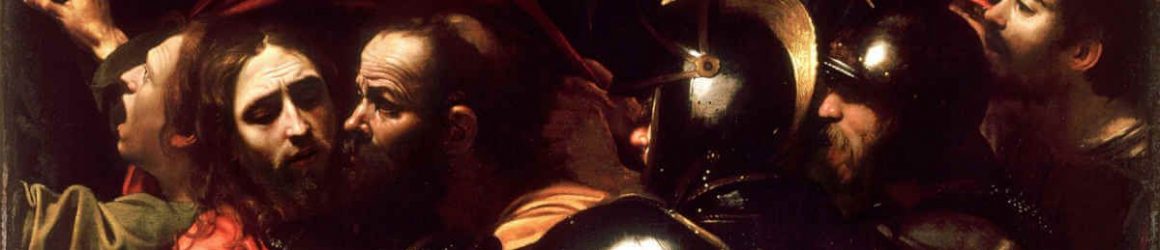
Why does this example from the exhibition …….

…. remind me of this?

And why do both of those images give me the feeling that Francis’ “better” One-World-Government-One-World-Religion world is something along the lines of THIS???

Spiritual Effects of Sodomite Priests

This extract is taken from Slaying dragons II: The Rise of the Occult (click here to purchase)

“The effects of sodomy on the individual, in particular on a clergyman, are so much more devastating than many in the hierarchy seem to accept in our age. This sort of devastation, as Fr Athanasius [a pseudonym] explained, can indeed make priests disposed toward occult practices. He said, “Once someone compromises the conscience and habitually lives in sin, the devil’s suggestions become more constant and acceptable. But consider the interest the devil has in high value targets such as priests. Every mortal sin of a priest is a sacrilege. It makes sense that the Enemy will concentrate on them to bring about anti-priests, anti-liturgy, anti-Church. And today we’ve got a lot of possessed clergy thanks to their sodomitical ways, You’d be surprised.” When I further asked if he thought there were occultists in today’s hierarchy, he replied, “Absolutely!”

“The compromising of the conscience mentioned by the above exorcist is surely accomplished by the enemy through the moral and spiritual effects produced by the sin of sodomy. In The Book of Gomorrah, St. Peter Damien presented the evil effects brought about by the presence of this abominable vice within the priesthood in the eleventh century. From these, and in light of the comments by Fr. Athanasius, we can see how this could easily dispose those clergy today to embrace the occult, guilty as they are of the same abominations condemned by St. Peter Damien. St. Peter Damien said that sodomy “evicts the Holy Spirit from the temple of the human heart; it introduces the devil who incites to lust.” Further, “It casts into error [and] extinguishes the light of the mind … It defiles everything, stains everything, pollutes everything.” The damage done to the priest or Bishop involved in such behaviour is immense:

In fact, after this most poisonous serpent once sinks its fangs into the unhappy soul, (moral) sense is snatched away, memory is borne off, the sharpness of the mind is obscured. It becomes unmindful of God and even forgetful of itself. This plague undermines the foundation of faith, weakens the strength of hope, destroys the bond of charity; it takes away justice, subverts fortitude, banishes temperance, blunts the keenness of prudence.

St. Peter Damien, “Book of Gomorrah”, p 63-4.

“Further, St. Peter Damien added, “This vice casts men from the choir of the ecclesiastical community and compels them to pray with the possessed and with those who work for the devils.” With all these negative effects articulated, the mind is quick to respond, “How can a man, given over to this vice, seek to govern the Church as a Bishop or priest, or lead souls to Christ, or protect the Mass, or raise up new holy priests, and avoid leading the people into error?” These men, St. Peter Damien declared, “Try with such desire to ensnare the people of God in the bonds of [their] own ruin,” and lamented, “What fruitfulness can still be found in the flocks when the shepherd is so deeply sunk in the belly of the devil?”

“Given the rampant acceptance of homosexuality in the clergy today, and the presence of these men even among the Bishops, as it was in St. Peter Damien’s day, these criticisms and laments need to be considered as we seek to understand the spiritual fallout which is the result of having these men as the spiritual leaders of the Church today.”

Masons involved in the Synod on Synodality

Well, I guess it’s not really surprising.

During Australia’s Plenary Council process, there were lapsed Catholics, alphabet-soup Catholics, Protestants, Moslems, and even atheists all giving their two-cents’ worth on the Church. So it stands to reason that somewhere along the line, Freemasons would want to have some input into the Church’s future – especially seeing as so many of them occupy important positions in the hierarchy these days.

From FSSPX NEWS:

“The Conference of Bishops of the Philippines (CBCP) has just issued a statement reminding the faithful of the impossibility of a Catholic being a part of Freemasonry. A welcome clarification, as it appears that Freemasons in the archipelago had been participating in the preparatory work for the Synod on Synodality.

The declaration of the Filipino bishops is part of the context of the synod organized in the archipelago, as everywhere else in the world. The debate is indeed more and more lively on the participation of “Catholic Freemasons” in synodal consultations.

“We thought that the teachings of the Catholic Church on the matter had evolved. Since several participants in the Synod are Freemasons, we thought that the Church had relaxed its rules on joining Masonry and participating in activities of the Catholic Church,” explains Gloria Buencamino.

For this parishioner from Quezon City, the episcopal development is surprising, because in some churches, “Catholic Freemasons help the priest distribute communion; in our parish alone we have two and they were delegated to the Synod on Synodality. They are good and pious Catholics,” she says.

“Good and pious Catholics?”

Well, of course they are. At least Freemasons believe in the Real Presence, (albeit only in order to profane the Lord) which is more than can be said for the majority of non-Mason Catholics.

As usual, the Masons themselves have no problem with Church membership: it is only the Catholics who are bigoted and exclusive. From the article:

… Frank Munez hosts a lodge in Manila. For this 61-year-old Mason, there is no opposition between Catholicism and Masonry: “It is above all a fraternal community. What’s wrong with that? We have nothing against God, in fact, we encourage our members to be men of faith and good citizens,” he told Ucanews.

One further reason why Masons want to be involved in the Synod? I’ll give you a clue. It rhymes with Synodality. (And here’s what I wrote about it a little while ago)

How does a prelate become a Freemason?

From ‘Unholy Craft’by Arnaud de Lassus

In Italy, in 1999, a book was published anonymously entitled Via col vento in Vaticano and, according to the editor the French version, “would have come from a group of high-ranking Vatican dignitaries who chose to break the law of silence.”

It is a collective work describing various disorders affecting the Holy See. The chapters are not all of equal value and some call for serious reservations. Chapter 18, The Smoke of Satan in the Vatican, deals with Freemasonry and, in four very interesting pages, explains the process used to entice prelates to affiliate to the craft.

There is a real novitiate for recruiting ecclesiastics to the Masonic order. Among ecclesiastics, there is a certain category of men in which Masonry seeks possible collaborators; these must combine certain gifts: keen intelligence, a great desire for advancement, ambition, quickness to understand and to pretend to understand nothing, willingness to serve and, if necessary, a good physical presence and a pleasing face.

When a young ecclesiastic meets these criteria … it remains only to engage him by titillating his pride.

The author insists on the secrecy of the operation which is a consideration of its success:

In this first phase it is absolutely necessary that the designated candidate remains in total ignorance of what is being set up around him. The Masonic technique requires to be revealed progressively, so that the associate discovers the secret society’s aims only gradually, as the superiors think fit.

The first contact is made as naturally as possible. An invitation to an accomodating embassy for a national festival, unexpectedly meeting someone who claims to be delighted to have met him, a prelate who asks him for something and shows his gratitude. Then comes the phase of compliments and flattery: What a treasure, such kindness, such keen intelligence … You deserve better – you are wasting your time. Why don’t we address each other less formally? …. Then one enters the phase of future prospects: I know such a prelate, such a cardinal, such an ambassador or such a minister ….I’ll willingly put in a word for you; I’ll say you are someone who deserves higher responsibilities ….

At this stage, the proposer immediately realises whether the interested party has taken the bait.

The process thus described will continue for several years, always in secret.

Gradually, the promises made are fulfilled. The pre-selected candidate notes that these were not in vain and believes it is his duty to be grateful to the friend whom he regards as his benefactor. During this time, his career progresses very smoothly without encountering any difficulties. Brilliant prospects in the service of the Church appear before him and he begins to see a position which would suit him rather well.

Then, when fired with ambition and vanity, the naive prelate has at hand the evidence of his effortless advancement, which he hasn’t yet fully grasped, and when other promotion to higher levels still beckon – it is at this stage that the explanatory phase arrives.

The recruiters explain to the candidate that:

  • If he has attained such wonderful positions, it is thanks to the discrete support of the Masonic order and its friends
  • He is free to continue to collaborate with this order, which will ensure his advancement continues.

In this very delicate phase, it is up to the prelate, in crisis, to decide which choice to make.

The desire to continue to advance, the excitement of knowing one is being introduced into the Masonic group, the fear of unavoidable revelations should he refuse to join, or, on the contrary, the vacuum he can already feel around him, the fraternal exhortation of some dignitary to go ahead, as he himself has done formerly: In a word, all this ends up convincing the prelate to follow the path mapped out for him by others without him being aware of it.

The higher one’s position, the more likely one is likely to be gripped by the fear of losing the high position one has attained. One abyss opens after another. One seeks to justify oneself.

Many prelates, thus compromised, end up by giving in and become members of the Masonic apparatus and under obligation to obey its instructions.

Thus, once infiltrated into his ecclesiastical setting, the brave Masonic novice’s first duty is to maintain his credibility by keeping his promises and, if necessary, to cast, as poseurs and hypocrites, the prelates of the place he has infiltrated.

Skilfully hooked, the new Freemason then becomes a pawn in the secret lodge’s sphere of action and is added to the others already there. His rise can now continue unabated towards the top with the help of other ‘brothers.’

This is a remarkable process, founded on secrecy, which can easily last ten years and which can be implemented by disciplined, well trained …. and patient personnel. It is undoubtedly used not only in the Curia, but just as much in the secular and ecclesiastical worlds.

Two general remarks can be made following the observations which have been made on Masonic infiltration within the Curia and on the process used for that purpose.

The presence of Freemasons in key positions in the Church explains to a great extent the doctrinal and disciplinary deviations of these last forty years. It is particularly clear in the case of liturgical reform.

As for the process that is used to produce Masonic prelates, it is very important to understand it and to make it known, because it obviously loses its effectiveness when it is known.

In conclusion, let us remain alert to the Masonic question. It is one of the keys to the current crisis, political as well as religious and, as Pope Leo XIII said in the encyclical Humanum genus,it is necessary ‘to tear away the mask from Freemasonry and to let it be seen as it really is.

Let us remain alert and keep faith in the Church; we know that the gates of hell will not prevail against Her.

The Church is truly a supernatural society, truly holy. The Mystical Body of Christ, the Bride of Christ, of unblemished fidelity, in the image of the Virgin Mary. Without exception, throughout the centuries, and until the end of the world, ‘She is Jesus Christ, given and communicated. That and nothing else.’