Habemus (Lavender) Papam

“James Martin likes him.”

That was all we needed to hear to know that the Cardinals have just elected Francis II. Sure, he might speak Latin beautifully and he might be great at football and his papal name – Pope Leo XIV – sounds quite hopeful.

But Cardinal Robert Prevost is no traditionalist, nor even a conservative when it comes to the things that really count. He is fully committed to “Synodality”, open border migration and LGBT rights. That last one is the most concerning of all, because it means that the moral current flowing through the Vatican will remain contaminated for years to come.

Prevost is such a big hit with the gay Mafia that, prior to the Conclave, conservative news outlets were accused of running a campaign against him. If, by campaign, one means revealing Provost’s ties with sexual abuse cover-ups, then that is certainly true. The arch-Liberal journalist, Austen Ivereigh, was said to be nervous that damning evidence about Prevost was being released so close to the voting, but he need not have feared. As InfoVaticana explains, “Prevost was their man, the candidate in whom they had placed all their hopes.”

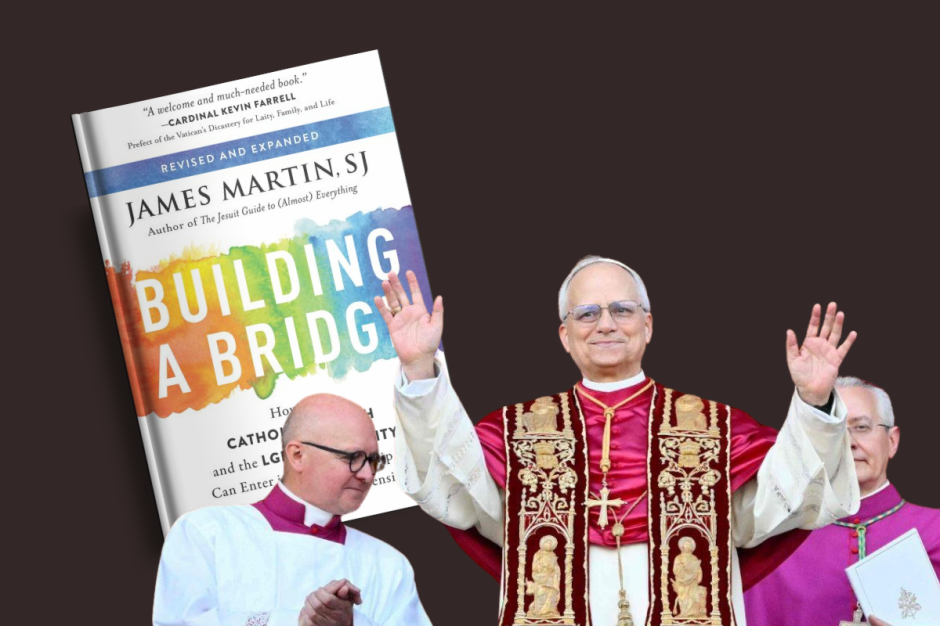
“They” refers to the lavender Mafia: in the US, that includes Cardinals Wuerl, Cupich and McElroy, with their ebullient frontman Fr James Martin of “Building Bridges” fame. You can hear what Martin had to say about Prevost <a href="http://<blockquote class="twitter-tweet" data-media-max-width="560"><p lang="und" dir="ltr">Pope Leo XIV! <a href="https://t.co/y9lFvPsNQe">pic.twitter.com/y9lFvPsNQe</a></p>&mdash; James Martin, SJ (@JamesMartinSJ) <a href="https://twitter.com/JamesMartinSJ/status/1920557966396129771?ref_src=twsrc%5Etfw">May 8, 2025</a></blockquote> <script async src="https://platform.twitter.com/widgets.js&quot; charset="utf-8">here.

James Martin’s book featuring an occult-inspired rainbow.

The College of Cardinal website provides more details on our new Pope: “views close to Pope Francis”; prefect of the Dicastery for Bishops; “very close to Francis’ vision regarding the environment, outreach to the poor and migrants, and meeting people where they are”; with his views on the blessing of same-sex couples being uncertain:

Although he expressed reservations about “sympathy for beliefs and practices that contradict the gospel,” Cardinal Prevost showed less clarity about Fiducia supplicans, stressing the need for national bishops’ conferences to have doctrinal authority to interpret and apply such directives in their local contexts, given cultural differences. He therefore did not fully endorse nor reject the document.

In her recent article calling for the next Pope to expel homosexualism from the ranks of the clergy, Dr. Janet Smith specifically mentioned Robert Prevost as one of those who was highly suspect:

It is impossible to estimate how many of the cardinals participating in the conclave have either been accused of being active homosexuals or of covering up for homosexuals. SNAP (The Survivors Network of those Abused by Priests) submitted to Cardinal Parolin a list of six of the papabile cardinals who have “either enabled or concealed sexual abuse committed by Catholic Clergy”: Péter Erdő from Hungary, Kevin Farrell from the United States, Victor Manuel Fernández from Argentina, Mario Grech from Malta, Robert Francis Prevost from the United States, and Luis Antonio Tagle from the Philippines. A rainbow cloud hangs over the heads of the cardinals from the United States, either for their own suspected homosexual activities or for cover-up of abusive homosexual priests. [emphasis added]

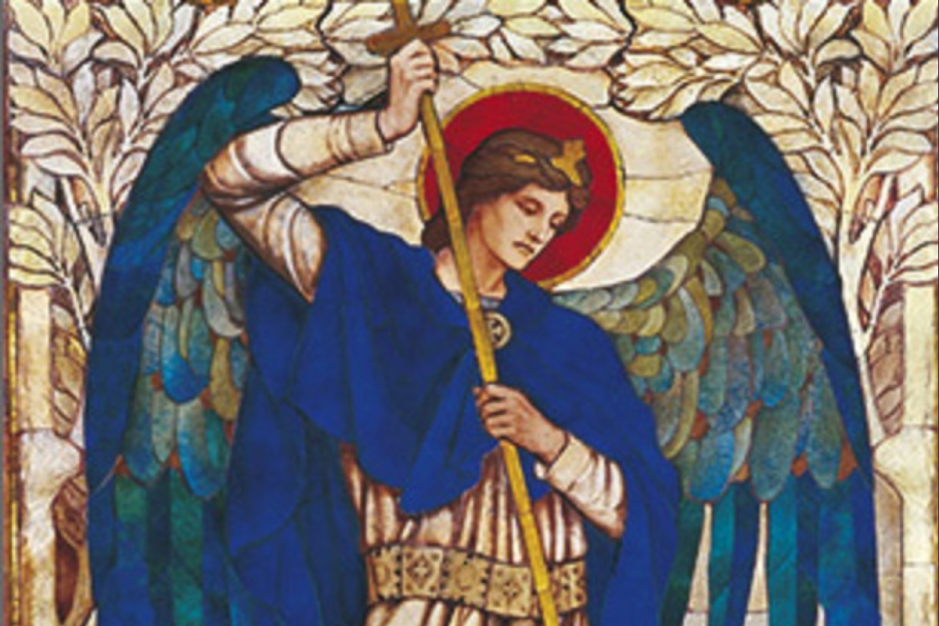
Prevost’s pro-life and other conservative-sounding quotes are already being circulated in the jubilant post-conclave atmosphere. Links are being fabricated between Leo XIV and the lion-hearted Leo XIII, connections made with the date of Prevost’s election (a lesser-known feast of St. Michael) and that mighty angelic defender of the Church.

While it is always possible that the graces of state may kick in and Prevost could surprise everyone by imitating St. Michael or embodying another Leo XIII, at this point in history it is far more likely that Christ and His Church are being mocked yet again by occultists and sex-magicians who have co-opted St. Michael – and Leo XIII – for their own ends.

So pray for the new Pope, as is the obligation of every Catholic. Offer prayers for him at every Mass – if only to gain indulgences for the souls in purgatory – but don’t expect a ‘new springtime’ in the near future. Put your head down, ignore the papal propaganda and work out your salvation in fear and trembling.
The St. Michael Prayer was an Antidote to Freemasonry

Most of the information in this article comes from a fascinating book, ‘Pope Leo XIII and the Prayer to St. Michael’. The book looks at various accounts of the origin of the prayer as well as its significance.

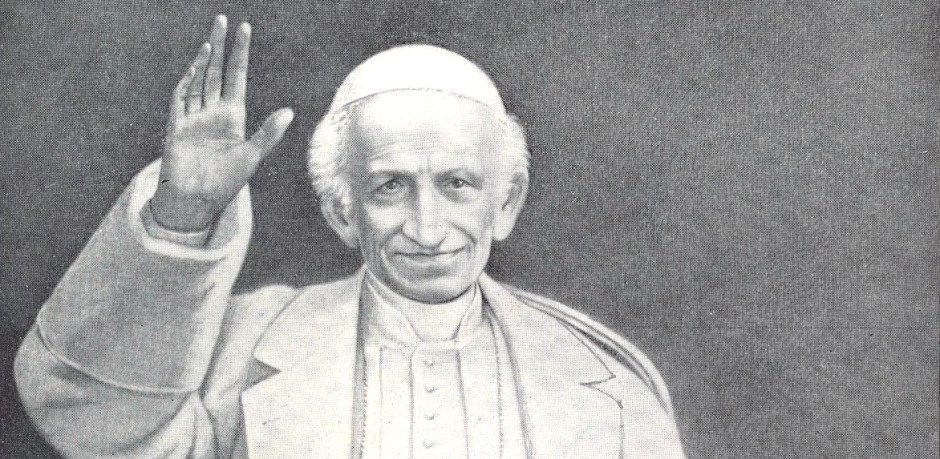
Pope Leo XIII famously composed the prayer to St. Michael after seeing a vision in which God gave the devil permission to have free reign over the earth from the mid-twentieth century. The date of that apparition is traditionally given as October 13, 1884 – coincidentally, that is exactly 140 years ago today. This date is significant for several reasons, none of which should be a surprise to my readers. October 13, as well as being the anniversary of Leo’s apparition, it is the date of the miracle of the sun at Fatima (1917) and of the final apparition of Our Lady at Akita (1973).

Some sources believe that Leo’s decision to write the prayer coincided with his increasing concern over the influence of Freemasonry on the Catholic Church. His predecessor, Pius IX, had ordered a set of prayers to be prayed by priest and faithful after Low Mass for the protection of the Church. Leo inserted the prayer to St. Michael into that set of prayers – a practise which continues today in traditional parishes – requesting this from his priests in his classic encyclical against Freemasonry, Humanem Genus.

Leo issued continued warnings to his priests to be increasingly vigilant with regard to dangers both within and without the Church. As well as the St. Michael prayer, Leo composed an exorcism prayer just for priests which is based on the St. Michael prayer as well as a longer version of the St. Michael prayer to be used by the laity.

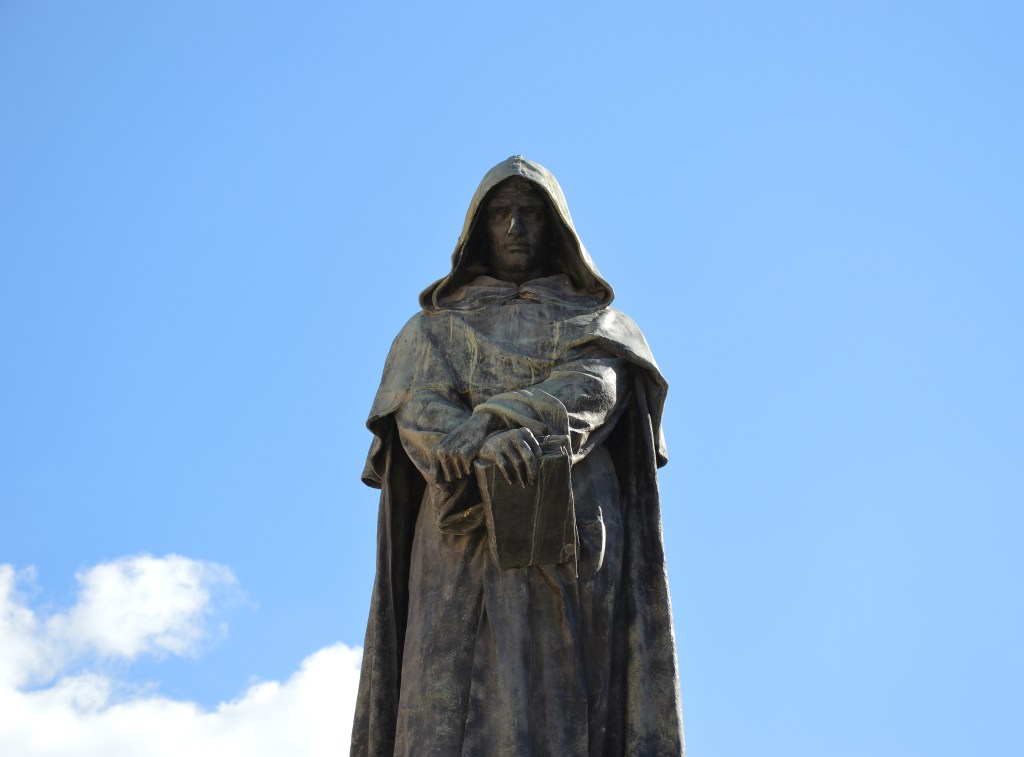
Statue of Giordano Bruno at the Campo de ‘Fiori in Rome.
SOURCE: Livioandronico2013 via Wikimedia Commons

Leo’s strong condemnations of Masonry drew the ire of the secret societies against him. In particularly egregious incident, the Masons erected a statue of an infamous heretic in Rome. The heretic, Giordano Bruno had been condemned and executed under the Inquisition in 1600.

Bruno was a hero to the Freemasons and other subversive groups and the statue’s sculptor went on to become the Grand Master of the Grand Orient lodge of Italy. By erecting Bruno’s statue, the Masons were in effect thumbing their noses at Pope Leo. Leo’s response was to release another encyclical, Dall’alto dell’Apostolico Seggio, condemning the Freemason’s act. The date of issue was October 15, 1890, just two days after the mysterious and highly significant date of October 13th.

[As an aside, Giordano Bruno was posthumously rehabilitated by the highly suspect Cardinal Angelo Sodano in the year 2000! As another aside, and this is very strange: St. Michael is a saint who is perversely venerated by the Masons, who think of him as the ‘planetary angel of the sun.’]

One reason why Pius and Leo sought to engage extra help from the archangels can be found in the records of exorcists. During exorcisms performed after their pontificates, demons admitted that there had been ‘unusually numerous and strong invasions by diabolical spirits on the earth’ during Pius’ pontificate. One exorcist wrote:

In their battle against the Church, the demons use the wicked people as their allies. They have succeeded in enlisting a large number of people under their banner.

“We have the will of the people on our side,” they say.

The demon ‘Caesar’ leads their forces to stir up governments against the Church. “The people are our trusty storm troops”, he stated.

The Masons are among the main supporters of the demons. Lucifer admits that they are his ‘dearly beloved children’ and calls them his ‘representatives on earth.’

The exorcist continued:

Once they are defeated, the time will come when the members of the secret societies will be humiliated. The Virgin will destroy the secret societies. She has already set herself against them.

So we can see that before Modernism infiltrated the Church, Freemasonry was identified as being Her fundamental enemy, leading Pius to institute extra prayers after Mass for the protection of the Church and leading Leo to compose some very powerful new prayers invoking the great St. Michael.

IMAGE SOURCE: detail from James Powell and Sons of the Whitefriars Foundry, Public domain, via Wikimedia Commons

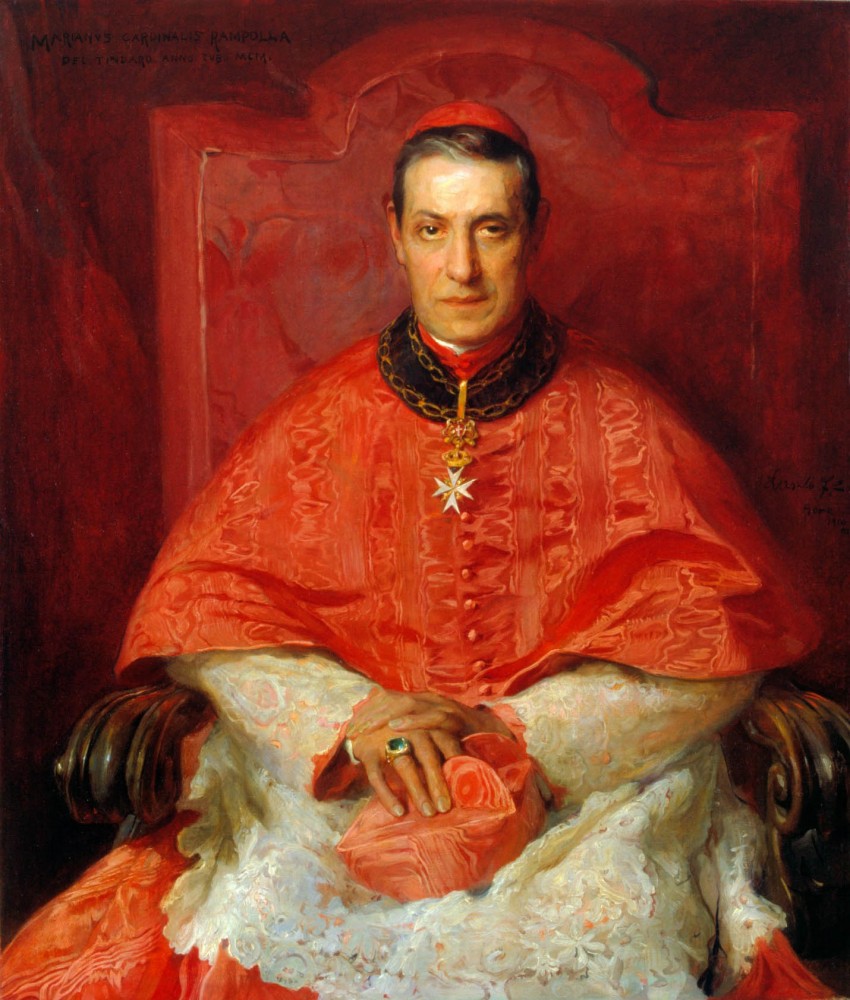
Cardinal Rampolla – the archetypal Freemason cleric

The first significant inroad made by Freemasonry into the heart of the Church was the appointment of the influential Cardinal Rampolla as Secretary of State. Ordained in 1866, Mariano Rampolla was made a bishop by Pope Leo XIII and appointed Apostolic Nuncio of Spain in 1882 for five years. 

It was during this time that Pope Leo released his landmark encyclical condemning Freemasonry, Humanum Genus. Released in April of 1884, this was to be his final official condemnation of the Craft. Only six months later, Pope Leo received his famous vision of the devil ‘conversing’ with God and subsequently wrote the prayer to St Michael. The date of that vision is particularly significant: it was October 13th – precisely 33 years before the Miracle of the Sun at Fatima. Some time after this, the Pope decreed that the St Michael prayer and the Salve Regina be recited after every Low Mass.

In 1887, the Pope promoted Rampolla to Cardinal and in the same year, appointed him as his Secretary of State. (16 years)

 It seems strange to think that a Pope who was so opposed to Masonry allowed a character like Rampolla to achieve such prominence. Perhaps Pope Leo’s confidence in Rampolla reflected something of the latter’s character: he has all the hallmarks of a wolf in sheep’s clothing.

Leo XIII died in 1903 and Rampolla became known as the best potential new pope, or  ‘papabile.” This was despite Rampolla’s liberal tendencies already being widely known. 

In an unusual political intervention, the French Foreign Minister urged the French Bishops to vote for Rampolla, in order to maintain the support given to the French by Leo XIII.

Some of Rampolla’s other supporters at this time were Bishop Pietro Gasparri, Rampolla’s Under-Secretary of State, Msgr della Chiesa, and his private secretary, Eugenio Pacelli. Another supporter, Bishop Rafael Merry del Val, became Pro-Secretary of the conclave. This followed the sudden death of the original Pro-Secretary, Msgr Volpini. The Pro-Secretary plays an important ceremonial role after the election of a new pontiff and is also automatically elevated to the role of Cardinal at the same time as a former Cardinal is elevated to the papacy.

Cardinal Rampolla received the highest tally in the first vote and things appeared to be going his way. Suddenly there was an unheard-of intervention by the Metropolitan of Krakow, Cardinal Puzyna, on behalf of His Imperial Majesty Franz Josef of Austria-Hungary. Franz Josef was invoking a power of veto that had not been used in 400 years to eliminate Rampolla as a candidate. Del Val had tried without success to stop this intervention from taking place.

When Rampolla realised that the request was valid, he asked that his supporters transfer their votes to the Patriarch of Venice, Cardinal Giuseppe Sarto. The final ballot in fact elected Cardinal Santo and he took the name Pius X.

Pius X abolished the Imperial Privilege soon after his election, possibly due to the common opinion that the Emperor was motivated by political intentions. The true reason behind the intervention was not known until a decade later.

Rampolla was replaced as Secretary of State by Bishop Merry del Val; other progressive prelates, supporters of Rampolla, still held their important posts in the Vatican.  Rampolla became Secretary of the Holy Office in 1908.

The truth behind the Emperor’s intervention was not revealed until 1918, after Rampolla’s sudden demise. Amongst the Cardinal’s private papers were documents that indicated he was a member of the Ordo Templi Orientis,  or OTO, an occult arm of Freemasonry. This cult incorporates elements of Gnosticism, Kabala and Eastern mysticism and is the foundation of Aleister Crowley’s ‘sex magick.’


Of special interest in our own days is one aspect of the initiation ritual of the eleventh degree of the OTO: sodomy. Msgr Jouin believed that Cardinal Rampolla was initiated into the OTO in Switzerland and that he was a Grand Master of the OTO.

INFORMATION FROM THE RITE OF SODOMY V by Dr Randy Engels

One-Time
Monthly

PLease donate to help me create more content like this!
Make a one-time donation

Make a monthly donation

Choose an amount

$5.00
$50.00
$100.00
$5.00
$15.00
$100.00

Your contribution is greatly appreciated!

Your contribution is appreciated.

DonateDonate monthly

Masons on the Church – Then and Now

Humanum Genus, Pope Leo XIII’s great encyclical warning against Freemasonry, was promulgated in 1884. In it, the Pope condemned Masonry and other secret societies in the most direct and unambiguous way. The scathing nature of his reprisal can be evaluated by the response from Masons of that time.

From the Bulletin of the Symbolic Scottish Grand Lodge:

Freemasonry cannont help but thank the Supreme Pontiff of the last encyclical. Leo XIII, with unquestionable authority, and wth great luxury of evidence has demonstrated once again that there is an unbridgeable gulf between the Church of which he is the representative, and the Revolution, of which Freemasonry is the right arm. It is good that the skeptics cease to entertain vain hopes. All must get used to the new order which does not recognise any other foundation than that of science and human reason, in the spirit of authority and spirit of liberty.

Enrico Delassus, “Il problema dell’ora presente”, Desclèe e C. Tipografi-Editori 1907, vol. 1, p 39. (Via Fr Villa.)

Contrast this appraisal with laudatory comments from the Masons in our present day. The following is a press release from Italy’s Grand Lodge, made after the election of Jorge Bergoglio in 2013.

The Catholic Church has chosen as Pope the Jesuit Jorge Mario Bergoglio who assumed the name of Francis. A clear-cut choice, away from the logic of the Roman Curia and of the temporal power. From the first moment on, Pope Francis, a man who comes “nearly from the end of the world,” rejecting the ermine robe and gold cross and replacing it with an iron cross, made his first tangible act. In his first words of greeting he fostered a desire for dialogue with the world and with mankind, nurturing the vivid hope for laymen and nonbelievers that change is underway. Maybe this is really what the world expects and what it expected. A new Church that knows how to reconnect love with truth in a confrontation among institutions not entrenched in the defense of their own power. It is that same hope for which the world — and especially Latin America, where the Masons Simon Bolivar, Salvador Allende and the same Giuseppe Garibaldi [especially while in Brazil] among the many who have given liberty to those peoples — has always longed for.

A message that Freemasonry itself perceives a sharp break with the past and one which is turned now to listening to the poor, the marginalized and the weakest. To the new Pontiff we send our best wishes for his good work for years to come.

Luciano Nistri, Grand Master GLVDI

(As found at OnePeterFive)