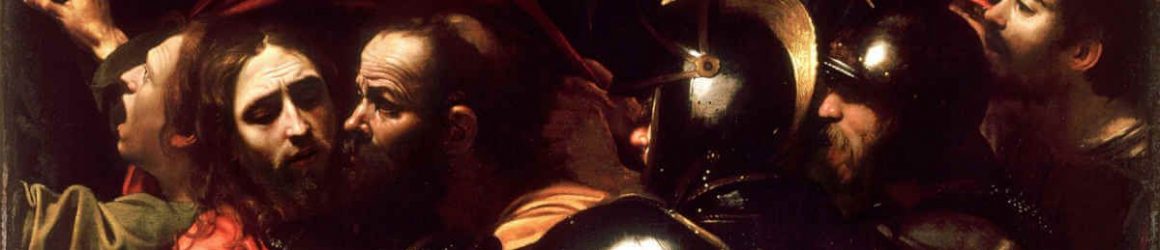

Beware of false prophets, who come to you in the clothing of sheep, but inwardly they are ravening wolves – Matthew 7:15.
Some may think that the election of yet another unworthy Cardinal to the Papacy causes perverse delight for writers who routinely expose wrongdoing in the Church. Nothing could be further from the truth! It is actually a source of pain to be counted among the minority who disregards popular opinion in order to defend the rights of God.
It was Christ Himself who warned us to be on the watch for dangerous men who like to appear as one thing, while having intentions that are altogether different. Our Lord even specifically warned that such men will dress the part in order to lead His unsuspecting sheep astray.
This profile of a ravenous wolf perfectly fits the latest Pontiff, Leo XIV, who has chosen to adopt the outward persona of a traditionalist, all the way from his heavily embroidered pallium down to his relic-embedded pectoral cross.
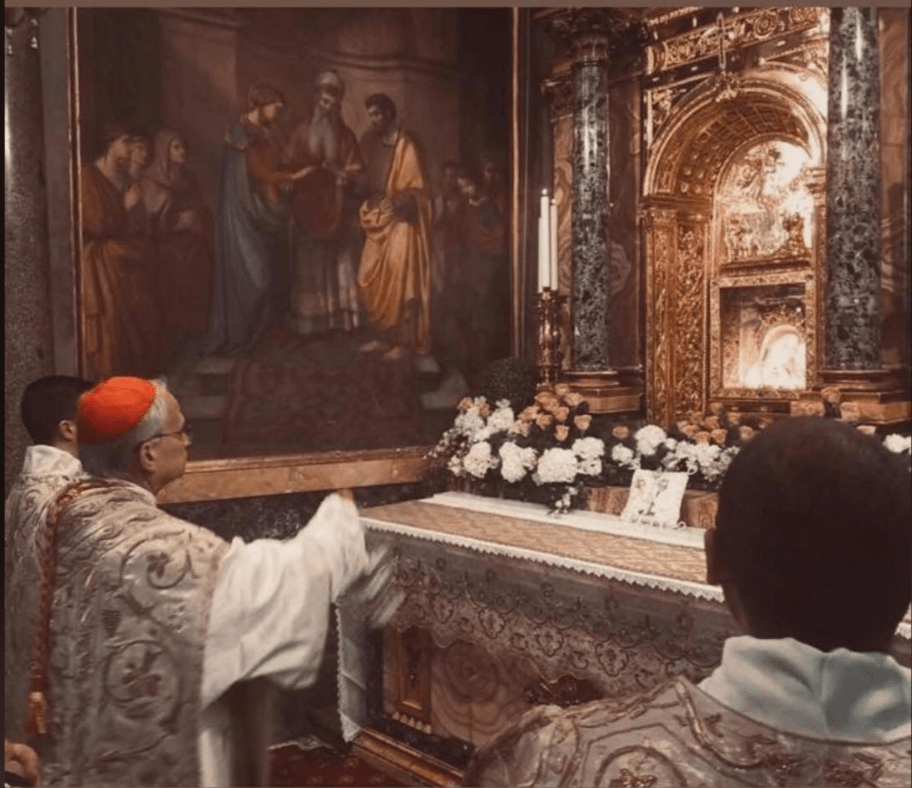
He is gaining favour with Trads, as stories of him offering private Latin Masses are doing the rounds of social media. Those posts are often accompanied by a photograph, shown below, of then-Cardinal Prevost wearing traditional vestments. However, the liturgical event was not a traditional Mass; rather Prevost was simply incensing an image of Our Lady, possibly the miraculous icon at Gennazzo. [We know it wasn’t a Mass because the altar is covered, and there are no altar cards, vessels or missal.]
So what is underneath the lovely vestments and fluent Latin that should have us so concerned? It is that Prevost is a Modernist, through and through, and that he a stated goal of picking up where Francis left off, steering the Barque of Peter firmly along a course of Synodality.
The Catholic Esquire has done a great job of explaining succinctly the programme of this papacy and how it is in perfect continuity with that of Francis – and of the entire Revolution. [His short (17min) video can be found here.]
In short, Synodality is the name of the game: decentralising the Church in an attempt to obliterate the foundation of Her unchanging doctrinal authority. Now, obviously, this plan can never ultimately succeed, as Christ is that foundation, but the Synodalists have and will continue to inflict great damage on the Church in their attempt.
We should expect to see national bishops’ conferences implementing their own local brand of Catholicism whilst tolerating all manner of error. We can also expect some tinkering with the Novus Ordo liturgy, as Synodalists move along in their efforts to further delegitimise, and one day completely invalidate that form.
The persecution of Traditional Catholics could perhaps appear to soften, but in no way should a return to the widespread traditional practice of the Faith be expected. Should Traditiones Custodes be revoked, then Traditional Catholics must not let down their guard. If a convincing wolf is in charge, then we must not stand near him saying “what big teeth you have!”
As explained in my last article, we also should not expect to see a cleansing of sodomites from the ranks of the hierarchy under this pontificate. The moral chaos and errors are very likely to increase, rather than diminish. And that means an increase of moral chaos in the wider society as well.
What about Ecclesiastical Freemasonry? Will Pope Leo denounce Masonry in the strongest terms, like his namesake, Leo XIII? That is most unlikely. The best that can be hoped for is the reiteration – on paper, at least – of the Church’s longstanding condemnation as was produced by Tucho Fernandez under Bergoglio in November 2023. That ostensible condemnation was more likely aimed at disempowering the Masonic Old Guard in the Curia, led by then-papabile Cardinal Parolin, than at actually dissuading Catholics from becoming Masons. Francis’ Masonic credentials certainly suggest that this was the case.
Speaking of Masons, an intriguing image was posted on a Masonic Instagram account a few days after the death of Bergoglio. There’s no way of knowing what it meant, but the timing was most interesting. It was accompanied by a snippet of Masonic poetry, without any additional commentary. Note the red cuff on the figure of the Pope, as well as the (Rosicrucian-inspired?) equilateral crosses on his vestments.

As with the election of other Popes since the Council, Freemasons have expressed their congratulations to the newest Pontiff. This was the only example that was easily found, but it is early days yet.

The surest confirmation of Pope Leo’s agenda will be his selection of a new Curia, which won’t happen until after his official installation on May 18th. Some more Masonic well-wishing around that time is to also be expected.
So is there reason for us to be disoriented? Or disillusioned …. depressed? Well, no. All of this has to play out before the time of Our Lady’s Triumph.
Since the majority of Catholics, including a series of Popes, has refused to honour the requests of Our Lady at Fatima and elsewhere, another destructive papacy is simply part of the package.
However, we are not powerless in the face of adversity. In fact, there is much we can do to mitigate the effects of another ‘worm-ridden’ papacy. The following Rules of Engagement with the revolutionary forces – both natural and supernatural – may be of assistance:
- A renewed commitment to daily prayer, especially the Holy Rosary
- A commitment to a small form of daily penance for Pope Leo XIV, that God will work much good through his pontificate (and even a conversion can’t be ruled out)
- A commitment to limiting online criticism to the actions of the new pope, while being careful not to demean his office
- Similarly, great care should be taken always to distinguish between the human element of the Church and Her Divine origin. {For example, as clearly stated by Pope Gregory XVI in Mirari Vos: “To use the words of the fathers of Trent, it is certain that the Church “was instructed by Jesus Christ and His Apostles and that all truth was daily taught it by the inspiration of the Holy Spirit.” Therefore, it is obviously absurd and injurious to propose a certain “restoration and regeneration” for her as though necessary for her safety and growth, as if she could be considered subject to defect or obscuration or other misfortune.“]
- Asking heaven for the grace to remain on the Ark; to stay within His Church, no matter how bad things get.
PS. It is well-known that Hollywood and the celeb-world are in cahoots with the revolution everywhere – including within the Church.
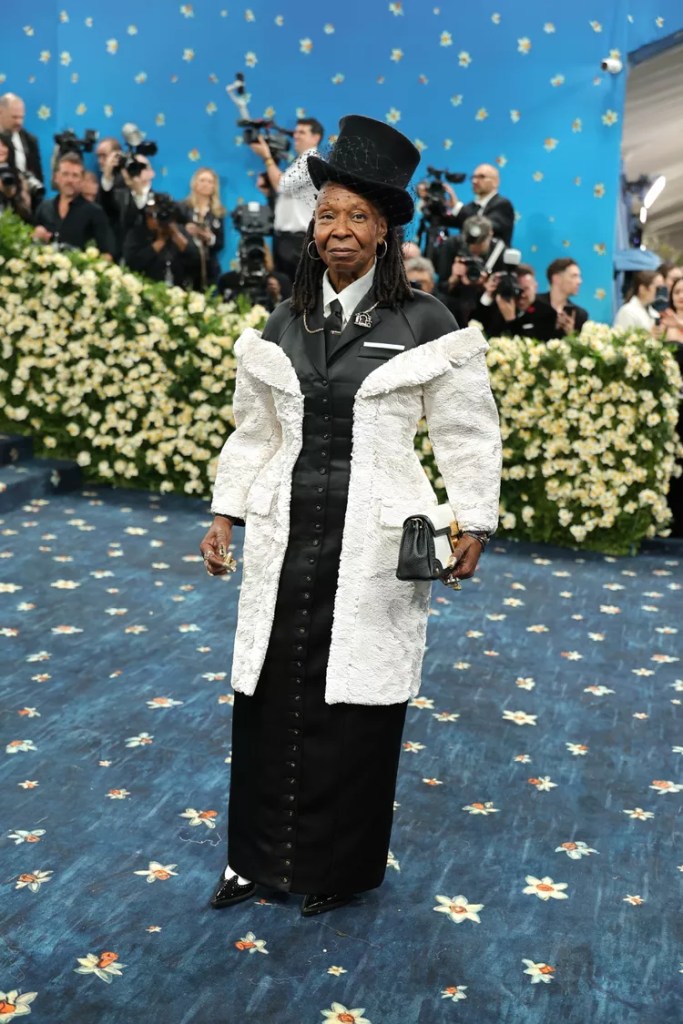
Does anyone else think this costume worn by Whoopi Goldberg at the recent Met Gala refers to an ecclesiastical wolf in sheep”s clothing? The furry-looking overcoat seems to peel away, revealing a sombre, even militaristic suit beneath. The bottom of the suit is even more surprising, as it is buttoned all the way down, just like a cassock.
To top it off, the brooch on her lapel is in the shape of a key-hole. Food for thought….

 Ecclesiastical Freemasonry